Setting the Stage for Postpartum Well-Being
Preparing for a healthy postpartum is often discussed as a checklist—meals prepared, nursery arranged, schedules imagined—but the lived reality unfolds far more quietly and complexly. The postpartum season is not a recovery window that behaves on command. It is a gradual re-entry into one’s body, identity, and emotional landscape, shaped as much by expectations as by biology. Women who feel grounded during this phase are rarely those who “did everything right,” but those who made space for uncertainty, recalibration, and grace before the baby ever arrived.
The conversation around preparing for a healthy postpartum deserves more honesty and nuance. Beneath the surface of pastel advice lies a period defined by contradiction: strength paired with vulnerability, joy interrupted by exhaustion, confidence dissolving into self-doubt and reforming again. Understanding this reality ahead of time does not remove difficulty, but it softens its edges ✨.
Reframing the Idea of “Preparation”
Preparing for a healthy postpartum is not about controlling outcomes. It is about adjusting expectations so the experience feels navigable rather than disorienting. Many women enter postpartum believing readiness means physical healing alone. In practice, the emotional terrain often proves more demanding than the physical recovery itself.
Postpartum rarely mirrors prenatal fantasies. Energy fluctuates unpredictably. Confidence arrives in fragments. Even women surrounded by support can feel unexpectedly alone at night, when the world quiets and responsibility feels absolute. Preparing emotionally means acknowledging these moments without framing them as personal failure.
This reframing allows preparation to become internal as well as external—less about perfection, more about adaptability.✨
The Body After Birth: Beyond the Narrative of “Bouncing Back”
The cultural expectation of rapid recovery often undermines preparing for a healthy postpartum. Bodies do not simply return; they reorganize. Muscles behave differently. Hormonal shifts alter temperature regulation, sleep rhythms, and emotional responses. The disconnect between expectation and reality can create unnecessary tension.
Many women notice sensations they were not warned about—lingering pressure, unfamiliar aches, changes in balance or breathing. These experiences are not anomalies; they are signs of transition. Preparation here means understanding that healing is not linear and does not adhere to visual timelines.
A healthier postpartum mindset recognizes the body as active, not broken. Recovery is happening even on days when it feels invisible 💫.
Recommended Reading:
Signs of Pregnancy After Having a Period
Emotional Undercurrents No One Schedules For
Preparing for a healthy postpartum also requires emotional literacy. Postpartum emotions are rarely singular. Gratitude can coexist with grief for one’s former autonomy. Love can feel overwhelming rather than immediately blissful. These contradictions often surprise women more than physical discomfort.
Common advice emphasizes positivity, but emotional resilience comes from acknowledging complexity. Women who feel emotionally steadier postpartum are often those who anticipated ambivalence and normalized it. They do not interpret difficult emotions as signs that something is wrong, but as part of psychological adjustment.
Quiet moments—during feeding, pacing a dim room, or sitting alone while the baby sleeps—can magnify unprocessed feelings. Anticipating this inward shift is an overlooked element of preparing for a healthy postpartum.✨
Support Systems: The Difference Between Presence and Performance
Support is frequently discussed in terms of quantity rather than quality. Preparing for a healthy postpartum is not about having many people around; it is about having the right dynamics in place. Well-meaning support can still feel intrusive, especially when it comes with opinions or expectations.
The most stabilizing support respects autonomy. It notices without hovering, helps without instructing, and listens without correcting. Many women discover postpartum that they need to renegotiate boundaries they assumed were understood.
Preparation means identifying who feels grounding rather than draining—and allowing those relationships to take precedence without guilt.✨
Rest That Actually Restores
Postpartum rest is often misunderstood as sleep alone. In reality, rest includes mental quiet, emotional safety, and the absence of performance. Preparing for a healthy postpartum means redefining rest as restoration, not inactivity.
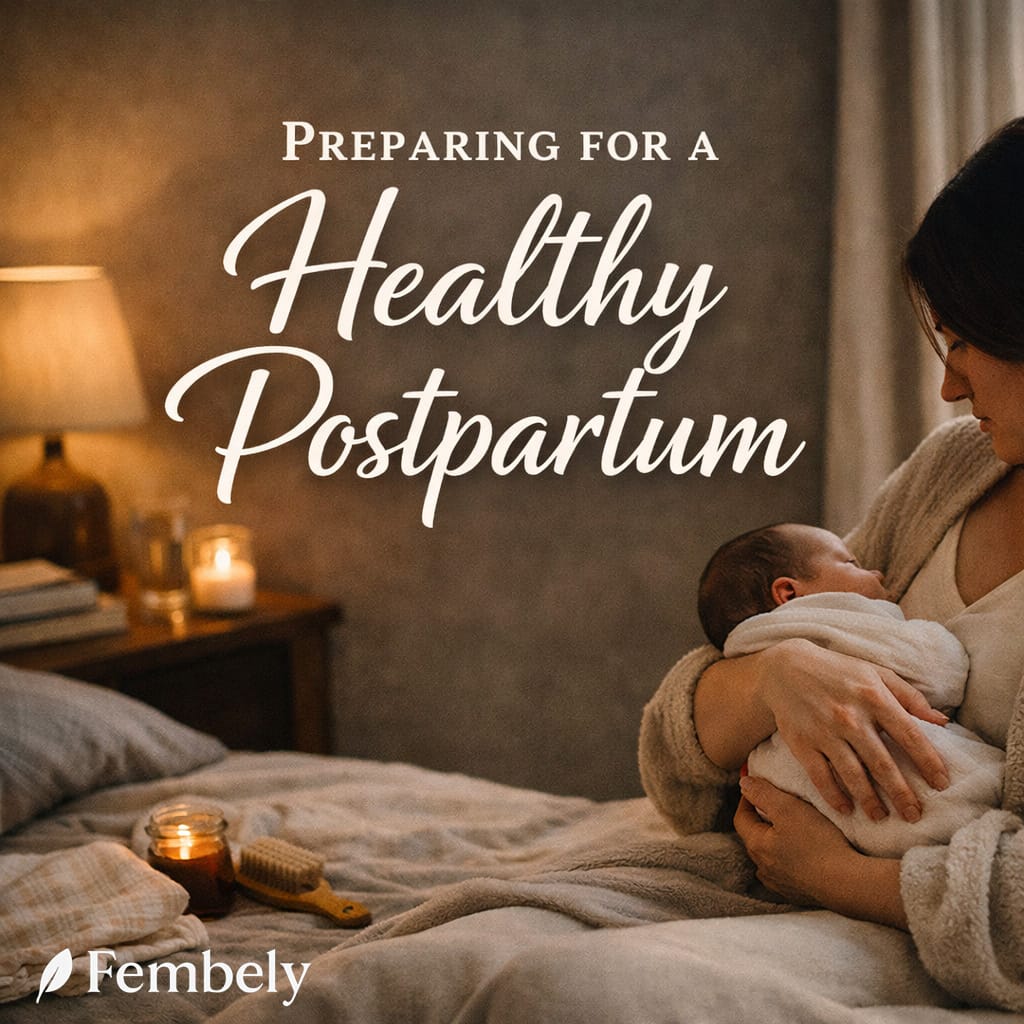
Women frequently report feeling exhausted despite sleeping whenever possible. This fatigue often stems from vigilance—the constant awareness of responsibility. Small rituals that signal safety and continuity can ease this mental load: familiar lighting in the evening, predictable rhythms, or moments of silence without stimulation.
True postpartum rest does not require optimization. It requires permission.
✨
Nourishment as Emotional Stability, Not Control
Food during postpartum is often framed in extremes: strict nutritional rules or complete disregard. Preparing for a healthy postpartum involves viewing nourishment as emotional regulation as much as physical fuel. Appetite fluctuates. Preferences shift. Comfort matters.
Meals that feel grounding—warm, familiar, unhurried—often provide more stability than rigid plans. Women who approach postpartum nourishment with flexibility tend to feel more emotionally balanced, because food becomes supportive rather than another metric to manage.
Preparation here lies in mindset, not menus.
✨
Identity Shifts That Begin Quietly
One of the least discussed aspects of preparing for a healthy postpartum is identity transition. This shift does not announce itself; it unfolds subtly. Women often feel “in between”—no longer who they were, not yet who they are becoming.
This liminal state can feel unsettling, especially for those accustomed to clarity and competence. Moments of self-doubt may arise even in women who felt confident during pregnancy. Preparation means knowing that this questioning is transitional, not permanent.
Allowing identity to evolve without urgency reduces internal pressure and supports emotional health.
✨
Why Common Advice Often Misses the Mark
Much postpartum advice fails because it assumes consistency. Real life is fragmented. A strategy that works one week may feel impossible the next. Preparing for a healthy postpartum involves expecting inconsistency rather than resisting it.
Rigid routines often collapse under sleep disruption. Strict expectations around productivity or emotional response can amplify frustration. What works instead is responsiveness—adjusting daily expectations based on capacity rather than ideals.
This adaptability is a skill worth cultivating before postpartum begins.
✨
The Role of Environment in Emotional Regulation
Physical surroundings subtly shape postpartum experience. Light, sound, and visual calm can influence emotional regulation more than anticipated. Preparing for a healthy postpartum includes considering environment as support.
Soft lighting in the evening, reduced visual clutter, and sensory familiarity help the nervous system settle. These details may seem minor, but during heightened sensitivity, they matter.
Creating an environment that feels safe rather than stimulating supports recovery on multiple levels.
✨
Relationships Under Pressure
Postpartum does not occur in isolation. Relationships often shift—sometimes temporarily, sometimes more profoundly. Communication can become strained when both partners are tired and emotionally stretched.
Preparing for a healthy postpartum includes acknowledging that connection may look different for a while. Reduced conversation, altered intimacy, or emotional misalignment do not indicate relational failure. They reflect transition.
Patience, rather than problem-solving, often restores connection more effectively during this phase.
✨
Mental Health Without Labels
While postpartum mental health is often discussed in extremes, many women experience subtler emotional fluctuations that do not fit labels. Preparing for a healthy postpartum means recognizing that emotional discomfort can exist without pathology.
Mood changes, irritability, or tearfulness can appear sporadically. Responding with curiosity rather than alarm allows emotions to pass more gently. Awareness without overinterpretation creates emotional breathing room.
This balanced approach fosters resilience.
✨
Recommended Reading:
Impact of Social Media on Child Development
Preparing Without Over-Preparing
There is a fine line between readiness and overload. Over-preparing can create rigid expectations that reality immediately disrupts. Preparing for a healthy postpartum works best when it leaves room for improvisation.
This means planning support without scripting outcomes. It means gathering information without memorizing rules. It means trusting that adaptability will develop alongside experience.
Confidence often grows not from preparation itself, but from discovering one can respond to the unexpected.
✨
The Quiet Strength of Slowing Down
Postpartum culture often pressures women to “get back” to life quickly. Preparing for a healthy postpartum involves resisting this urgency. Slowing down is not regression; it is integration.
Taking time to sit, observe, and respond rather than react allows emotional and physical systems to recalibrate. Women who honor slowness often report feeling more stable in the long term, even if the early weeks feel unremarkable from the outside.
This quiet strength is undervalued but transformative ✨.
Long-Term Perspective Over Short-Term Fixes
Preparing for a healthy postpartum benefits from a long view. The goal is not to feel perfect quickly, but to build sustainable well-being over time. Early discomfort does not predict long-term dissatisfaction. Early uncertainty does not signal lasting imbalance.
When postpartum is seen as a season rather than a test, pressure decreases. Growth becomes gradual rather than forced.
This perspective reframes challenges as transitional rather than defining.
✨
Integrating the Experience, Not Escaping It
Some women approach postpartum as something to endure. Preparing for a healthy postpartum invites a different approach: integration. This means allowing the experience to shape priorities, rhythms, and self-understanding rather than rushing past it.
Moments of difficulty coexist with moments of quiet meaning. Noticing both creates a more grounded narrative of motherhood—one rooted in reality rather than performance.
Integration does not require enjoyment of every moment. It requires presence.
✨
Conclusion: A Healthier Postpartum Begins Before It Starts
Preparing for a healthy postpartum is less about mastering techniques and more about cultivating flexibility, compassion, and realism. It means expecting transformation rather than continuity, complexity rather than clarity, and growth rather than immediate resolution.
Women who feel steadier during postpartum are often those who prepared emotionally for unpredictability and allowed themselves to change without judgment. Health, in this context, is not the absence of difficulty—it is the ability to move through difficulty without self-erasure.
For more thoughtful, experience-driven perspectives on women’s health, identity, and modern living, explore the editorial world of Fembely at https://fembely.com/. There, the conversation continues—quietly, intelligently, and without illusion 💫.