
Secrets to Radiant, Naturally Glowing Skin
how to achieve natural glowing skin is not a mystery reserved for genetics, expensive treatments, or a perfectly curated routine that never survives real life. It is, instead, a quiet accumulation of habits, compromises, small frictions, and decisions made on ordinary days—often when no one is watching.
The idea of glowing skin has been flattened by oversimplified advice: drink more water, apply this serum, avoid sugar, sleep eight hours. None of that is wrong. Yet most women already know these rules—and still feel disconnected from the reflection in the mirror. The disconnect isn’t ignorance. It’s that common advice rarely accounts for how life actually unfolds: stress that doesn’t resolve neatly, routines interrupted by work or family, hormonal shifts, emotional eating, climate changes, or skin that reacts unpredictably.
To understand how to achieve natural glowing skin in a way that lasts, the conversation needs to move away from perfection and toward realism. Toward what works on imperfect weeks, in transitional seasons, during exhaustion, and in moments when motivation is thin.
✨
The Myth of Effortless Glow—and Why It Keeps Failing
Glowing skin is often presented as something effortless once you “get it right.” That framing alone sets most women up for quiet disappointment. Skin is not a static surface; it responds constantly to sleep quality, cortisol levels, digestion, hydration patterns, touch, climate, and even self-perception.
The problem with most glow-centric advice is that it treats skin like a checklist project rather than a living system. When glow is reduced to products or rules, women either overdo everything or give up entirely.
In reality, how to achieve natural glowing skin has far more to do with reducing friction than adding steps. Less forcing. Less chasing. More consistency in small, unglamorous behaviors.
✨
Recommended Reading:
Understanding Natural Beauty Concepts
Glow Begins Where Most Routines Never Look: The Nervous System
One of the least discussed aspects of skin health is the nervous system. Skin is deeply responsive to stress signals—tight deadlines, emotional labor, unresolved tension. These don’t always show up as breakouts; sometimes they manifest as dullness, uneven tone, or a persistent “tired” look that no product seems to fix.
Many women notice their skin looks better on vacation not because of better products, but because their nervous system finally downshifts. Fewer cortisol spikes mean improved circulation, better barrier function, and more efficient cellular repair.
This is where common advice fails. Telling someone to “reduce stress” without addressing how stress actually shows up day to day is useless. What works instead are micro-adjustments:
- Creating short decompression rituals between tasks
- Avoiding scrolling immediately after waking
- Allowing skin-care moments to be slow rather than rushed
These shifts don’t sound cosmetic, but they directly influence how to achieve natural glowing skin over time.
💫
Cleansing Isn’t About Being Clean—It’s About Respecting Skin Rhythm
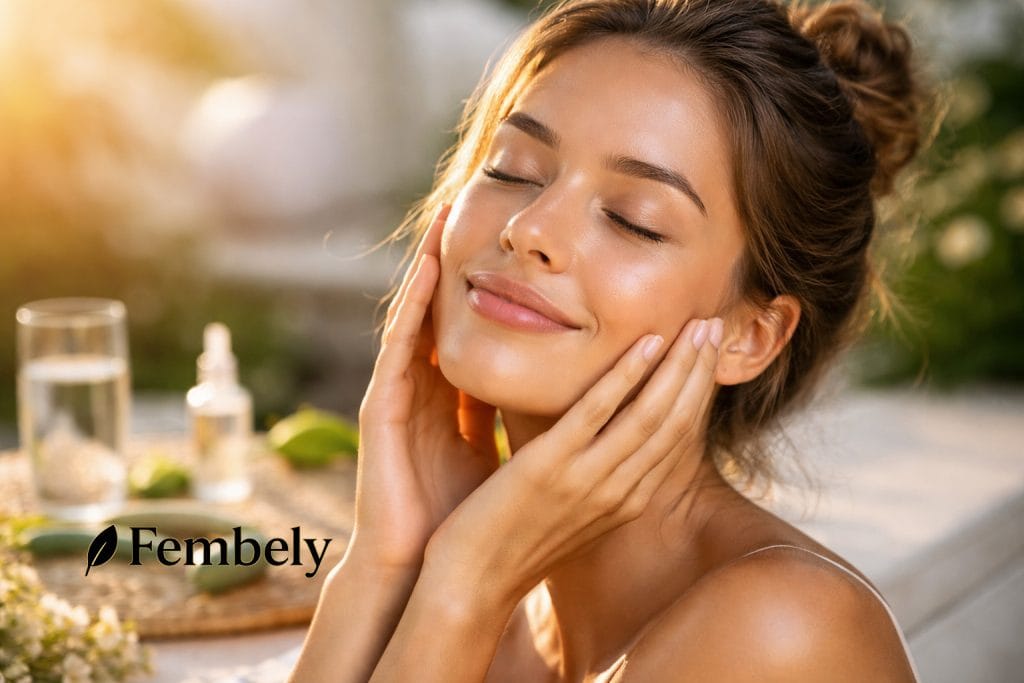
Cleansing is often treated as a purity ritual: remove everything, reset completely, start fresh. But skin does not benefit from constant resetting. Over-cleansing disrupts the lipid barrier, leading to dehydration and reactive dullness that’s often mistaken for “bad skin.”
Many women unintentionally dull their glow by:
- Using water that’s too hot
- Cleansing too frequently
- Treating oil as something to eliminate
Skin glow thrives on balance, not austerity. Gentle, consistent cleansing that preserves the skin’s natural oils allows light to reflect more evenly—one of the core visual elements of glow.
Understanding how to achieve natural glowing skin here means accepting that skin does not need to feel squeaky clean to be healthy. Comfort, softness, and flexibility are better indicators than tightness.
✨
The Overlooked Habit That Dulls Skin Faster Than Sugar Ever Could
Sugar gets blamed for everything, but one of the most consistent glow disruptors is chronic under-fueling during the day followed by late, heavy eating at night. This pattern—common among busy women—creates blood sugar instability that reflects directly on the skin.
Skin cells rely on steady nutrient delivery. Long gaps between meals, skipped breakfasts, or caffeine-only mornings create internal stress signals. By evening, digestion is compromised, sleep quality drops, and the skin misses its repair window.
Advice that simply says “eat healthy” misses this nuance. Timing matters. Consistency matters. Predictability matters.
Women who see improvements in glow often haven’t changed what they eat as much as how regularly they eat. This subtle shift supports the body systems that ultimately answer the question of how to achieve natural glowing skin.
💫
Why Exfoliation Is Often Doing the Opposite of What You Want
Exfoliation promises instant brightness, and sometimes it delivers. But over time, frequent exfoliation thins the skin’s protective layer, making it more reactive to light, pollution, and temperature changes.
The result? Temporary shine followed by long-term dullness.
Glow is not about stripping away layers; it’s about strengthening what’s already there. Skin that holds moisture evenly reflects light better than skin that’s constantly inflamed beneath the surface.
This is why many women notice their glow improves when they exfoliate less, not more. Allowing skin cycles to complete naturally supports the subtle luminosity that lasts beyond a single morning.
✨
Hydration Is Not Just Water—and That’s Where Advice Gets Lazy
“Drink more water” is easy advice. It’s also incomplete. Hydration that reaches the skin depends on electrolyte balance, digestive health, and cellular absorption. Excessive water without minerals can actually flush out what skin needs to stay supple.
The women who successfully learn how to achieve natural glowing skin often shift away from volume-based hydration toward quality and timing. Hydrating earlier in the day, pairing fluids with meals, and supporting mineral balance subtly improve skin plumpness and tone.
Glow appears when skin is evenly hydrated—not bloated, not depleted.
💫
The Quiet Impact of Touch, Pressure, and Daily Contact
Skin responds to how it’s treated physically. Harsh towel drying, aggressive rubbing, constant face-touching, or sleeping positions that compress the face all contribute to micro-inflammation.
Glow fades when skin is repeatedly stressed, even gently.
This is why some women notice improvement simply by changing pillowcases more frequently, patting skin dry, or applying products with slower, deliberate movements. These are not aesthetic rituals; they’re nervous system signals that tell skin it’s safe.
Understanding how to achieve natural glowing skin means noticing these small physical interactions that accumulate quietly over time.
✨
Why Chasing Trends Creates Long-Term Dullness
Trend-driven routines encourage constant switching. Skin, however, adapts slowly. Every new product, texture, or technique requires an adjustment period. Constant novelty keeps skin in a reactive state.
The glow many women chase is often lost because their skin never settles.
Consistency—even with a minimal routine—allows the skin barrier to strengthen, inflammation to subside, and tone to even out. This is not glamorous advice, but it’s effective.
Glow doesn’t come from doing more. It comes from allowing skin to stabilize.
💫
Recommended Reading:
Sleep Isn’t About Hours—It’s About Depth
Sleep advice usually focuses on duration, but skin repair depends more on depth and continuity. Fragmented sleep interrupts growth hormone release and cellular regeneration, leading to dullness even after eight hours in bed.
Late-night scrolling, irregular sleep times, or heavy meals close to bedtime quietly sabotage glow.
Women who improve their skin often don’t sleep longer—they sleep more predictably. Skin loves rhythm.
This rhythm is an underrated answer to how to achieve natural glowing skin without adding anything new.
✨
Hormonal Fluctuations and the Glow We’re Told to Ignore
Hormonal shifts—monthly, seasonal, or transitional—change skin texture, oil distribution, and sensitivity. Yet many routines are built as if skin should behave the same every day.
Glow becomes elusive when expectations ignore reality.
Adjusting routines subtly across cycles—lighter hydration at some times, more barrier support at others—keeps skin responsive rather than overwhelmed.
The glow that lasts comes from listening, not controlling.
💫
Why “Perfect Skin” Thinking Blocks Real Glow
Perhaps the biggest obstacle to glowing skin is the belief that it must look flawless. Glow is not perfection; it’s vitality. Slight texture, visible pores, and natural variation do not cancel glow—they often enhance it.
Skin that looks alive reflects light differently than skin that’s been over-corrected.
Letting go of hyper-scrutiny allows women to notice the improvements that actually matter: softness, comfort, resilience. These qualities build gradually and last.
✨
Bringing It All Together: A More Sustainable Definition of Glow
When the question shifts from “what am I missing?” to “what can I stop fighting?” skin begins to change. How to achieve natural glowing skin is not about doing everything right—it’s about removing the habits that quietly undermine it.
Glow emerges when skin feels supported, not managed. When routines feel flexible, not rigid. When self-care adapts to real life rather than demanding control over it.
The women whose skin truly glows aren’t doing more. They’re doing less—more thoughtfully.
✨
A Final Thought
Natural glowing skin is not a finish line; it’s a reflection of balance, patience, and self-awareness. When glow is approached as a relationship rather than a result, it becomes sustainable—and deeply personal.
For more refined, experience-led perspectives on beauty, wellness, and modern femininity, explore the curated editorial world at https://fembely.com/ and continue the conversation where nuance matters.