

Smart Weight Loss for Midlife Women Designed for Real Life ✨
Best weight loss plan for middle aged woman is less about punishing diets and more about understanding how the body, lifestyle, and priorities naturally shift over time. What worked in your twenties often feels ineffective—or even exhausting—after forty. Hormones fluctuate, sleep becomes less predictable, stress accumulates differently, and suddenly the “just eat less and move more” advice feels painfully outdated. Real results begin when the plan respects energy levels, metabolism changes, emotional needs, and daily responsibilities instead of ignoring them.
Many women reach this stage after trying multiple short-term diets that seemed promising but left them more tired, hungrier, and frustrated. The truth is, midlife weight loss isn’t about dramatic restriction. It’s about stability, nourishment, and consistency that fits into real routines—not idealized schedules.
Why the Best Weight Loss Plan for Middle Aged Woman Must Be Different
In middle age, the body becomes more sensitive to stress, sugar spikes, sleep disruption, and restrictive eating. Metabolism doesn’t simply “slow down” overnight; it responds to accumulated habits, hormonal shifts, and muscle loss that often begins in the late thirties.
Many traditional diets fail because they:
- Cut calories too aggressively
- Ignore protein and muscle maintenance
- Promote extreme cardio without strength work
- Eliminate entire food groups
- Create cycles of restriction and rebound eating
A more effective approach focuses on metabolic stability instead of rapid loss. Women who succeed long-term usually eat more balanced meals, maintain muscle mass, and follow routines they can realistically sustain.
Recommended Reading:
Balanced Diet for Female Hormones
The Emotional Side of Weight Changes in Midlife
Weight gain during this stage is rarely just about food. It often appears during times of intense responsibility—career pressure, caregiving, family demands, or emotional fatigue. Eating patterns become irregular, sleep shortens, and physical activity slowly disappears from the schedule.
A common scenario:
Breakfast is skipped because mornings feel rushed. Lunch becomes something quick and carbohydrate-heavy. By late afternoon, energy crashes, cravings spike, and dinner turns into the largest, most emotional meal of the day.
This pattern repeats, and even “healthy” food choices can lead to weight gain because the timing, balance, and portions are misaligned.
The best weight loss plan for middle aged woman addresses not only what is eaten, but when, how, and why.
The Core Principles of the Best Weight Loss Plan for Middle Aged Woman
Instead of rigid rules, midlife weight loss responds better to gentle but strategic structure.
1. Protein at Every Meal
Protein helps preserve muscle mass, keeps blood sugar stable, and reduces cravings. Many women unintentionally under-eat protein, especially at breakfast.
2. Balanced Carbohydrates, Not Elimination
Completely removing carbohydrates often leads to fatigue and binge cycles. The focus should be on slow-digesting, fiber-rich sources.
3. Healthy Fats for Hormonal Support
Fats are essential for hormone balance and satiety. Extremely low-fat diets can worsen mood, skin, and energy.
4. Consistent Meal Timing
Long gaps between meals can trigger cortisol spikes and overeating later.
5. Strength-Based Movement
Muscle becomes the body’s metabolic ally. Even two to three short strength sessions weekly can change body composition.
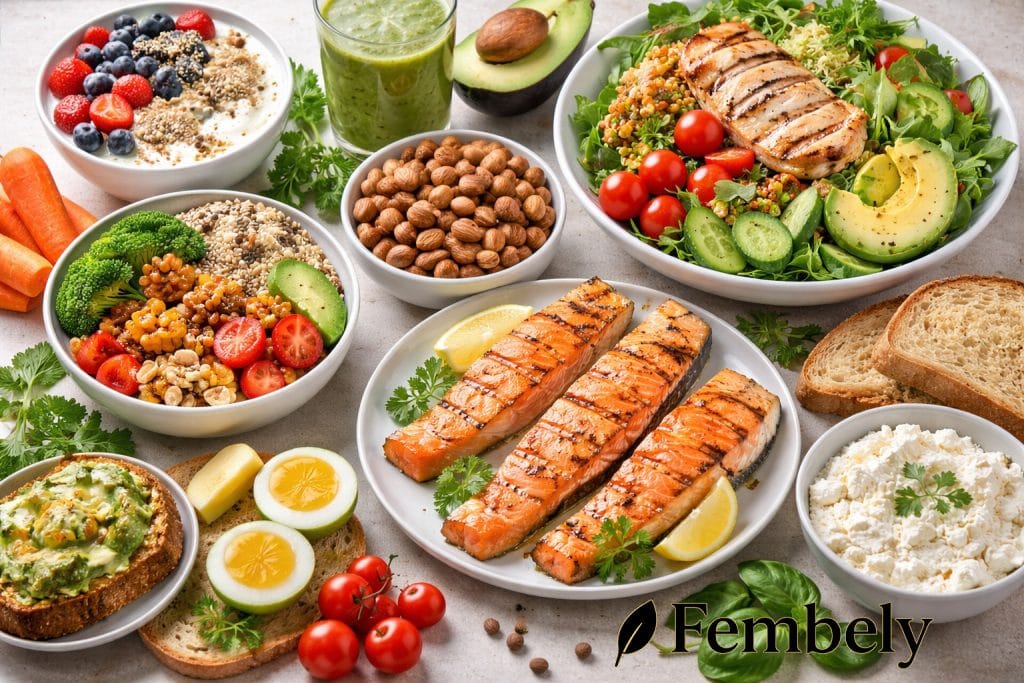
What a Realistic Daily Structure Looks Like 💫
The best weight loss plan for middle aged woman usually follows a rhythm rather than strict calorie counting.
Morning:
A protein-rich breakfast within an hour of waking.
Midday:
A balanced meal with vegetables, protein, and complex carbohydrates.
Afternoon:
A light snack to prevent energy crashes.
Evening:
A satisfying but lighter dinner that doesn’t overload digestion.
Sample 7-Day Practical Meal Plan
This plan is designed for balance, not deprivation. Portions can be adjusted based on appetite and activity.
Day 1
- Breakfast: Greek yogurt with berries and a handful of nuts
- Lunch: Grilled chicken salad with olive oil and whole-grain bread
- Snack: Apple with almond butter
- Dinner: Baked salmon with roasted vegetables
Day 2
- Breakfast: Oatmeal with chia seeds and sliced banana
- Lunch: Lentil soup with side salad
- Snack: Cottage cheese with cucumber
- Dinner: Stir-fried vegetables with tofu and brown rice
Day 3
- Breakfast: Scrambled eggs with spinach and whole-grain toast
- Lunch: Quinoa bowl with roasted vegetables and chickpeas
- Snack: Handful of mixed nuts
- Dinner: Grilled chicken with steamed broccoli and sweet potato
Day 4
- Breakfast: Smoothie with yogurt, berries, spinach, and flaxseeds
- Lunch: Tuna salad wrapped in lettuce leaves
- Snack: Pear slices with walnuts
- Dinner: Turkey and vegetable stew
Day 5
- Breakfast: Cottage cheese with sliced peaches
- Lunch: Brown rice with grilled vegetables and feta
- Snack: Boiled egg and cherry tomatoes
- Dinner: Baked cod with asparagus and quinoa
Day 6
- Breakfast: Whole-grain toast with avocado and poached egg
- Lunch: Chickpea and vegetable bowl
- Snack: Yogurt with seeds
- Dinner: Grilled shrimp with mixed greens and roasted carrots
Day 7
- Breakfast: Protein smoothie with banana and peanut butter
- Lunch: Chicken and vegetable soup
- Snack: Dark chocolate square with nuts
- Dinner: Stuffed bell peppers with ground turkey and vegetables
The Portion Method That Works Better Than Calorie Counting
Instead of obsessing over numbers, a simple visual method often proves more sustainable.
At each main meal:
- Half the plate: vegetables
- One quarter: protein
- One quarter: complex carbohydrates
- Add one spoon of healthy fat
This approach keeps meals balanced without mental fatigue.
Why Many Diets Fail Women Over Forty
The most common issue isn’t lack of discipline. It’s unrealistic expectations.
Extreme plans often:
- Cut out comfort foods entirely
- Require long workout sessions
- Ignore emotional eating triggers
- Demand perfect consistency
Real life rarely allows for perfection. Social dinners, family obligations, travel, stress, and hormonal shifts all influence appetite and energy.
The best weight loss plan for middle aged woman leaves room for flexibility. A single indulgent meal doesn’t undo progress when the overall pattern stays balanced.
Gentle Weekly Movement Plan
Weight loss in midlife responds better to strength and consistency than intensity.
Weekly structure:
- 3 days: 20–30 minutes strength training
- 2–3 days: brisk walking or light cardio
- Daily: gentle stretching or mobility work
Even short sessions at home can build muscle and improve metabolism.
The Sleep–Stress–Weight Connection
Many women notice weight gain during periods of poor sleep or emotional strain. This is not coincidence.
Sleep deprivation can:
- Increase hunger hormones
- Reduce energy for movement
- Slow metabolic efficiency
- Increase cravings for sugar
Improving sleep often leads to weight loss without changing food intake dramatically.
Small adjustments help:
- Consistent bedtime
- Dim lighting in the evening
- Light dinners instead of heavy meals
- Reducing screen time before bed
Real-Life Eating Strategies That Actually Work
The “First Plate” Rule
Serve one balanced plate and eat slowly. If still hungry after 15 minutes, take a small second portion.
The “Protein First” Habit
Start meals by eating the protein and vegetables. This naturally reduces overeating.
The “80 Percent Full” Approach
Stop eating when comfortably satisfied, not completely full.
These small shifts often lead to gradual, sustainable weight loss without strict dieting.
Recommended Reading:
Lack of Motivation Depression in Woman: The Quiet Weight Behind
Common Mistakes That Quietly Sabotage Progress
Skipping meals to save calories
Often leads to nighttime overeating.
Over-reliance on fruit or smoothies
Healthy, but can be too high in sugar without protein.
Too much cardio, not enough strength training
Can lead to muscle loss and slower metabolism.
Weekend overeating cycles
Five “perfect” days followed by two excessive ones can stall progress.
How Long Does Healthy Midlife Weight Loss Take?
The most sustainable pace is:
- 0.5 to 1 pound per week
- Or about 2–4 pounds per month
Slower weight loss often means:
- Better skin elasticity
- More stable energy
- Less muscle loss
- Lower risk of regain
The best weight loss plan for middle aged woman focuses on long-term body composition rather than quick scale changes.
A Gentle Daily Routine Example
Morning
- Protein-rich breakfast
- Short walk or stretching
Afternoon
- Balanced lunch
- Light snack
Evening
- Strength or walking session
- Light, balanced dinner
- Relaxation ritual before bed
This kind of rhythm supports both metabolism and emotional balance.
The Real Goal: Energy, Confidence, and Stability
Weight loss in midlife is rarely just about appearance. Many women simply want to feel lighter, sleep better, move more easily, and feel comfortable in their clothes again.
The best weight loss plan for middle aged woman is not the strictest one—it’s the one that feels calm, sustainable, and realistic enough to follow for years.
Small, consistent choices almost always outperform dramatic, short-lived efforts.
A Practical, Empowering Conclusion ✨
Lasting results come from structure, not restriction. A balanced plate, regular meals, strength-based movement, and gentle routines can gradually reshape both body and energy levels. The process doesn’t need to feel extreme to be effective—it only needs to be consistent.
If you’re ready to explore more realistic, elegant, and empowering approaches to wellness, style, and everyday confidence, discover more inspiring guides at
https://fembely.com/ 💫