
Healthy Ways to Say No While Protecting Your Peace
How to Set Boundaries Without Feeling Guilty? Setting boundaries isn’t selfish .it’s self-care 💕. Yet, many women struggle with guilt when they say “no” or assert their needs. The truth is, learning How to Set Boundaries can transform your relationships, your confidence, and even your mental health.
In this guide, we’ll explore not only why boundaries matter but also how to set them gracefully, clearly, and confidently — without feeling guilty.
🌿 Why Boundaries Are Essential for Every Woman
Let’s start with a simple truth: you can’t pour from an empty cup.
Boundaries are what protect your energy, your time, and your peace of mind. Learning How to Set Boundaries helps you:
- Avoid burnout
- Strengthen healthy relationships
- Improve communication
- Reduce anxiety and resentment
Boundaries tell others how to treat you — but more importantly, they remind you of your worth.
Recommended Reading:
Healthy Communication Tips for Stronger Relationships
💬 The Emotional Struggle: Why Women Feel Guilty Setting Boundaries
Many of us were raised to please others — to be “nice,” accommodating, and selfless. So when we start learning How to Set Boundaries, guilt often creeps in.
You might think:
- “What if they think I’m rude?”
- “I don’t want to hurt their feelings.”
- “I should be able to handle it.”
But guilt doesn’t mean you’re wrong. It means you’re breaking old patterns that never served you.
👉 Here’s a truth to remember: You can be kind and still say no.
🌸 Step 1: Understand Your Limits
The first step in How to Set Boundaries is self-awareness.
Ask yourself:
- What situations drain me emotionally?
- Who constantly oversteps?
- What do I need more or less of in my life?
Journaling helps here. When you identify your emotional triggers, you’ll see where your boundaries need to be strengthened.
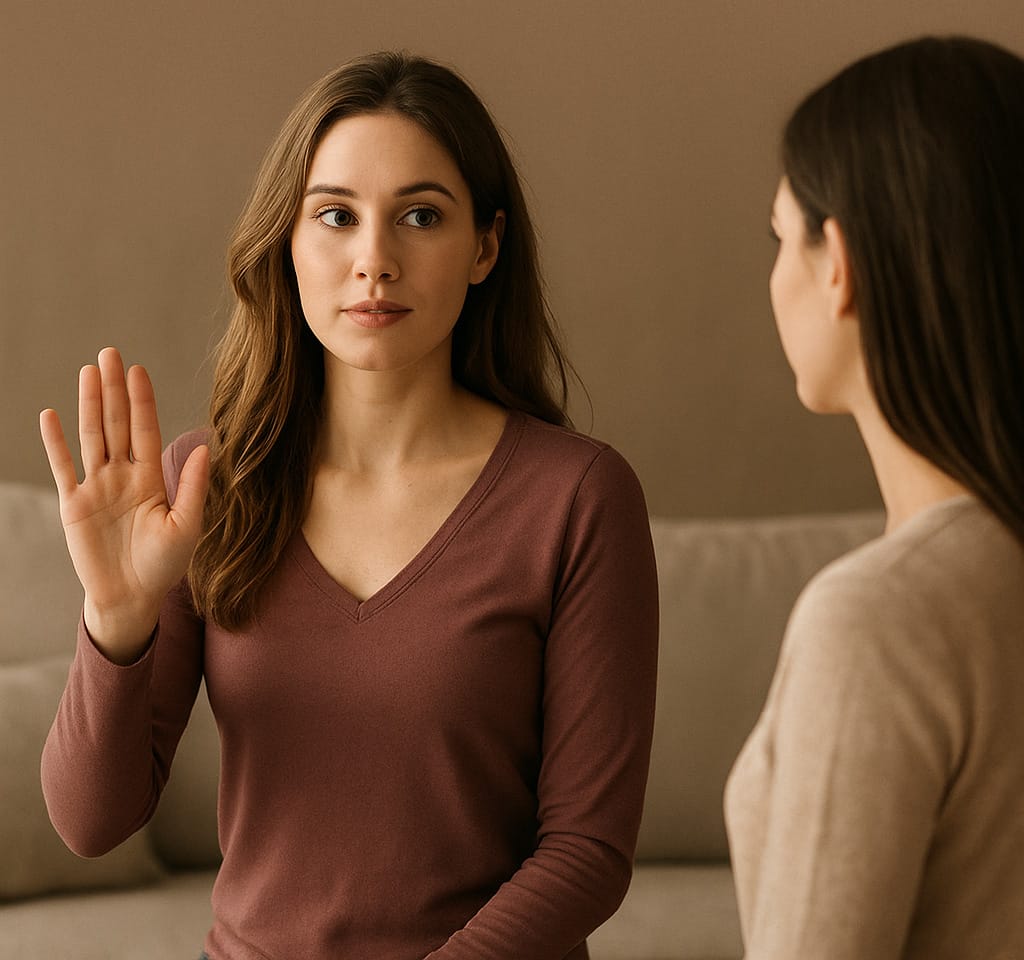
💪 Step 2: Communicate Clearly and Calmly
Setting boundaries doesn’t require anger or long explanations.
It’s about being clear, calm, and consistent.
Here’s how:
- Use “I” statements: “I can’t take this on right now.”
- Keep it short: “That doesn’t work for me.”
- Stay firm: “I understand, but my answer is still no.”
When practicing How to Set Boundaries, clarity is kindness — both to you and to others.
💖 Step 3: Practice Saying “No” Without Over-Explaining
If “no” feels too hard, start small. Try phrases like:
- “Not today, but thank you.”
- “That’s not something I can commit to right now.”
Each time you practice How to Set Boundaries, it becomes easier. Remember: “No” is a full sentence.
🧘 Step 4: Prioritize Your Energy
Think of your energy as a battery 🔋. Every “yes” drains it — every boundary protects it.
When you prioritize rest, self-care, and time for yourself, you’re not being lazy. You’re being intentional.
Use How to Set Boundaries to create space for things that truly matter — your passions, your health, and your happiness.
🌷 Step 5: Set Boundaries in Different Areas of Life
💼 Work Boundaries
- Don’t check emails after hours.
- Communicate your workload honestly.
- Take lunch breaks without guilt.
💑 Relationship Boundaries
- Say no to emotional over-dependence.
- Express your needs early, not after resentment builds.
- Avoid people who only take but never give.
🧡 Family Boundaries
- You’re allowed to disagree respectfully.
- You’re not obligated to explain every choice.
- It’s okay to limit time with draining relatives.
💬 Social Boundaries
- Mute group chats when you need mental space.
- Skip events that don’t serve your peace.
- Protect your weekends for recovery.
This is the true heart of How to Set Boundaries — building a life that reflects your priorities, not others’ expectations.
🌼 Step 6: Handle Pushback Gracefully
When you start learning How to Set Boundaries, not everyone will applaud.
Some people will test you — not because they’re bad, but because they benefited from your lack of limits.
Stay calm. Repeat your boundary without over-explaining.
Remember: people who truly care will adjust. Those who don’t, revealed themselves.
🌙 Step 7: Replace Guilt with Gratitude
Each time you honor your boundary, thank yourself 🌺.
Say: “I’m proud of protecting my peace.”
Guilt fades with practice, but self-respect grows stronger each time.
That’s the secret of How to Set Boundaries — it’s not just about saying no; it’s about saying yes to you.
🌞 Step 8: Build Confidence Through Repetition
Boundaries aren’t one-time acts — they’re habits.
The more you practice, the more natural it becomes.
Use affirmations like:
- “I have the right to protect my time.”
- “My peace matters.”
- “Saying no is a form of self-love.”
Keep reminding yourself that setting limits is healthy — not heartless.
🌺 Step 9: The Ripple Effect of Healthy Boundaries
When you learn How to Set Boundaries, your relationships change — for the better.
You attract respect, mutual effort, and understanding.
You stop feeling resentful, and you start feeling free.
Your peace will inspire others to do the same.
Recommended Reading:
Morning Habits That Boost Motivation for Women
Practical Scripts & Gentle Exercises to Practice How to Set Boundaries
Putting boundaries into words is often the hardest part — so let’s make it simple, honest, and gentle. Below are short, real-world scripts you can adapt and rehearse until they become second nature. Try saying them out loud in the mirror, or role-play with a friend. Rehearsal reduces the guilt and replaces it with calm confidence. ✨
When someone asks too much of your time:
- “I appreciate you thinking of me — I can’t take this on right now.”
- “I’m choosing to focus on a few priorities at the moment; I won’t be able to help this week.”
When a friend cancels plans last-minute often:
- “I value our time together. If plans change more than once, I’ll assume we’ll reschedule for a different week.”
- “I understand things come up — I’d love to plan something when it’s more certain.”
When family expects you to solve everything:
- “I care about you, but I can’t carry this on my own. Have you considered [suggested resource]? I can help with one step.”
- “I can’t be available around the clock, but I can check in every evening at 7.”
At work when asked to take on extra duties:
- “Thank you for trusting me with this. My current workload includes X; if this is a priority, can we reassign or extend another deadline?”
- “I’m not able to add this right now without affecting my other commitments. If it’s urgent, I can help find a colleague who has capacity.”
Micro-Practices to Reduce Guilt and Build Confidence
Use these daily mini-exercises to make boundary-setting feel less daunting and more habitual.
- The 10-Second Pause: Before answering an ask, take ten seconds to breathe and say, “Let me check and get back to you.” This creates space to decide rather than default to “yes.” 🧘♀️
- The One-Sentence Rule: Respond in one calm sentence. Short, clear replies reduce over-explaining and limit room for negotiation. For example: “I can’t, but thank you for asking.”
- Gratitude Reframe: After you set a boundary, silently name one thing you protected by saying “no” — your sleep, your focus, your sanity. Gratitude quickly replaces guilt.
- Boundary Buddy: Pair up with a friend to share one boundary you’ll practice each week. Support and accountability make it easier — and safer — to experiment.
- Boundary Journal: After a boundary interaction, jot down what felt right and what was hard. Note any shifts in others’ behavior over time. Small data points build big confidence.
How to Handle Emotional Reactions
People may feel surprised, upset, or defensive — and that’s okay. Their reaction is their process, not your responsibility. Hold your boundary with empathy: acknowledge their feeling without retracting your limit. For example, “I hear this is disappointing; I’m sorry you feel that way, but my answer still stands.” This keeps you compassionate yet firm. 🌸
Practice these scripts and micro-practices regularly. The more you use them, the more natural it becomes to protect your time, energy, and peace — and the less guilt will follow.
✨ Final Thoughts
Setting boundaries is not a wall — it’s a filter. It keeps out what drains you and lets in what nurtures you.
So, the next time guilt whispers, remember this: you’re not rejecting people — you’re protecting your peace.
If you’re ready to start practicing How to Set Boundaries today, begin with one small “no.” Each one builds strength, confidence, and calm. 🌷
For more empowering lifestyle and wellness guides, visit fembely.com 💖