
How Technology Is Transforming Skincare
future of skincare technology has moved from fanciful promise to everyday reality — and yet the most exciting chapter may still lie ahead. In this era of rapid scientific progress and consumer demand for smarter self-care, the future of skincare technology blends engineering, biology, and data to create targeted, effective, and more meaningful skin solutions. This article examines the devices and scientific advances already changing the field, explains what research has added to our understanding, and outlines the directions the industry is likely to take next. ✨
A quick orientation: why the future of skincare technology matters now
The intersection of wellness culture, longer lifespans, and digital health has accelerated investment and innovation in skin science. People no longer accept one-size-fits-all regimens; they expect systems that learn from their skin, respond to environmental inputs, and integrate seamlessly into daily life. The future of skincare technology is therefore not just about gadgets — it’s about reshaping how we evaluate, treat, and maintain skin health at scale. 💫
Recommended Reading:
Understanding Natural Beauty Concepts: A Modern Guide to Authentic Elegance
Where we are today: the devices and tools shaping the field
The current landscape already features a layered ecosystem of tools used in clinics, dermatology practices, and at home. These technologies form the foundation for the next wave of innovation.
Clinical and in-office innovations driving the future of skincare technology
Clinical-grade devices bring controlled, measurable interventions that extend far beyond topical creams. Today’s portfolio includes energy-based treatments that selectively target skin structures, diagnostic imaging that reads tissue conditions in real time, and delivery platforms that improve how active ingredients reach their targets. These solutions have raised standards for efficacy and safety, creating a scientific baseline for consumer products. 👩⚕️
At-home devices and consumer electronics in the future of skincare technology
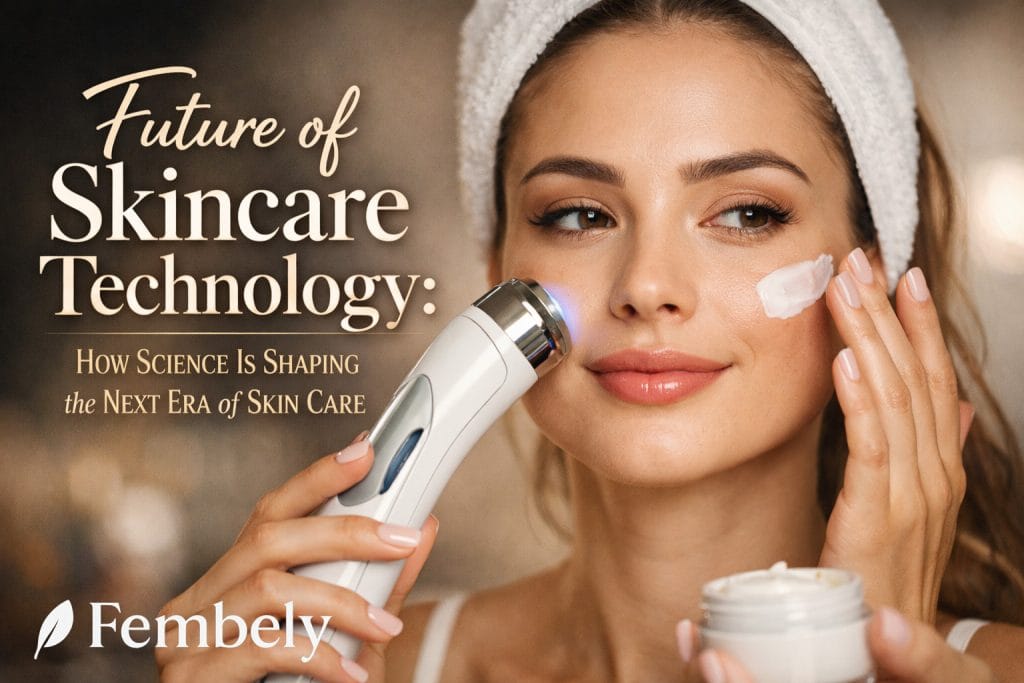
Home devices have matured from novelty items to legitimate skincare tools. Consumers now use light-based therapies, microcurrent tools, and sonic cleansers with measurable outcomes. The gap between professional and at-home care is narrowing — in many cases, home devices complement clinical regimens rather than replace them. This democratization of technology is a key theme in the future of skincare technology narrative. 🏠
Diagnostic tools and skin assessment platforms
Objective measurement is essential. Noninvasive scanners, multispectral imaging, and mobile-enabled diagnostic apps capture skin parameters (hydration, pigmentation, barrier integrity) and translate them into actionable recommendations. These diagnostics turn subjective impressions into data — a prerequisite for personalization and continuous improvement. 📊
What science has added: from molecules to mechanisms
Technological progress depends on scientific discovery. Over the past decade, researchers have deepened our understanding of skin biology and delivery science in ways that directly inform device and product design.
Material science and delivery systems
Novel biomaterials and carrier technologies have improved stability and penetration of active molecules. Nano-encapsulation, smart polymers, and bioadhesives enable controlled release and targeted delivery — reducing waste and enhancing effectiveness. These advances strengthen the bridge between topical actives and device-enabled delivery in the future of skincare technology ecosystem. 🧪
Microbiome research
The skin microbiome is no longer an abstract concept; it is a measurable ecosystem influencing barrier function, inflammation, and even visible aging. Interventions that modulate microbial communities — whether through prebiotic formulations or microbiome-friendly device settings — are now evidence-based strategies that shape product development and device programming. 🌿
Cellular and molecular diagnostics
Molecular assays, transcriptomic profiling, and biomarkers for inflammation or barrier disruption are translating into refined diagnostics. This shift from phenotype to molecular phenotype allows treatments to be matched more precisely to underlying causes rather than surface symptoms — a hallmark of what the future of skincare technology promises. 🔬
Data, AI, and personalization: the technological triad
Data capture and intelligent processing are the engines that turn devices and discoveries into personalized care.
AI-powered skin assessment and recommendation engines
Machine learning models trained on thousands of images and clinical outcomes can classify conditions, predict responses, and recommend regimens. AI helps parse complex variables — genetics, environment, lifestyle — to propose bespoke routines. As these systems improve, they enable a shift from generic advice to dynamic, evidence-driven plans. 🤖
The role of continuous monitoring
Wearable sensors and integrated apps allow continuous tracking of UV exposure, humidity, and behavior. This context-rich data enables adaptive interventions: for example, adjusting antioxidant delivery after high UV days. Continuous monitoring is a cornerstone capability when imagining the future of skincare technology as an ongoing, responsive service. ⏱️
Privacy, data quality, and ethical AI
With personalization comes responsibility. High-quality datasets, transparent algorithms, and robust privacy protections are essential. Ethical considerations — avoiding biased models, securing sensitive health data, and ensuring interpretability — will shape consumer trust and regulatory approval for AI-driven skin technologies. 🔐
Clinical-to-consumer convergence: hybrid care models
The fastest-moving innovations blur professional and consumer boundaries.
Hybrid treatment pathways
Patients increasingly experience blended journeys: an in-clinic procedure followed by a connected device and app-driven home maintenance plan. This continuity increases long-term efficacy and fosters adherence. The future of skincare technology will likely favor platforms rather than isolated products — ecosystems that combine consultation, in-office interventions, and at-home maintenance. 🔁
Teledermatology and remote supervision
Remote consultations and image-based triage expand access to care. Combined with device-derived metrics, telehealth can provide clinicians with reliable data to guide adjustments without in-person visits. This reduces friction and scales expertise beyond clinic walls. 🌐
Sustainability and ethical manufacturing
Technological advancement must marry responsibility.
Eco-conscious device design
As consumers demand greener products, device makers are rethinking materials, energy efficiency, and lifecycle impacts. Refillable cartridges, recyclable components, and repairable designs reduce environmental footprints. Responsible manufacturing will be a competitive differentiator in the future of skincare technology market. ♻️
Ingredient stewardship
Alongside devices, formulations are evolving to prioritize biocompatible, sustainably sourced actives. Delivery efficiency reduces ingredient waste, and longer-lasting device solutions can reduce overall material consumption compared with disposable product cycles. 🌱
Regulation, standards, and validation
Technologies that touch health will face scrutiny — and that’s a good thing for long-term credibility.
Clinical validation and evidence standards
Expect higher bars for claims. Controlled studies, standardized endpoints, and real-world evidence will become the norm for any device or platform promising medical or quasi-medical benefits. This rigor elevates the field and protects consumers. 📚
Regulatory pathways and international harmonization
Harmonized standards across regions will accelerate innovation and reduce duplication. Developers who design with regulatory compliance in mind — from safety testing to data governance — will scale more smoothly into global markets. 🌍
Recommended Reading:
Vitamins for Clear Skin Complexion
What to expect next: likely directions for the future of skincare technology
Combining the threads above, several concrete trends emerge that will define what comes next.
1. Deep personalization as the default
Generic routines will cede ground to dynamically tailored plans driven by diagnostics, AI, and continuous feedback. The future of skincare technology centers on individualized journeys that change with the user’s life and environment. 🎯
2. Convergence of hardware, software, and biology
Expect more integrated solutions where sensors, delivery systems, and algorithms work in concert. For example, a device might analyze skin hydration, release a measured dose of hyaluronic mimic, and report outcomes back to the app for iterative tuning. This systems approach amplifies efficacy. ⚙️
3. Noninvasive molecular interventions
Noninvasive methods to influence cellular pathways (light therapies that modulate cell signaling, ultrasound-enhanced peptide delivery) will advance from experimental to mainstream. These methods offer targeted benefits with minimal downtime, aligning with consumer preferences for gentle but effective options. ✨
4. Democratized clinical-grade care
High-performing technologies once confined to clinics will increasingly be safe and smart enough for home use under remote supervision, enabling broader access to advanced care while maintaining safety. 🩺
5. Emphasis on prevention and resilience
The focus will shift upstream: preventing damage (UV, pollution, oxidative stress) and strengthening skin resilience rather than merely correcting visible signs. Preventative algorithms and daily adaptive regimens will play a major role in this preventative paradigm. 🛡️
Practical guidance: how consumers should navigate the future of skincare technology
For readers eager to responsibly adopt new tech, these practical steps will help.
- Start with diagnostics: Use objective assessments (clinic or app-based) before investing in devices. 📋
- Prioritize validated solutions: Seek products with clinical data and transparent protocols. ✔️
- Look for interoperability: Choose devices and apps that integrate with other trusted systems to avoid siloed data. 🔗
- Consider lifecycle impacts: Favor refillable designs and brands that prioritize sustainability. 🌍
- Protect your data: Read privacy policies and prefer providers with clear data governance. 🔐
Risks, limitations, and realistic expectations
No technology is a panacea. Users should be wary of overhyped claims, incomplete evidence, and the one-size-fits-all pitch. Safety, proper usage, and realistic expectations matter: even the most sophisticated device cannot replace foundational skin health practices like sun protection, sleep, and nutrition. The future of skincare technology enhances care — it does not substitute for basic, evidence-based habits. ⚖️
Final thoughts — integrating technology thoughtfully into everyday beauty
The trajectory of innovation suggests a future where skincare is smarter, more personalized, and more integrated into overall health. Devices will become less obtrusive and more intelligent, diagnostics will guide precise action, and sustainability and ethics will frame progress. The future of skincare technology is ultimately about empowering individuals to care for their skin with clarity and confidence — using tools that are as thoughtful as they are effective. 🌟
Practical tips to get started today
- Begin with a professional assessment or a reliable diagnostic app.
- Adopt one validated device or platform at a time and track results over weeks.
- Keep routines simple: technology should simplify, not complicate.
- Prioritize sunscreen, sleep, and hydration — tech amplifies benefits when basics are solid. ☀️💧😴
For more in-depth, magazine-quality insights on beauty innovation and science-led wellness, explore our curated articles and features at https://fembely.com/. ✨