
Korean Outfit Ideas for Female
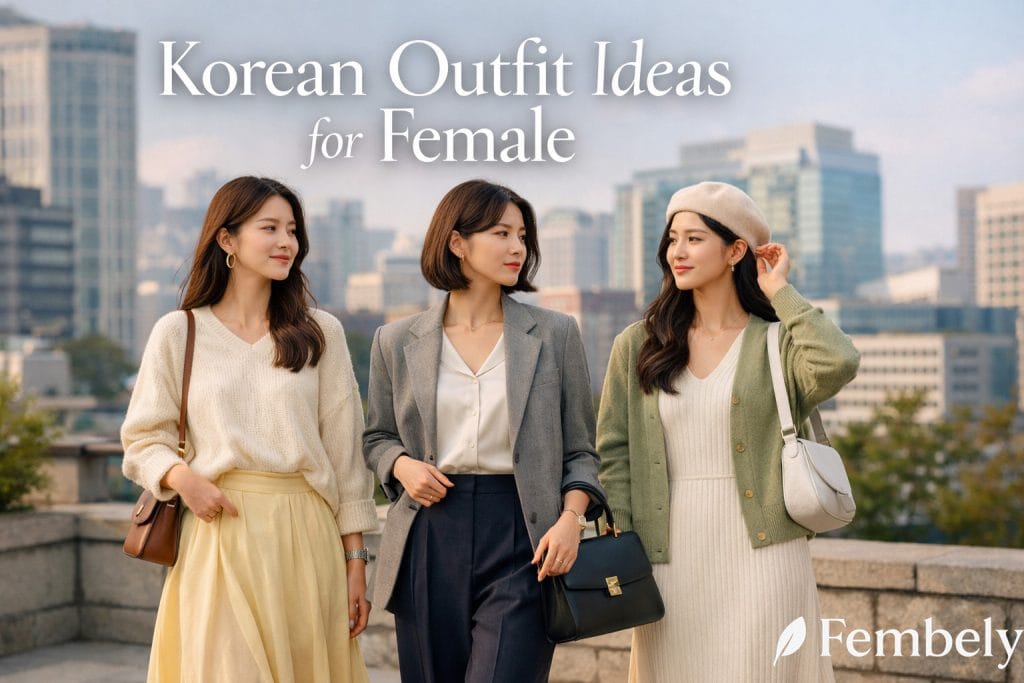
Modern Korean-Inspired Outfit Ideas for Women Korean Outfit Ideas for Female wardrobes have quietly reshaped how modern women think about everyday style — not through extravagance, but through intention. In Seoul-inspired dressing, clothes are never just clothes; they are mood-setters, confidence-builders, and subtle reflections of personality. The appeal lies in balance: softness paired with structure, ease paired with polish, romance grounded by practicality. This aesthetic doesn’t chase trends loudly — it lets them drift naturally into real life. What makes Korean outfit ideas for female style so compelling is how wearable it feels. These looks understand crowded commutes, long café afternoons, unpredictable weather, and the desire to feel put-together without looking overdone. It’s fashion that respects reality — and that’s exactly why it resonates. ✨✨✨ The Core Philosophy Behind Korean Outfit Ideas for Female Style At the heart of Korean outfit ideas for female fashion is restraint. Rather than stacking statement pieces, the focus is on harmony: silhouettes that skim rather than cling, colors that complement rather than compete, and details that reveal themselves slowly. This is why oversized tailoring coexists so effortlessly with delicate fabrics. A slightly loose blazer in soft beige over a cream knit top, paired with straight-leg trousers in muted gray, creates a look that feels intentional but never stiff. The secret isn’t boldness — it’s proportion. Color plays a major role here. Korean outfit ideas for female wardrobes often rely on thoughtful palettes such as: Ivory + Oatmeal + Soft Brown Dusty Pink + Warm Gray Sage Green + Off-White Navy + Milk Beige These combinations flatter a wide range of skin tones and photograph beautifully without feeling staged. ✨✨✨ Recommended Reading: Denim Pants Outfit Ideas with a Modern Twist Everyday Casual Looks That Feel Effortlessly Polished Casual in Korean outfit ideas for female fashion does not mean careless. Even the simplest looks are edited carefully. Think straight-cut jeans in light blue, a tucked-in ribbed knit top in cream, and minimalist loafers. Add a structured tote in tan or espresso brown, and the outfit suddenly feels elevated. Another classic combination: Oversized white shirt High-waisted black trousers Flat ballet shoes in soft nude This formula works because it respects movement. Nothing feels restrictive, yet everything feels intentional. Many women discover that once they adopt this approach, they stop chasing “statement outfits” and start building dependable, repeatable looks. ✨💫✨ Soft Feminine Outfits Without Looking Overly Sweet One of the most misunderstood elements of Korean outfit ideas for female style is femininity. It’s not about ruffles everywhere or exaggerated silhouettes. Instead, femininity is expressed through fabric choice, gentle drape, and quiet details. A flowing midi skirt in buttercream paired with a fitted knit top in pale lavender creates softness without fragility. Layered with a cropped cardigan in light gray, the look feels romantic but grounded. Another practical pairing: Pleated skirt in muted camel Fine-gauge sweater in ivory Ankle boots in warm brown This kind of femininity works in real life — for workdays, casual dinners, or unplanned errands — because it doesn’t demand perfection. ✨✨✨ Layering Techniques That Define Korean Outfit Ideas for Female Looks Layering is where Korean outfit ideas for female fashion truly shines. Not for warmth alone, but for visual depth. The key is lightness: thin layers that add dimension without bulk. A classic example: Fitted turtleneck in soft beige Sleeveless slip dress in charcoal gray Long wool coat in neutral taupe Another favorite approach: Basic white tee Knit vest in sage green Wide-leg trousers in off-white These layers allow outfits to evolve throughout the day. Remove a coat, add a scarf, swap shoes — the look adapts, not collapses. ✨✨✨ Office-Appropriate Korean Outfit Ideas for Female Professionals Workwear within Korean outfit ideas for female styling feels refreshingly humane. It avoids harsh tailoring while still commanding respect. Blazers are slightly oversized, trousers are fluid, and skirts move when you walk. A reliable office formula includes: Blazer in soft gray Silk-like blouse in ivory Straight trousers in deep navy For a softer approach: Midi skirt in warm beige Fine knit top in muted rose Low block heels in taupe These outfits signal competence without rigidity — a quality many women find empowering in professional settings. ✨💫✨ Seasonal Korean Outfit Ideas for Female Wardrobes Korean outfit ideas for female styling shifts subtly with the seasons rather than dramatically. Spring favors light layers and fresh tones: Mint green cardigans Cream skirts Pale denim Summer focuses on breathability: Linen trousers in sand Sleeveless blouses in soft white Lightweight dresses in sky blue Autumn embraces warmth: Chocolate brown knits Olive green skirts Camel coats Winter leans into texture: Wool coats in charcoal Knit dresses in oatmeal Boots in deep espresso The continuity across seasons keeps wardrobes cohesive rather than chaotic. ✨✨✨ Why Minimal Accessories Matter More Than You Think Accessories in Korean outfit ideas for female fashion never scream. They whisper. Small gold hoops, simple leather bags, understated shoes — each piece supports the outfit instead of stealing attention. A neutral outfit becomes memorable when paired with: A structured bag in deep burgundy Shoes in soft gray instead of black A delicate scarf in muted pattern These choices feel personal rather than performative. ✨✨✨ Recommended Reading: How to Style Minimalist Jewelry? Common Styling Mistakes — And What Works Instead Many women try Korean outfit ideas for female looks by copying silhouettes without understanding balance. Oversized everything can quickly feel sloppy. Soft colors without structure may look unfinished. What works instead is contrast: Loose trousers with a fitted top Soft fabrics anchored by sharp tailoring Neutral palettes punctuated by one deeper tone The goal is not imitation — it’s interpretation. ✨💫✨ How Korean Outfit Ideas for Female Style Builds Confidence Perhaps the most powerful aspect of Korean outfit ideas for female dressing is emotional. These outfits don’t demand attention — they create comfort. When clothes move with you, flatter without shouting, and feel considered, confidence follows naturally. Style becomes less about approval and more
How to Style Minimalist Jewelry?

The Art of Wearing Minimalist Jewelry How to Style Minimalist Jewelry? It’s a question that surfaces quietly in real wardrobes, not on mood boards. Minimalist jewelry has become a daily companion rather than a special-occasion accent, yet its very subtlety often creates uncertainty. When pieces are intentionally understated, the margin for error feels thinner. One wrong pairing, one extra detail, and the entire effect shifts from refined to forgettable—or worse, unfinished. Understanding how to style minimalist jewelry is less about rules and more about developing a visual instinct that aligns restraint with intention. Minimalist jewelry is not about absence; it’s about clarity. It reflects a desire for pieces that feel lived-in, thoughtful, and effortlessly relevant to real life. The challenge is that most styling advice treats minimalism as a formula, when in reality it’s a conversation between body, clothing, mood, and context. ✨ Understanding the Philosophy Behind Minimalist Jewelry Before addressing how to style minimalist jewelry, it’s essential to understand what gives these pieces their quiet power. Minimalist jewelry is designed to support rather than dominate. It doesn’t ask for attention—it earns it slowly. This philosophy resonates with women navigating full lives: careers, relationships, transitions, and moments that require adaptability. A delicate chain, a thin ring, or a barely-there earring often feels more aligned with daily realities than bold, declarative pieces. What’s often overlooked is that minimalist jewelry works best when it mirrors intentional choices elsewhere. When everything is “simple” without thought, the result can feel flat. Minimalism only reads as sophisticated when it’s deliberate. 💫 Why Minimalist Jewelry Often Looks Better in Real Life Than in Photos Social imagery has unintentionally complicated how to style minimalist jewelry. On screens, subtle pieces can disappear, making them seem ineffective. In reality, they interact with movement, light, and proximity. A thin bracelet may seem invisible in a photo, but across a table or during a gesture, it creates softness. A fine necklace resting at the collarbone can shift the entire tone of an outfit when someone leans in to speak. These micro-moments are where minimalist jewelry excels. Understanding this helps recalibrate expectations. Minimalist jewelry isn’t meant to “pop” instantly—it’s meant to reveal itself gradually. How to Style Minimalist Jewelry With Everyday Clothing One of the most practical questions around how to style minimalist jewelry involves daily outfits. The key is not to elevate basics artificially, but to let jewelry echo their simplicity. A plain knit, a crisp shirt, or a neutral dress offers negative space. Minimalist jewelry fills that space quietly. The mistake many make is adding too many pieces at once, hoping to compensate for their subtlety. Instead, fewer elements create stronger cohesion. Think in terms of balance rather than decoration. If clothing feels structured, jewelry can soften it. If clothing feels fluid, jewelry can add definition. ✨ Recommended Reading: Accessorizing Tips for Women, Done Right The Subtle Art of Proportion and Scale Minimalist jewelry demands sensitivity to proportion. Small pieces don’t mean insignificant ones. A single thin necklace can feel substantial if it sits at the right length. A narrow ring can command attention when worn intentionally. When considering how to style minimalist jewelry, observe scale in relation to your body and clothing silhouettes. Oversized garments often benefit from slightly longer chains or stacked rings. More fitted looks pair beautifully with shorter necklaces or fine studs. Ignoring proportion is one of the most common reasons minimalist jewelry feels “lost.” Layering Without Losing the Minimalist Spirit Layering is often misunderstood as excess. In minimalist styling, layering is about rhythm. Two necklaces of different lengths create a visual pause. Three delicate rings worn across both hands can feel lighter than one oversized piece. The secret to layering minimalist jewelry lies in variation that’s almost imperceptible: slightly different textures, barely different lengths, subtle shifts in thickness. Uniformity kills interest; chaos kills elegance. When learning how to style minimalist jewelry through layering, restraint is your most valuable tool. 💫 When Minimalist Jewelry Meets Color and Texture Minimalist jewelry thrives in neutral environments, but it doesn’t require them. In fact, it often shines brightest against unexpected textures: soft knits, natural fabrics, or fluid silhouettes. Color doesn’t compete with minimalist jewelry when it’s intentional. A muted palette allows jewelry to act as punctuation. Even deeper tones can create contrast that highlights delicacy. Avoid pairing minimalist jewelry with overly busy patterns. The jewelry won’t disappear—it will simply feel irrelevant. The Role of Skin Tone and Natural Contrast Styling minimalist jewelry is deeply personal because it interacts directly with skin. Fine pieces respond to natural contrast: complexion, hair color, and even freckles. This is why one person’s “barely there” necklace can look luminous, while on someone else it feels invisible. Understanding how to style minimalist jewelry includes recognizing which tones and finishes complement your natural coloring. This isn’t about rigid rules—it’s about awareness. Jewelry should feel like an extension, not an overlay. ✨ Minimalist Jewelry in Professional Settings Work environments demand nuance. Minimalist jewelry often feels like the safest option, but safety doesn’t mean invisibility. In professional settings, minimalist jewelry works best when it signals polish without distraction. A pair of refined earrings or a single bracelet can subtly reinforce confidence. Too many pieces, even delicate ones, can feel unsettled in structured environments. The goal isn’t to impress—it’s to align. Understanding how to style minimalist jewelry at work means choosing pieces that feel intentional rather than habitual. Evening Wear and the Quiet Impact of Minimalist Jewelry Evening styling challenges the assumption that more is better. Minimalist jewelry can feel daring at night precisely because it resists excess. A simple dress paired with restrained jewelry creates tension—a visual calm that draws attention. Instead of competing with lighting or movement, minimalist jewelry grounds the look. This approach often feels more modern and self-assured than overt glamour. 💫 Common Mistakes That Undermine Minimalist Jewelry Many women struggle with how to style minimalist jewelry because of small but impactful missteps. Wearing pieces without considering neckline. Layering without
Natural Face Cream for Daily Use+making and consuming
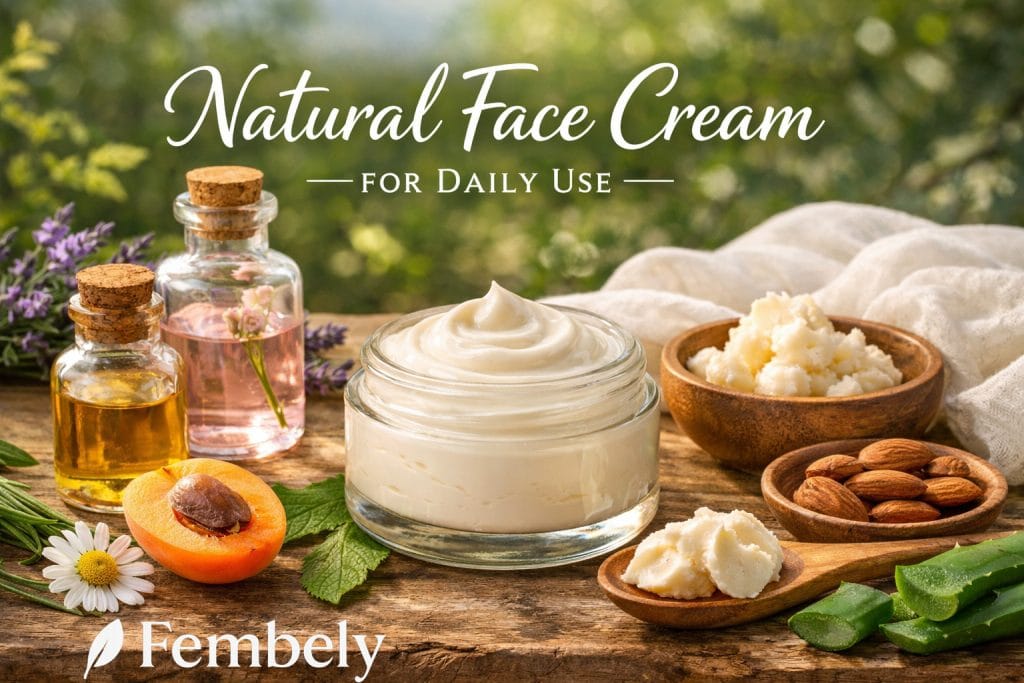
A Daily-Use Natural Face Cream for Healthy Skin Natural face cream for daily use has quietly become one of those phrases women return to again and again — usually after disappointment. After formulas that promise glow but deliver congestion, after textures that feel luxurious at night yet rebellious by morning, after routines that look beautiful on paper but collapse in real life. The desire isn’t for perfection; it’s for something that behaves well on ordinary skin, on ordinary days, under ordinary stress. And increasingly, that desire turns inward — toward creams made not in factories, but at kitchen counters, shaped by intuition, simplicity, and lived understanding of skin. ✨ Why Daily Face Creams So Often Fail in Real Life Most daily creams fail not because they’re ineffective, but because they’re misaligned with how skin actually functions day to day. Skin is not static. It changes with sleep quality, hormones, weather, emotional stress, and even how often we touch our face without realizing it. A cream that works beautifully for a week may suddenly feel heavy, insufficient, or irritating the next. What’s often overlooked is that daily use demands balance above all else. A natural face cream for daily use must hydrate without suffocating, protect without coating, and nourish without overwhelming. Many commercial formulas overshoot — too many active ingredients layered together, each competing for dominance on skin that simply wants calm consistency. This is where natural, minimal formulations begin to make sense — not as a trend, but as a practical response to skin fatigue. 💫 The Quiet Appeal of Making Your Own Cream There’s a particular confidence that comes from knowing exactly what touches your skin every morning. Making a natural face cream for daily use is rarely about perfection or control; it’s about clarity. When skin reacts, you know why. When it thrives, you understand what helped. Women who turn to homemade creams often do so after subtle frustrations: tightness by midday, makeup sitting oddly on textured skin, or that recurring feeling that a product works around the skin rather than with it. A handmade cream, when thoughtfully composed, can adapt more naturally to these realities. But the success lies not in piling ingredients together — it lies in restraint. Recommended Reading: Future of Skincare Technology ✨ The Foundation: Natural Ingredients That Truly Work Daily A natural face cream for daily use should be built around ingredients that support the skin barrier rather than challenge it. These are ingredients chosen not for drama, but for reliability. Plant Oils That Mimic Skin’s Own Language The most effective daily oils are those that resemble the skin’s natural lipids. They absorb quietly, leaving skin comfortable rather than shiny. Jojoba oil behaves almost like skin’s own sebum, making it suitable even when skin feels unpredictable. Sweet almond oil offers softness without heaviness, especially appreciated by skin that feels dull or tight. Apricot kernel oil brings light nourishment and a subtle glow, without lingering residue. Used thoughtfully, these oils help the cream disappear into skin rather than sit on top of it. 💫 Botanical Butters for Structure and Comfort A daily cream needs body — not thickness, but presence. Shea butter, when used sparingly, provides long-lasting comfort without clogging. Cocoa butter, in very small amounts, adds structure and barrier support, especially in colder months. The key is proportion. Too much butter turns a daily cream into a night balm, which quickly becomes impractical for daytime life. ✨ Hydration Agents That Don’t Overpromise Hydration is often misunderstood. It’s not about flooding the skin with moisture, but about helping it hold onto what it already has. Aloe vera gel offers immediate relief and light hydration, particularly after cleansing. Vegetable glycerin, when diluted correctly, supports moisture retention without stickiness. Rose water or chamomile water can replace plain water, adding subtle soothing benefits. These ingredients work quietly in the background — exactly what daily skin needs. Recommended Reading: how to achieve natural glowing skin? 💫 Essential Oils: The Gentle Whisper, Not the Shout A natural face cream for daily use does not need strong scent or aggressive essential oils. If included at all, they should be present in almost symbolic amounts. Lavender can support balance and comfort. Frankincense adds a refined, grounding quality often appreciated by mature skin. Chamomile offers softness, especially for skin that flushes easily. Used incorrectly, essential oils disrupt daily use. Used wisely, they disappear into the experience rather than define it. ✨ How a Natural Face Cream for Daily Use Comes Together Making a cream is less about following rigid steps and more about understanding texture and intention. The goal is a formula that feels natural to reach for every morning — not something that demands effort or precision once finished. The Conceptual Formula A balanced daily cream typically contains: A water phase for hydration An oil phase for nourishment A natural emulsifier to bind them A preservative suitable for natural formulas Optional botanical accents This structure mirrors how professional creams are made, but without unnecessary complexity. 💫 The Making Process (Simplified, Human, Realistic) The water phase — often aloe vera gel combined with floral water — is gently warmed. Separately, oils and butters are melted together until unified. Once both phases reach similar warmth, they’re slowly combined and blended until they transform into a cream. This moment is always revealing. Too thin, and it feels unfinished. Too thick, and it loses its daily elegance. Adjustments are subtle — a little more water, a whisper of oil — until the texture feels instinctively right. A preservative is added not as a luxury, but as a necessity. Daily creams encounter air, fingers, bathrooms, and fluctuating temperatures. Preservation protects both the cream and the skin. Once cooled, the cream settles into itself — often becoming smoother and more cohesive after a few hours. ✨ How to Use a Natural Face Cream for Daily Use Without Sabotaging It Even the best cream can fail if used without awareness. Daily use demands rhythm
how to achieve natural glowing skin?

Secrets to Radiant, Naturally Glowing Skin how to achieve natural glowing skin is not a mystery reserved for genetics, expensive treatments, or a perfectly curated routine that never survives real life. It is, instead, a quiet accumulation of habits, compromises, small frictions, and decisions made on ordinary days—often when no one is watching. The idea of glowing skin has been flattened by oversimplified advice: drink more water, apply this serum, avoid sugar, sleep eight hours. None of that is wrong. Yet most women already know these rules—and still feel disconnected from the reflection in the mirror. The disconnect isn’t ignorance. It’s that common advice rarely accounts for how life actually unfolds: stress that doesn’t resolve neatly, routines interrupted by work or family, hormonal shifts, emotional eating, climate changes, or skin that reacts unpredictably. To understand how to achieve natural glowing skin in a way that lasts, the conversation needs to move away from perfection and toward realism. Toward what works on imperfect weeks, in transitional seasons, during exhaustion, and in moments when motivation is thin. ✨ The Myth of Effortless Glow—and Why It Keeps Failing Glowing skin is often presented as something effortless once you “get it right.” That framing alone sets most women up for quiet disappointment. Skin is not a static surface; it responds constantly to sleep quality, cortisol levels, digestion, hydration patterns, touch, climate, and even self-perception. The problem with most glow-centric advice is that it treats skin like a checklist project rather than a living system. When glow is reduced to products or rules, women either overdo everything or give up entirely. In reality, how to achieve natural glowing skin has far more to do with reducing friction than adding steps. Less forcing. Less chasing. More consistency in small, unglamorous behaviors. ✨ Recommended Reading: Understanding Natural Beauty Concepts Glow Begins Where Most Routines Never Look: The Nervous System One of the least discussed aspects of skin health is the nervous system. Skin is deeply responsive to stress signals—tight deadlines, emotional labor, unresolved tension. These don’t always show up as breakouts; sometimes they manifest as dullness, uneven tone, or a persistent “tired” look that no product seems to fix. Many women notice their skin looks better on vacation not because of better products, but because their nervous system finally downshifts. Fewer cortisol spikes mean improved circulation, better barrier function, and more efficient cellular repair. This is where common advice fails. Telling someone to “reduce stress” without addressing how stress actually shows up day to day is useless. What works instead are micro-adjustments: Creating short decompression rituals between tasks Avoiding scrolling immediately after waking Allowing skin-care moments to be slow rather than rushed These shifts don’t sound cosmetic, but they directly influence how to achieve natural glowing skin over time. 💫 Cleansing Isn’t About Being Clean—It’s About Respecting Skin Rhythm Cleansing is often treated as a purity ritual: remove everything, reset completely, start fresh. But skin does not benefit from constant resetting. Over-cleansing disrupts the lipid barrier, leading to dehydration and reactive dullness that’s often mistaken for “bad skin.” Many women unintentionally dull their glow by: Using water that’s too hot Cleansing too frequently Treating oil as something to eliminate Skin glow thrives on balance, not austerity. Gentle, consistent cleansing that preserves the skin’s natural oils allows light to reflect more evenly—one of the core visual elements of glow. Understanding how to achieve natural glowing skin here means accepting that skin does not need to feel squeaky clean to be healthy. Comfort, softness, and flexibility are better indicators than tightness. ✨ The Overlooked Habit That Dulls Skin Faster Than Sugar Ever Could Sugar gets blamed for everything, but one of the most consistent glow disruptors is chronic under-fueling during the day followed by late, heavy eating at night. This pattern—common among busy women—creates blood sugar instability that reflects directly on the skin. Skin cells rely on steady nutrient delivery. Long gaps between meals, skipped breakfasts, or caffeine-only mornings create internal stress signals. By evening, digestion is compromised, sleep quality drops, and the skin misses its repair window. Advice that simply says “eat healthy” misses this nuance. Timing matters. Consistency matters. Predictability matters. Women who see improvements in glow often haven’t changed what they eat as much as how regularly they eat. This subtle shift supports the body systems that ultimately answer the question of how to achieve natural glowing skin. 💫 Why Exfoliation Is Often Doing the Opposite of What You Want Exfoliation promises instant brightness, and sometimes it delivers. But over time, frequent exfoliation thins the skin’s protective layer, making it more reactive to light, pollution, and temperature changes. The result? Temporary shine followed by long-term dullness. Glow is not about stripping away layers; it’s about strengthening what’s already there. Skin that holds moisture evenly reflects light better than skin that’s constantly inflamed beneath the surface. This is why many women notice their glow improves when they exfoliate less, not more. Allowing skin cycles to complete naturally supports the subtle luminosity that lasts beyond a single morning. ✨ Hydration Is Not Just Water—and That’s Where Advice Gets Lazy “Drink more water” is easy advice. It’s also incomplete. Hydration that reaches the skin depends on electrolyte balance, digestive health, and cellular absorption. Excessive water without minerals can actually flush out what skin needs to stay supple. The women who successfully learn how to achieve natural glowing skin often shift away from volume-based hydration toward quality and timing. Hydrating earlier in the day, pairing fluids with meals, and supporting mineral balance subtly improve skin plumpness and tone. Glow appears when skin is evenly hydrated—not bloated, not depleted. 💫 The Quiet Impact of Touch, Pressure, and Daily Contact Skin responds to how it’s treated physically. Harsh towel drying, aggressive rubbing, constant face-touching, or sleeping positions that compress the face all contribute to micro-inflammation. Glow fades when skin is repeatedly stressed, even gently. This is why some women notice improvement simply by changing pillowcases more frequently, patting
Current Popular Lip Colors
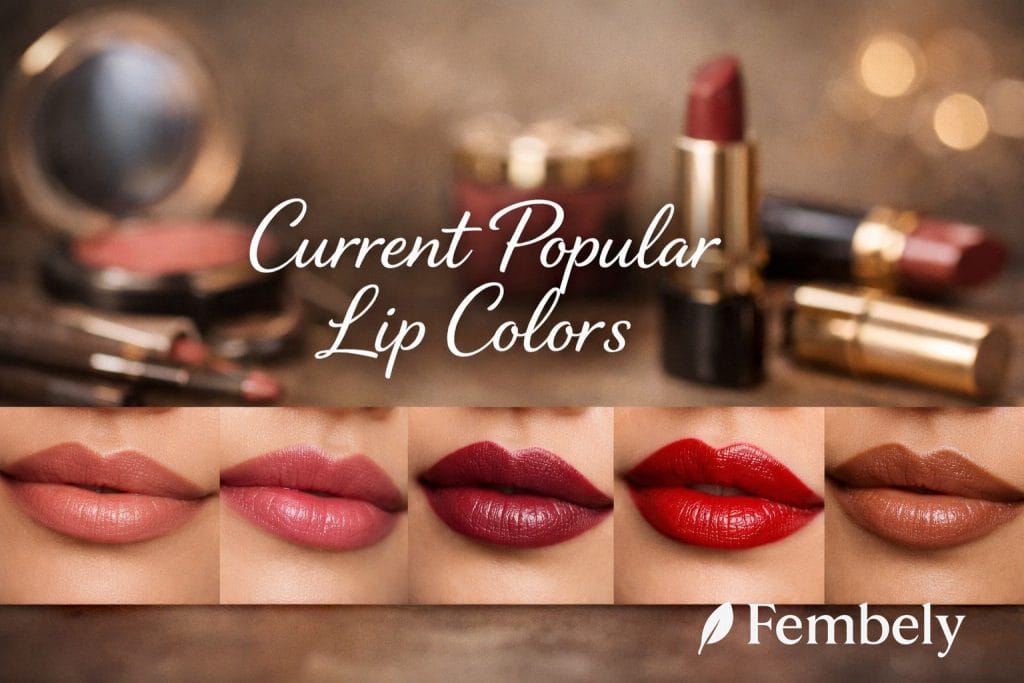
The Lip Colors That Took Over Modern Beauty Current Popular Lip Colors — the phrase itself sets the tone for a moment in beauty where women are gravitating toward shades that feel personal, expressive, and mood-driven rather than trend-chasing. Current popular lip colors reflect more than seasonal palettes; they echo the way women navigate identity, confidence, and subtle reinvention. In conversations, at brunch tables, in office elevators, and in quiet routines before stepping out the door, these choices reveal emotional undercurrents. Women don’t simply select a shade — they select how loudly or softly they want to speak that day. And that is why exploring current popular lip colors has become a window into modern femininity. ✨ Shades That Mirror Real-Life Mood Shifts The evolving world of current popular lip colors is deeply intertwined with daily rhythms. Women rarely commit to a single category; they rotate as life demands. One morning, a gentle muted rose feels right because the day requires calmness. Another afternoon, a deep berry offers a power surge for a difficult meeting. The shift isn’t about beauty for beauty’s sake — it is about emotional calibration. In many real-world settings, the lip color that looks perfect in theory can fall apart in practice. A rich tone that appears stunning in a mirror might suddenly feel overwhelming under fluorescent workplace lighting. A subtle hue selected for simplicity might fade too quickly during a long day of conversation. These micro-frictions shape which shades emerge as truly current popular lip colors rather than passing whims. 💫 The Rise of Soft Statement Shades Women who once gravitated toward high-drama tones every day are now embracing nuanced pigments that still make a point. These soft statement shades appear effortless yet polished — a balance many real-life routines demand. Modern Rose Variations Among current popular lip colors, rose remains timeless — but not the classic uniform version. What surfaces today is a spectrum of rose-based tones adjusted with brown, mauve, or berry undertones. Women choose them because they rarely clash with natural lip pigmentation and adapt well across lighting situations. A modern rose works on a grocery run as easily as it does during dinner plans. It doesn’t dominate the face; it partners with it. Why This Shade Fits Real Life Women often prefer tones that survive unpredictability. Modern rose shades handle: The softness needed for minimal-makeup mornings The sophistication required for work calls The romantic warmth suitable for evening outings This flexibility explains why modern rose is consistently mentioned among the most current popular lip colors across various age groups. 💫 Recommended Reading: Reindeer Makeup: The Ultimate Festive Beauty Guide Tones Inspired by Natural Flush Another defining category of current popular lip colors comes from shades that echo the natural flush of lips after a brisk walk or a light sip of something warm. These colors fall between nude and pink but carry more life than traditional neutrals. Lived-In Nude The shift away from flat, beige nudes is noticeable. Women increasingly seek lived-in nude tones — hues that look like an elevated version of their natural lip color rather than a separate layer. The Problem with Classic Nudes Classic nudes often fail in daily use because: They can wash out certain complexions They require heavy eye makeup to balance the look They lose charm as the day progresses A lived-in nude, however, maintains softness without sacrificing dimension. It enhances the lips without overtaking the face, making it a standout among current popular lip colors that get repeated, day after day, in real routines. ✨ Deep Tones for Controlled Boldness While softer tones dominate many mornings, deeper pigments still hold strong among current popular lip colors — not for drama alone but for intentional expression. These are shades women choose when they want presence without needing to say much. Berry with Depth Modern berry colors avoid the overly bright finishes that were once common. Instead, they lean into muted richness. These tones work beautifully during transitional seasons, when women naturally shift from bright looks to ones with more emotional weight. The Emotional Appeal Women often reach for berries when: They want to feel grounded They need an effortless boost of sophistication They crave something evening-friendly yet wearable A deep berry has a way of transforming mood — an effect that keeps it highly relevant among current popular lip colors. 💫 Earth-Toned Browns Returning with a Softer Edge One of the most intriguing changes in current popular lip colors is the return of brown-based tones. But the comeback isn’t a repeat of earlier eras. Today’s browns have more softness, warmth, and dimension. Soft Chocolate and Caramel Variants These shades flatter naturally warm lip tones and offer a sense of grounded confidence. They suit women who prefer understated elegance over vibrancy. Why They’ve Become Daily Favorites Real-world wearability drives their popularity: They create definition without harshness They adapt well to various fashion choices They look intentional without feeling heavy Women appreciate that brown tones rarely require a full-face look to feel complete. They stand on their own — a subtle strength reflected in today’s most current popular lip colors. ✨ The Everyday Red That Women Actually Wear Red lips used to symbolize glamour, confidence, or big nights out. Now, a new wave of everyday red has emerged among current popular lip colors — practical, approachable, and emotionally grounding. Soft Blue-Based or Muted Warm Reds Instead of high-gloss, intense reds, women reach for softer variants. They still carry the power of red but without demanding a full look to support them. Why Common Red Advice Fails Beauty advice often suggests “finding your perfect red,” but in reality: Reds that look perfect in theory don’t always survive daily lighting They can be too loud for quiet days They highlight lip dryness quickly The modern everyday red solves these problems with softer finishes, making it genuinely wearable across different lifestyles. 💫 Luxurious Plum and Wine Tones Another category rising within current popular lip colors is
Sustainable Haircare Routine Women

Sustainable Beauty Hair Rituals for Women sustainable haircare routine women are no longer approaching beauty as a checklist of trends to copy but as a set of thoughtful decisions shaped by lifestyle, time, values, and reality. The shift toward sustainability in haircare isn’t driven by perfection or purity. It’s driven by fatigue — fatigue from excess, from waste, from routines that promise transformation but quietly drain time, money, and energy. In modern life, sustainability becomes less about doing more and more about doing enough, consistently, without compromise. A sustainable approach to haircare does not ask women to abandon pleasure, elegance, or self-expression. Instead, it asks sharper questions: What truly supports hair health over years, not weeks? What routines survive busy mornings, hormonal shifts, climate changes, and evolving priorities? The answers rarely sit in extremes. They live in moderation, awareness, and small, repeatable choices that quietly compound. ✨💫 Rethinking What “Sustainable” Actually Means for Hair Sustainability in haircare is often misunderstood as restriction — fewer washes, fewer products, fewer choices. In reality, a sustainable haircare routine women can realistically maintain is about alignment. Alignment between hair type and climate. Between routine and schedule. Between values and behavior. Many women attempt rigid eco-inspired routines only to abandon them weeks later. Not because sustainability doesn’t work — but because the routine ignores friction points like time pressure, styling expectations at work, or unpredictable hair texture from one week to the next. True sustainability adapts. It allows flexibility without excess. It accepts that hair doesn’t behave the same in winter as it does in summer, or during high-stress periods versus calmer seasons. A sustainable routine adjusts without restarting from zero every time life shifts. The Quiet Cost of Overconsumption in Haircare Haircare excess rarely announces itself loudly. It accumulates silently through half-used bottles, impulse purchases, and routines that grow longer without becoming better. Many women recognize the pattern: buying something new because the old routine feels stale, not because it stopped working. This cycle doesn’t just affect the environment. It creates mental clutter. Too many products lead to inconsistent use, diluted results, and a sense of constant dissatisfaction. Hair becomes something to fix instead of something to maintain. A sustainable haircare routine women trust is simplified, not stripped down. It removes redundancy rather than pleasure. The goal isn’t minimalism for its own sake, but clarity — knowing exactly why each step exists. ✨💫 Why “One-Size-Fits-All” Advice Fails Women’s Hair Generic haircare advice often assumes consistency: consistent texture, consistent climate, consistent lifestyle. Real hair lives far from those assumptions. Hormonal cycles, stress levels, water quality, and even wardrobe choices affect how hair behaves. This is where many sustainable routines fail. They are built on ideals instead of observation. Women are told to wash less without accounting for scalp sensitivity. To air-dry without considering hair density. To avoid heat without acknowledging professional or social expectations. A sustainable haircare routine women actually sustain respects context. It allows strategic heat use instead of rigid avoidance. It encourages mindful washing rather than arbitrary schedules. Sustainability is not rigidity; it’s responsiveness. Building a Sustainable Foundation Without Starting Over The most effective sustainable routines are layered onto existing habits rather than replacing them entirely. Sudden overhauls often collapse under real-world pressure. Gradual refinement sticks. Start by identifying what already works. If your hair responds well to a certain washing rhythm, sustainability does not require disruption. Instead, refinement may come from adjusting quantities, improving application technique, or reducing unnecessary steps between wash days. Hair health improves not from novelty but from consistency. A sustainable haircare routine women return to week after week relies on familiarity. It feels intuitive, not experimental. ✨💫 Recommended Reading: Natural Ways to Slow Early Aging in Women The Small Choices That Quietly Define a Sustainable Haircare Routine Women Keep Many routines fail not because they are unsustainable in theory, but because they ignore the small, physical moments where hair is most vulnerable. These overlooked details are where a sustainable haircare routine women can actually maintain begins to feel supportive rather than demanding. ✨💫 The Brushes That Protect Hair — And the Ones That Undermine It Most long-term damage doesn’t happen during washing. It happens during detangling. In a sustainable haircare routine women rely on, the brush is not a styling tool — it is a protection tool. Brushes that offer flexibility, gentle resistance, and movement allow hair to release knots instead of fighting them. Overly rigid brushes tend to: Pull rather than guide Create tension at weak points along the strand Turn small knots into breakage over time A sustainable routine quietly avoids anything that treats hair as something to be forced into submission. Detangling Timing: Why When You Brush Matters More Than What You Use Hair is at its most fragile when wet. This is the moment where impatience causes the most damage, even in otherwise careful routines. A sustainable haircare routine women can trust prioritizes: Letting hair settle slightly before detangling Working gradually from ends upward Accepting that speed often comes at the cost of strength Gentleness here is not indulgence — it is efficiency measured over months, not minutes. ✨💫 Towels, Friction, and the Damage No One Talks About Aggressive towel-drying creates more stress than most styling tools. The friction may feel harmless in the moment, but repeated daily, it erodes the outer structure of the hair. Within a sustainable haircare routine women benefit from: Pressing moisture out rather than rubbing Reducing unnecessary friction at the ends Treating wet hair as something to be supported, not hurried Less friction means fewer split ends, less tangling, and fewer interventions later. Styling Tools and the Myth of Total Avoidance Completely eliminating styling tools is rarely realistic. A sustainable haircare routine women actually follow does not demand perfection — it demands intention. Instead of daily reliance, sustainable routines: Reserve heat for moments that truly require polish Allow hair to rest between styling sessions Choose styles that age gracefully rather than collapse quickly Sustainability lives
How to Prevent Premature Aging in Women Naturally?
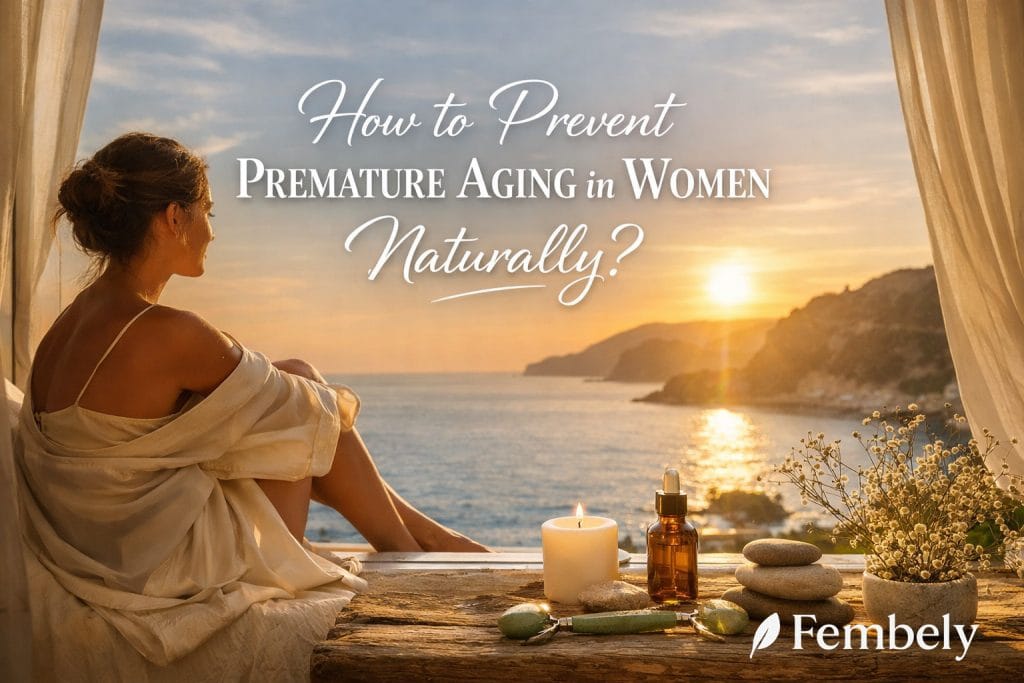
Natural Ways to Slow Early Aging in Women How to prevent premature aging in women naturally is no longer a niche concern whispered about in wellness circles; it has become a quiet, collective question many women carry as they move through increasingly demanding lives. Long before fine lines appear or energy subtly shifts, there is often a feeling — that the body is responding faster to stress, that recovery takes longer, that glow feels harder to access than it once did. Premature aging rarely arrives dramatically. It shows up in small, cumulative ways that reflect lifestyle pressure more than time itself. Rather than chasing youth as an aesthetic goal, the more sustainable conversation is about preserving vitality, elasticity, and internal balance — naturally, realistically, and without extremes. This approach does not promise to freeze time. It focuses on slowing unnecessary wear while supporting the body’s innate intelligence, which is far more powerful than most quick-fix solutions suggest. ✨✨✨ Understanding What Premature Aging Really Looks Like in Women Premature aging in women is often misunderstood as something purely visible. In reality, it frequently begins beneath the surface — in hormonal rhythm, inflammatory response, sleep quality, and stress adaptation. Many women notice the signs long before they appear in the mirror: chronic fatigue that feels disproportionate, skin that reacts more easily, weight that redistributes without clear cause, or a sense of being “run down” despite healthy intentions. These shifts are not failures of discipline. They are signals that modern female life — balancing emotional labor, professional pressure, caregiving roles, and self-expectation — places unique strain on the nervous and endocrine systems. Understanding how to prevent premature aging in women naturally starts with recognizing that aging is accelerated more by chronic stress patterns than by birthdays. 💫💫💫 The Natural Skin Habits That Quietly Slow Aging When conversations turn to how to prevent premature aging in women naturally, skincare is often reduced to products and steps. Yet the habits that truly preserve skin youthfulness are quieter, slower, and far less dramatic. They live in daily behavior rather than bathroom shelves. Skin ages faster when it is constantly overstimulated — over-cleansed, over-treated, over-exposed. Many women unknowingly create this stress through aggressive routines meant to “fix” aging, only to find sensitivity, dryness, and dullness increasing over time. What works instead is restraint paired with consistency. Skin thrives when it is protected, nourished, and given time to regenerate. Gentle cleansing, minimal manipulation, and respect for the skin barrier allow natural repair mechanisms to function — a foundational principle in how to prevent premature aging in women naturally. Another often-overlooked habit is how skin is touched. Rushing through routines, tugging at the face, or applying pressure mindlessly contributes to loss of elasticity over years. Calm, intentional movements — especially around the eyes and jaw — support circulation without strain. Equally important is exposure balance. Sun avoidance is unrealistic, but chronic overexposure accelerates aging dramatically. Seeking shade intuitively, protecting the face during peak hours, and supporting skin recovery afterward creates resilience rather than fear. Ultimately, youthful skin is rarely the result of complexity. It is the outcome of daily respect — allowing the skin to function as living tissue, not a problem to be corrected. ✨✨✨ A Simple Daily Natural Skincare Routine to Support Youthful Skin This routine is intentionally minimal. It supports how to prevent premature aging in women naturally without overwhelming the skin or demanding perfection. Morning: Protection and Calm Gentle cleansing with lukewarm water Avoid harsh cleansers in the morning. The goal is freshness, not stripping natural oils produced overnight. Light natural hydration Use a simple, non-irritating natural moisturizer to support the skin barrier rather than overwhelm it. Facial massage (1–2 minutes) Soft upward movements with clean hands encourage circulation and reduce morning puffiness without pulling the skin. Mindful sun awareness Protect the face naturally through shade, hats, or timing outdoor exposure when possible. 💫💫💫 Evening: Repair and Recovery Gentle cleansing to remove the day Remove impurities slowly, avoiding scrubbing or repeated washing. Natural nourishment A small amount of lightweight natural oil or barrier-supporting cream helps seal in moisture and support overnight repair. Neck and jaw care These areas often show aging first. Apply products downward and outward with minimal pressure. Early wind-down Skin repair is deeply tied to sleep timing. Earlier rest supports collagen renewal more than any topical solution. ✨✨✨ Weekly Skin-Reset Habits One gentle exfoliation at most Over-exfoliation accelerates aging rather than preventing it. Intentional skin rest days Some evenings require nothing beyond cleansing and hydration — simplicity allows recovery. Hydration from within Skin elasticity depends on internal hydration patterns more than surface products. Why Common Anti-Aging Advice Often Falls Short Much of the advice surrounding aging assumes women have unlimited time, energy, and consistency. Rigid routines, extreme dietary rules, or perfectionist wellness schedules often collapse under real life. When they fail, the narrative quietly blames the woman rather than the strategy. What works instead is flexibility grounded in biology. The body responds better to supportive patterns than to control. Sustainable prevention respects fluctuations — menstrual cycles, emotional seasons, workload peaks — rather than demanding the same output every day. This reframing alone can dramatically change outcomes when exploring how to prevent premature aging in women naturally. ✨✨✨ The Nervous System: The Overlooked Key to Youth Preservation One of the most underestimated factors in premature aging is nervous system overload. A woman can eat well and exercise regularly yet still age faster if her body remains in a constant state of alert. Subtle signs often go unnoticed: shallow breathing, difficulty fully relaxing, waking up tired despite enough sleep, or feeling “wired but exhausted.” Over time, this state affects skin regeneration, collagen integrity, digestion, and hormonal balance. Preventing premature aging naturally requires creating daily moments of physiological safety — not just mental calm. Slow breathing, unhurried meals, gentle transitions between tasks, and even moments of silence recalibrate internal systems far more effectively than intensity-based solutions. 💫💫💫 Recommended Reading: The
Preparing for a Healthy Postpartum
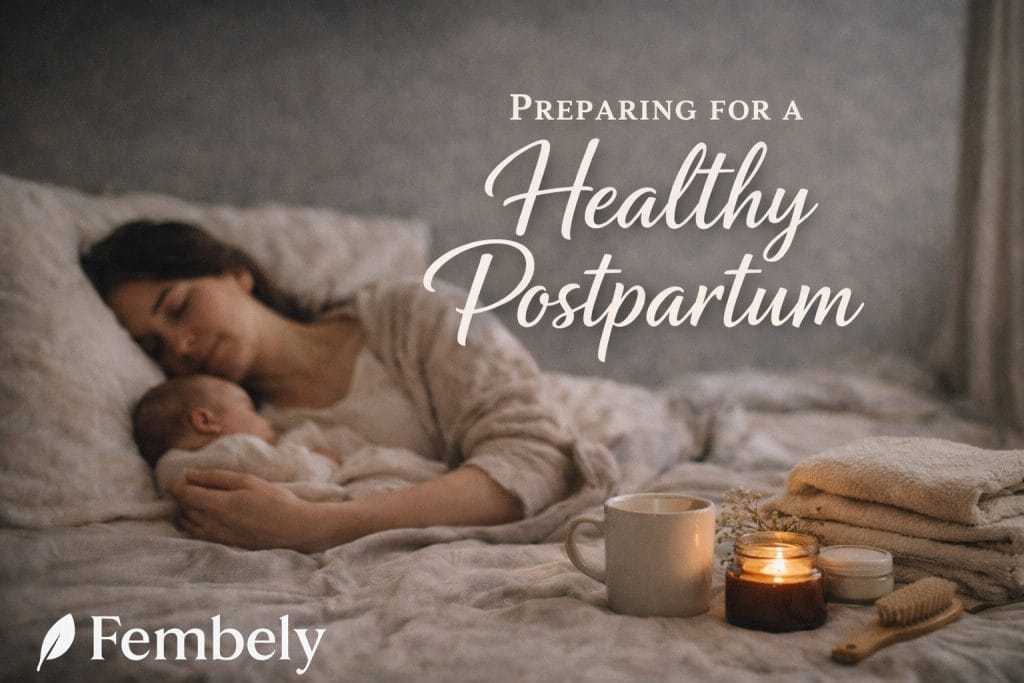
Setting the Stage for Postpartum Well-Being Preparing for a healthy postpartum is often discussed as a checklist—meals prepared, nursery arranged, schedules imagined—but the lived reality unfolds far more quietly and complexly. The postpartum season is not a recovery window that behaves on command. It is a gradual re-entry into one’s body, identity, and emotional landscape, shaped as much by expectations as by biology. Women who feel grounded during this phase are rarely those who “did everything right,” but those who made space for uncertainty, recalibration, and grace before the baby ever arrived. The conversation around preparing for a healthy postpartum deserves more honesty and nuance. Beneath the surface of pastel advice lies a period defined by contradiction: strength paired with vulnerability, joy interrupted by exhaustion, confidence dissolving into self-doubt and reforming again. Understanding this reality ahead of time does not remove difficulty, but it softens its edges ✨. Reframing the Idea of “Preparation” Preparing for a healthy postpartum is not about controlling outcomes. It is about adjusting expectations so the experience feels navigable rather than disorienting. Many women enter postpartum believing readiness means physical healing alone. In practice, the emotional terrain often proves more demanding than the physical recovery itself. Postpartum rarely mirrors prenatal fantasies. Energy fluctuates unpredictably. Confidence arrives in fragments. Even women surrounded by support can feel unexpectedly alone at night, when the world quiets and responsibility feels absolute. Preparing emotionally means acknowledging these moments without framing them as personal failure. This reframing allows preparation to become internal as well as external—less about perfection, more about adaptability.✨ The Body After Birth: Beyond the Narrative of “Bouncing Back” The cultural expectation of rapid recovery often undermines preparing for a healthy postpartum. Bodies do not simply return; they reorganize. Muscles behave differently. Hormonal shifts alter temperature regulation, sleep rhythms, and emotional responses. The disconnect between expectation and reality can create unnecessary tension. Many women notice sensations they were not warned about—lingering pressure, unfamiliar aches, changes in balance or breathing. These experiences are not anomalies; they are signs of transition. Preparation here means understanding that healing is not linear and does not adhere to visual timelines. A healthier postpartum mindset recognizes the body as active, not broken. Recovery is happening even on days when it feels invisible 💫. Recommended Reading: Signs of Pregnancy After Having a Period Emotional Undercurrents No One Schedules For Preparing for a healthy postpartum also requires emotional literacy. Postpartum emotions are rarely singular. Gratitude can coexist with grief for one’s former autonomy. Love can feel overwhelming rather than immediately blissful. These contradictions often surprise women more than physical discomfort. Common advice emphasizes positivity, but emotional resilience comes from acknowledging complexity. Women who feel emotionally steadier postpartum are often those who anticipated ambivalence and normalized it. They do not interpret difficult emotions as signs that something is wrong, but as part of psychological adjustment. Quiet moments—during feeding, pacing a dim room, or sitting alone while the baby sleeps—can magnify unprocessed feelings. Anticipating this inward shift is an overlooked element of preparing for a healthy postpartum.✨ Support Systems: The Difference Between Presence and Performance Support is frequently discussed in terms of quantity rather than quality. Preparing for a healthy postpartum is not about having many people around; it is about having the right dynamics in place. Well-meaning support can still feel intrusive, especially when it comes with opinions or expectations. The most stabilizing support respects autonomy. It notices without hovering, helps without instructing, and listens without correcting. Many women discover postpartum that they need to renegotiate boundaries they assumed were understood. Preparation means identifying who feels grounding rather than draining—and allowing those relationships to take precedence without guilt.✨ Rest That Actually Restores Postpartum rest is often misunderstood as sleep alone. In reality, rest includes mental quiet, emotional safety, and the absence of performance. Preparing for a healthy postpartum means redefining rest as restoration, not inactivity. Women frequently report feeling exhausted despite sleeping whenever possible. This fatigue often stems from vigilance—the constant awareness of responsibility. Small rituals that signal safety and continuity can ease this mental load: familiar lighting in the evening, predictable rhythms, or moments of silence without stimulation. True postpartum rest does not require optimization. It requires permission. ✨ Nourishment as Emotional Stability, Not Control Food during postpartum is often framed in extremes: strict nutritional rules or complete disregard. Preparing for a healthy postpartum involves viewing nourishment as emotional regulation as much as physical fuel. Appetite fluctuates. Preferences shift. Comfort matters. Meals that feel grounding—warm, familiar, unhurried—often provide more stability than rigid plans. Women who approach postpartum nourishment with flexibility tend to feel more emotionally balanced, because food becomes supportive rather than another metric to manage. Preparation here lies in mindset, not menus. ✨ Identity Shifts That Begin Quietly One of the least discussed aspects of preparing for a healthy postpartum is identity transition. This shift does not announce itself; it unfolds subtly. Women often feel “in between”—no longer who they were, not yet who they are becoming. This liminal state can feel unsettling, especially for those accustomed to clarity and competence. Moments of self-doubt may arise even in women who felt confident during pregnancy. Preparation means knowing that this questioning is transitional, not permanent. Allowing identity to evolve without urgency reduces internal pressure and supports emotional health. ✨ Why Common Advice Often Misses the Mark Much postpartum advice fails because it assumes consistency. Real life is fragmented. A strategy that works one week may feel impossible the next. Preparing for a healthy postpartum involves expecting inconsistency rather than resisting it. Rigid routines often collapse under sleep disruption. Strict expectations around productivity or emotional response can amplify frustration. What works instead is responsiveness—adjusting daily expectations based on capacity rather than ideals. This adaptability is a skill worth cultivating before postpartum begins. ✨ The Role of Environment in Emotional Regulation Physical surroundings subtly shape postpartum experience. Light, sound, and visual calm can influence emotional regulation more than anticipated. Preparing for a healthy postpartum
Impact of Social Media on Child Development

The Influence of Social Platforms on Childhood Development Impact of social media on child development is no longer a distant concern discussed in abstract terms—it is a lived reality unfolding quietly in homes, classrooms, and even playgrounds. The first exposure often happens earlier than many parents expect: a borrowed phone at dinner, a tablet used to calm restlessness, a short video meant to entertain but lingering far longer than intended. What follows is rarely dramatic or immediate. Instead, it is subtle, cumulative, and deeply woven into how children learn to see themselves, relate to others, and interpret the world around them. What makes the impact of social media on child development so complex is that it resists simple conclusions. It is neither entirely harmful nor wholly beneficial. Its influence shifts depending on age, personality, family dynamics, emotional maturity, and the invisible pressures of modern life. The challenge lies not in banning or embracing it blindly, but in understanding where its quiet influence reshapes growth in ways we often notice only when patterns are already formed. ✨💫 The Early Years: When the Digital World Arrives Before Language In early childhood, development is driven by sensory exploration, repetition, and real-world feedback. Facial expressions, tone of voice, physical play, and unstructured boredom all play a role in shaping emotional regulation and cognitive flexibility. The impact of social media on child development at this stage often enters indirectly—through short-form videos, algorithm-driven content, and fast-paced visual stimulation. What tends to be overlooked is how this type of content alters a child’s tolerance for stillness. When entertainment arrives instantly, without effort or imagination, moments of quiet can feel uncomfortable rather than restorative. Children may struggle to engage deeply with slower activities like drawing, building, or listening to stories without visual reinforcement. This is not a failure of discipline, but a predictable response to overstimulation. Parents often notice this as irritability or restlessness rather than a developmental shift. The connection becomes clear only later, when attention feels fragmented and frustration surfaces quickly in offline situations. ✨💫 Attention, Focus, and the Cost of Constant Stimulation One of the most discussed aspects of the impact of social media on child development is attention span. Yet the issue is not simply that children “can’t focus anymore.” It is that their brains are adapting to a reward system built on immediacy, novelty, and endless scrolling. Social platforms are designed to deliver small bursts of satisfaction at irregular intervals. For a developing brain, this creates an expectation that engagement should always feel stimulating. In classrooms or conversations where rewards are delayed—understanding a concept, resolving a conflict, completing a task—motivation can fade more quickly. This does not mean children lose the ability to concentrate entirely. Instead, focus becomes conditional. They may concentrate intensely on digital content while struggling with tasks that require patience, effort, or emotional resilience. The contradiction is confusing for adults and often misinterpreted as laziness or lack of discipline. ✨💫 Recommended Reading: All About Parenting: A Complete, Practical Guide Emotional Development in a World of Curated Feelings Emotional intelligence develops through lived interaction: misreading a friend’s tone, repairing misunderstandings, learning empathy through shared experience. The impact of social media on child development becomes more visible as children begin comparing their inner world with carefully curated digital realities. Even at a young age, children pick up on patterns—who is admired, what gets attention, which emotions are celebrated and which are ignored. Online spaces often reward confidence, humor, beauty, or bold expression, while vulnerability and uncertainty remain hidden. Over time, children may internalize the idea that certain feelings should be performed and others concealed. This can create emotional dissonance. A child who feels sad, anxious, or left out may believe something is wrong with them because those emotions are rarely reflected back in the content they consume. Emotional literacy becomes distorted, shaped more by observation than experience. ✨💫 Identity Formation and the Pressure to Be Seen As children move into later childhood and early adolescence, identity becomes fluid and exploratory. This is where the impact of social media on child development intersects sharply with self-image. Digital platforms offer a stage, an audience, and metrics of validation—likes, comments, followers—that can subtly redefine self-worth. The issue is not exposure alone, but timing. When identity is still forming, external validation can feel like proof of existence. Children may begin adjusting behavior, appearance, or opinions to align with what receives approval online. Authenticity becomes negotiable. Offline, this can show up as heightened sensitivity to criticism, fear of standing out, or reluctance to try new things without reassurance. The digital self begins to compete with the real one, and the boundary between expression and performance blurs. ✨💫 Social Skills in the Age of Digital Interaction Social media often promises connection, yet the impact of social media on child development includes a paradox: increased communication paired with reduced depth. Online interaction removes many social cues—body language, pauses, tone shifts—that help children learn empathy and conflict resolution. When disagreements occur online, they are easier to avoid, delete, or escalate without repair. Children may miss opportunities to practice uncomfortable but necessary skills: apologizing, negotiating, reading emotional nuance. These gaps rarely appear dramatic but can influence friendships over time. In group settings, some children become observers rather than participants, more comfortable watching than engaging. Others may feel socially overwhelmed, navigating both offline dynamics and the invisible hierarchy of online presence simultaneously. ✨💫 Sleep, Regulation, and the Hidden Ripple Effects Sleep is foundational to emotional regulation, learning, and physical growth. The impact of social media on child development often shows up quietly through disrupted routines rather than obvious behavioral changes. Late-night scrolling, even passive consumption, keeps the brain alert and delays the transition into rest. Beyond sleep deprivation, there is the issue of emotional carryover. Content consumed before bedtime—whether exciting, distressing, or socially charged—lingers in the nervous system. Children may wake feeling unsettled without understanding why. This can affect mood, impulse control, and resilience the following day, creating a
eco friendly living ideas for women
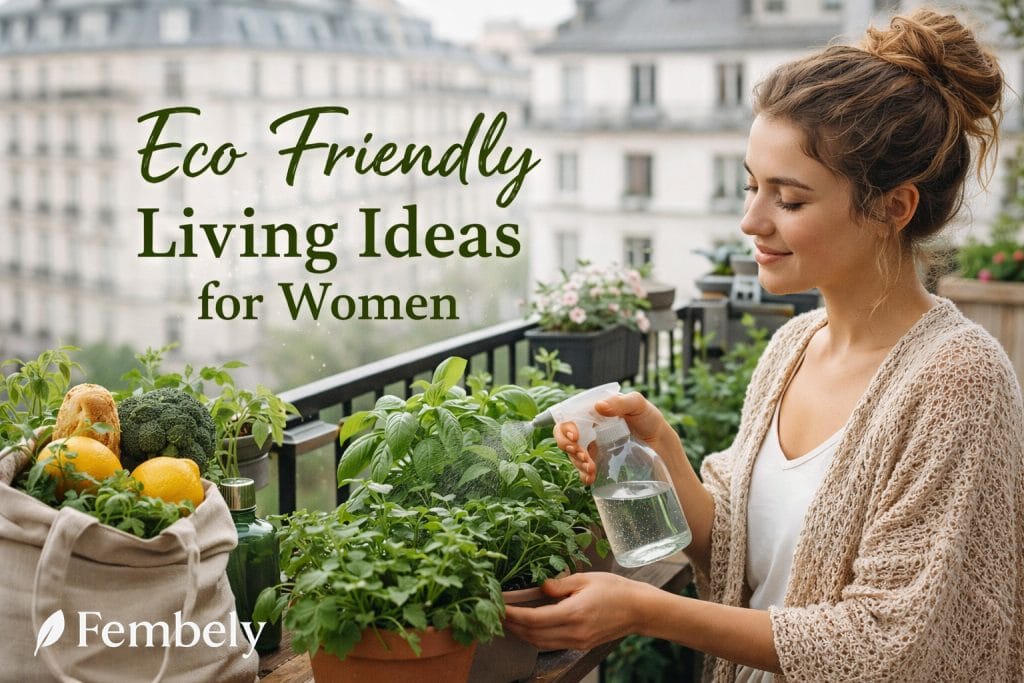
Sustainable Lifestyle Inspiration for Modern Women eco friendly living ideas for women have quietly shifted from being a niche lifestyle choice to an emotional, cultural, and deeply personal response to modern life. It often begins with a subtle discomfort — the feeling that consumption has become automatic, that daily routines generate more waste than meaning, that convenience sometimes comes at the cost of inner alignment. For many women, this awareness doesn’t arrive through grand revelations, but through small, persistent questions that surface during ordinary moments: shopping bags piling up, closets overflowing, kitchens producing more waste than nourishment. What makes eco friendly living ideas for women so compelling today is not the promise of perfection, but the invitation to live more deliberately. Sustainability, when viewed through a female lens, is rarely about extremes. It is about harmony — between care and practicality, values and reality, aspiration and daily life. ✨💫 Why Eco-Friendly Living Feels Different for Women Women often experience sustainability as an extension of care — for their bodies, their homes, their families, and their future selves. Eco friendly living ideas for women are shaped by invisible labor, emotional responsibility, and the mental load that accompanies everyday decision-making. From managing households to navigating social expectations, women are constantly balancing choices. Sustainability adds another layer, sometimes welcomed, sometimes overwhelming. The pressure to “do it all right” can quickly turn conscious living into quiet guilt. This is where many well-intentioned efforts collapse. What works instead is reframing eco friendly living ideas for women as adaptive rather than absolute. It is not about eliminating impact, but about reducing friction — choosing better where possible, forgiving imperfection where necessary. The Myth of the Perfect Sustainable Woman One of the most damaging narratives surrounding eco friendly living ideas for women is the image of flawlessness: zero waste kitchens, capsule wardrobes, pristine routines. In reality, most women navigate messy schedules, fluctuating energy, and competing priorities. This myth creates paralysis. When sustainability feels like an all-or-nothing identity, many women disengage entirely. They assume that if they cannot do everything, doing something is pointless. In lived reality, meaningful change often comes from selective consistency. A woman may reduce waste in her kitchen but still rely on convenience elsewhere. She may invest in fewer clothes but not eliminate shopping altogether. These contradictions are not failures — they are reflections of real life. ✨💫 Rethinking Consumption Through Emotional Awareness Eco friendly living ideas for women become more sustainable when emotional drivers are acknowledged. Many purchases are not about need, but about reassurance, reward, or relief. A stressful day often ends with impulsive spending. A busy season invites convenience over consideration. Sustainable living does not ask women to suppress these impulses, but to understand them. Pausing before consumption — not to judge, but to notice — often changes behavior organically. The question shifts from “Is this eco-friendly?” to “What am I actually seeking right now?” When emotional needs are addressed directly, material consumption often softens on its own. Recommended Reading: How to Remove Stains from Clothes? Sustainable Fashion Without the Moral Weight Fashion is one of the most emotionally charged spaces for eco friendly living ideas for women. Clothing is identity, expression, confidence, and comfort — not just fabric. Attempts to moralize fashion choices often backfire, creating shame rather than change. A more realistic approach begins with awareness rather than restriction. Understanding how often clothes are worn, why certain pieces remain untouched, and what triggers impulse buys creates clarity. Many women discover they are not shopping too much — they are shopping without intention. Eco friendly living ideas for women in fashion work best when style is honored. Choosing longevity over trends, fit over volume, and emotional satisfaction over novelty naturally reduces waste without erasing pleasure. ✨💫 The Quiet Power of Slowing the Home Home life is where eco friendly living ideas for women are most consistently practiced — often invisibly. From cleaning routines to food choices, sustainability unfolds in small, repetitive actions. Many women feel pressure to overhaul their homes overnight. In practice, gradual shifts are more effective. Replacing disposable habits slowly, rethinking storage, and reducing clutter one category at a time creates momentum without burnout. Interestingly, many women report that eco-friendly homes feel calmer. Fewer objects mean fewer decisions. Fewer chemicals mean fewer sensory overloads. Sustainability becomes less about saving the planet and more about preserving personal energy. Food Choices That Respect Real Life Food is deeply personal, cultural, and emotional. Eco friendly living ideas for women often collide with family preferences, time constraints, and budget realities in the kitchen. Rather than chasing idealized eating patterns, sustainable food habits grow from flexibility. Planning meals loosely, reducing food waste gradually, and honoring hunger signals make eco-conscious choices feel supportive rather than restrictive. Many women find that sustainability in food is less about what is added and more about what is wasted less. Using what is already available, cooking with intention, and embracing simplicity often create both environmental and emotional nourishment. ✨💫 Beauty, Self-Care, and Conscious Choices Self-care is frequently misunderstood in sustainability conversations. Eco friendly living ideas for women should never imply self-denial. Beauty rituals are often acts of grounding, confidence, and emotional regulation. The shift comes when routines are simplified rather than abandoned. Using fewer products more consistently, finishing what is owned, and choosing formulations that feel gentle rather than excessive creates alignment. Sustainability in beauty becomes less about labels and more about relationship — how products are used, respected, and integrated into daily life without excess. Recommended Reading: digital detox for family well being Emotional Sustainability: The Missing Conversation One of the most overlooked eco friendly living ideas for women is emotional sustainability. Burnout, overstimulation, and constant productivity undermine any long-term lifestyle shift. Women often overextend themselves in the name of care — for families, communities, and ideals. Sustainable living cannot thrive in exhaustion. Rest, boundaries, and self-compassion are foundational, not optional. When women protect their energy, they make clearer choices. Sustainability becomes