
Daily Habits to Improve Your Mental Health
Small Daily Practices That Support Emotional Well-Being Daily Habits to Improve Your Mental Health – In a world that constantly asks us to perform, give, hustle, and stay “on,” mental health can easily slip to the background. But your emotional well-being is not a luxury—it’s a foundation for how you think, feel, care, love, mother, work, create, and experience life. Establishing Daily Habits to Improve Your Mental Health is one of the most powerful gifts you can give yourself. Small, consistent actions—done every day—shape your nervous system, your hormone balance, your sleep, your energy, and ultimately, your happiness. If you’ve ever felt overwhelmed, disconnected, drained, or just not like yourself, the answer often lies not in big dramatic changes—but in how you move through your days. Tiny habits, repeated over time, compound. Healing doesn’t happen in a moment. It happens in moments repeated. ✨ What Does It Mean to Practice Daily Habits to Improve Your Mental Health? Practicing Daily Habits to Improve Your Mental Health means creating routines that support emotional balance, regulate your stress response, and nurture your mind and body. It’s not about being perfect or having a flawless routine; it’s about intentionally choosing behaviors that refuel rather than drain you. This can include how you breathe, how you speak to yourself, how you begin and end your day, where your attention goes, and the way you nourish your body. When we talk about mental wellness, we’re not only referring to anxiety, sadness, irritability, or burnout—but also your sense of joy, your ability to connect with others, your level of creativity, and how calmly you can respond to challenges. Your habits shape all of these things. Think of your mental health like a battery. Every action you take either charges or drains it. And now—let’s walk through the most powerful Daily Habits to Improve Your Mental Health that you can start today. Recommended Reading: The Power of Positive Thinking for Women 1. Begin Your Mornings Slowly and Intentionally The way you begin your day sets the emotional tone for everything that follows. Instead of checking messages, scrolling social media, or jumping immediately into responsibilities, give yourself a slow and grounded start. A powerful Daily Habit to Improve Your Mental Health is morning mindfulness. This can look like: Sitting quietly and breathing for 2 minutes Stretching your body before touching your phone Drinking water before coffee ☀️ Letting sunlight in your room to wake your nervous system gently When you allow your mind to arrive into the day with calmness, you reduce cortisol spikes, support hormone balance, and increase emotional stability throughout the day. 2. Eat Foods That Support Mood Stability Food affects mood more than most people realize. Your brain is physically built from the nutrients you consume. To maintain emotional balance, you need: Omega-3 fatty acids B vitamins Amino acids (protein!) Magnesium-rich foods Healthy fats that stabilize hormones This is one of the Daily Habits to Improve Your Mental Health that works from the inside out. Choose whole, colorful foods, stable meals, and steady blood sugar rhythms. Skipping meals or living on caffeine creates anxiety-like symptoms, mood swings, and exhaustion. 3. Move Your Body Regularly—Even Gently Movement is medicine—but it doesn’t have to look like intense workouts. Walking, stretching, yoga, slow pilates, dancing in your living room—all signal your brain to release serotonin, dopamine, and endorphins. And here’s the secret: Consistency beats intensity. If you want to practice Daily Habits to Improve Your Mental Health, don’t aim for perfection. Aim for 20 minutes of gentle, enjoyable movement each day. Let it feel nurturing, not punishing. 4. Practice Emotional Check-Ins Throughout the Day Emotional regulation isn’t natural for everyone—it’s learned. And you can learn it too. Set reminders to pause and ask: “What am I feeling right now?” “Where do I feel it in my body?” “What do I need in this moment?” This habit strengthens the connection between your body and mind. This is one of the Daily Habits to Improve Your Mental Health that increases emotional intelligence, reduces overwhelm, and teaches you to soothe yourself instead of suppressing your feelings. 5. Protect Your Energy With Digital & Social Boundaries Your nervous system was never designed to absorb constant notifications, endless scrolling, and nonstop access to others. A huge part of Daily Habits to Improve Your Mental Health is intentionally choosing where your attention goes. Try: Setting screen-free times Muting nonessential notifications Limiting doom-scrolling Choosing real-life presence over digital overload Protecting your attention protects your peace. 🌿 6. Create Routines of Rest and Pleasure Mental health is not only about coping—it’s about experiencing joy. Add at least one tiny thing every day that brings softness: Lighting a candle in the evening Doing your skincare slowly Listening to gentle music Making tea with intention Wearing clothes that feel good on your skin Pleasure is not indulgent—it is regulating and healing. This is a deeply feminine approach to Daily Habits to Improve Your Mental Health. Recommended Reading: Signs of Hormonal Imbalance and How to Fix It 7. Strengthen Your Support Circle Humans are wired for connection. Isolation intensifies stress. Call a friend. Text someone you care about. Join a community, a group, a circle. Share your inner world with at least one trusted person. This habit reminds your nervous system: You are supported. You are not alone. 8. Get Sunlight and Fresh Air Every Single Day Your brain’s clock—your circadian rhythm—controls your hormones, energy, sleep, and mood. The simplest way to balance it is morning sunlight + fresh air. This is one of the Daily Habits to Improve Your Mental Health that shows results quickly: You sleep better You feel more energized You regulate emotional highs and lows Even 10 minutes outside makes a difference. 9. Journal to Process Your Thoughts Journaling is not just writing—it is emotional release. It allows your brain to unload instead of carrying everything inside. Prompts to start: What am I holding onto emotionally right now? What is something I need
Signs of Hormonal Imbalance and How to Fix It?
Common Hormonal Disruptions and Ways to Restore Balance Signs of Hormonal Imbalance – Hormones are the silent leaders behind almost everything happening in our bodies. From mood and metabolism to sleep, skin health, energy levels, and fertility, hormones influence how we feel and how we show up in everyday life. When these hormones fall out of balance, the body begins to send subtle (and sometimes loud) signals. Recognizing the Signs of Hormonal Imbalance early can help women take corrective steps before the symptoms escalate into chronic issues. This guide breaks down the most common Signs of Hormonal Imbalance, why they happen, and realistic, supportive ways to restore balance with everyday lifestyle habits, nourishment, and emotional care. ✨ What Are Hormones and Why Do They Matter? Hormones are chemical messengers produced by various glands in the endocrine system. They travel through the bloodstream and regulate processes like: Metabolism Reproductive cycles Sleep Mood and emotional regulation Skin and hair health Stress response Energy and motivation When hormone levels shift too high or too low, the body feels the effects. Since women experience natural hormonal fluctuations during menstrual cycles, pregnancy, postpartum, and perimenopause, staying aware of the Signs of Hormonal Imbalance is key to long-term wellness. 🌸 The Most Common Signs of Hormonal Imbalance Below are the symptoms women often notice first. If several feel familiar, your body may be asking for hormonal support. 1. Irregular or Painful Periods A healthy cycle is generally between 24 to 35 days. Periods that are extremely painful, unpredictable, very heavy, or missing may signal shifted levels of estrogen, progesterone, or luteinizing hormone. 2. Chronic Fatigue Feeling tired even after sleeping? Hormones related to thyroid and cortisol may be out of rhythm. 3. Persistent Anxiety or Low Mood Emotional shifts are one of the most overlooked Signs of Hormonal Imbalance. When progesterone dips or cortisol remains high, anxiety rises and emotional resilience drops. 4. Stubborn Weight Fluctuations Weight gain around the stomach is often linked to cortisol imbalance. Meanwhile, difficulty gaining weight may relate to thyroid function. 5. Hair Loss or Thinning Hormonal imbalance can disrupt hair growth cycles, especially estrogen, testosterone, and thyroid hormones. 6. Acne Along Jawline or Chin This is one of the clearest Signs of Hormonal Imbalance, often connected to androgen dominance. 7. Trouble Sleeping Low progesterone can make it difficult to fall asleep; high cortisol can make it easy to wake up at 3 AM. Recommended Reading: The Best Foods for Healthy Skin and Hair ☕ Why Stress Plays the Biggest Role Chronic stress directly affects the Signs of Hormonal Imbalance because stress hormones (like cortisol) force other hormones to shift out of their natural cycles. Emotional overload, lack of rest, and pressure to “do more” are huge contributors. When the nervous system stays in fight-or-flight mode, hormone-producing glands can’t function optimally. 🥗 Foods That Help Restore Hormonal Balance Nutrition is one of the most practical ways to support hormones daily. Here are categories and examples of hormone-supportive foods: Support Goal Foods to Include Why They Help Balance Estrogen Flaxseed, chickpeas, berries, leafy greens Provide plant-based phytoestrogens Support Progesterone Walnuts, pumpkin seeds, whole grains Stabilize blood sugar and reduce cortisol Stabilize Cortisol Herbal teas, complex carbs, avocado Reduce stress hormones naturally Thyroid Support Iodized salt, seaweed, eggs Help regulate metabolism Eating consistently, rather than skipping meals, is also essential. Blood sugar swings are one of the leading triggers for the Signs of Hormonal Imbalance. 🌿 Lifestyle Changes That Make the Biggest Difference 1. Prioritize Gentle Movement Yoga, pilates, walking, and low-impact workouts calm the nervous system while supporting metabolism. 2. Improve Sleep Hygiene At least 7-8 hours nightly. Sleep is where hormone repair happens. 3. Reduce Caffeine, Especially Before 11 AM Excess caffeine overstimulates cortisol and can amplify many Signs of Hormonal Imbalance. 4. Practice Nervous System Regulation Deep breathing Journaling Nature walks Prayer or meditation Taking intentional slow mornings Small, consistent calm moments matter more than long occasional ones. 🌙 A Gentle Daily Routine to Support Hormones Time of Day Habit Why It Helps Morning Drink warm water + eat a protein-rich breakfast Stabilizes blood sugar Midday 20-minute walk Supports metabolism and stress regulation Evening Limit screens 1 hour before bed Protects melatonin production Night Light stretching or calming tea Signals the body to unwind This daily rhythm supports the body’s natural hormonal cycles and helps reduce the Signs of Hormonal Imbalance gradually. 💛 When to Seek Medical Insight If symptoms are persistent and strongly disrupting your daily life (severe hair loss, very painful periods, sudden weight change), consider getting: Thyroid panel Progesterone and estrogen levels (days 18-22 of cycle) Cortisol awakening response test Knowledge empowers better care. Understanding Your Body’s Signals with Compassion When exploring the Signs of Hormonal Imbalance, it’s important to approach your body with patience rather than pressure. Many women are conditioned to ignore their symptoms or label themselves as “too emotional” or “overreacting.” But your body is not dramatic—your body is wise. Symptoms are not flaws; they are communication. They are invitations to pause, listen, and support yourself. Begin by journaling your physical and emotional experiences for at least one cycle. Track your sleep, mood, energy levels, cravings, stress triggers, and menstrual patterns. This creates a personal wellness map that can reveal patterns you may have overlooked. For example, you may notice anxiety rises before your period, or afternoon fatigue hits when you skip protein at breakfast, or headaches appear on days when caffeine intake is high. These patterns help you understand how your hormones respond to daily life and what adjustments could help restore balance. It’s also helpful to explore how your lifestyle influences your hormonal rhythm. Are you constantly multitasking? Does your morning start with rushed energy? Do you feel guilty resting? Many of the Signs of Hormonal Imbalance are rooted in chronic “go-mode,” where the nervous system never gets a chance to settle. In these cases, the solution goes beyond nutrition—it includes emotional permission to slow down. Recommended Reading: How
The Best Foods for Healthy Skin and Hair
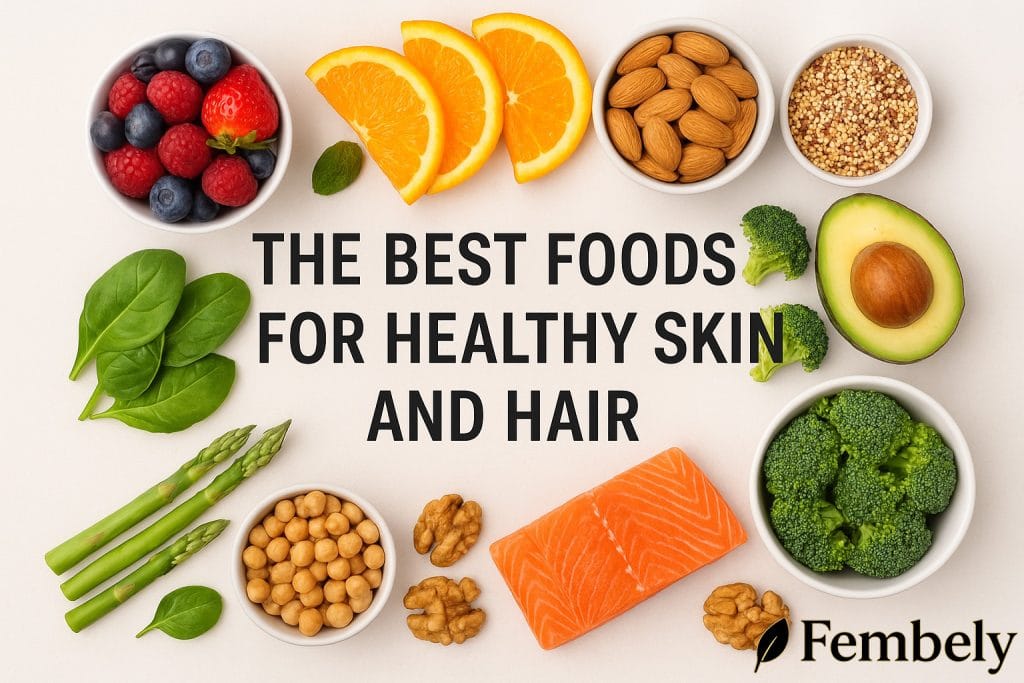
Nutrient-Dense Foods That Support Skin and Hair Health Having glowing skin and strong, healthy hair isn’t only about the products you apply on the outside. True radiance begins inside your body. What you eat directly influences your collagen levels, hydration, hormonal balance, hair strength, and skin elasticity. This is why learning about the Best Foods for Healthy Skin is such a powerful and transformative part of your beauty journey. Skin and hair are mirrors of internal health. If you’re stressed, dehydrated, or lacking nutrients, your skin might look dull and your hair may feel weak or shed more. On the other hand, when your meals are nutrient-rich and balanced, you naturally develop smoother skin, stronger hair, and a healthy glow that no makeup can replicate. 🌿 This guide explains how nutrition impacts beauty and how you can use specific foods to nourish your skin and hair from within. Everything here is practical, science-based, and easy to apply in daily life. Why Diet Matters for Skin and Hair Health Your skin and hair require vitamins, minerals, antioxidants, and healthy fats to stay hydrated and strong. Certain nutrients encourage collagen production, while others protect cell membranes or support hair follicles. When you lack these nutrients, you might notice signs like: Dry, flaky skin Slow hair growth Breakouts or inflammation Dull complexion Hair thinning or breakage So, understanding the Best Foods for Healthy Skin is key to long-lasting, natural beauty. Recommended Reading: Meal Planning for Busy Women: A Simple Guide 1. Omega-3 Rich Foods for Hydration and Elasticity Omega-3 fatty acids nourish the cell membranes of both skin and hair follicles. They help reduce inflammation, dryness, and even stress-related breakouts. Sources to include: Walnuts Flaxseeds Chia seeds Fatty fish like salmon or sardines (if you eat animal products) Avocado Eat omega-3 foods daily to keep your skin soft, dewy, and resilient. 2. Antioxidant-Rich Berries for Brightness and Even Tone Berries protect your skin from free radicals caused by stress and pollution. They support brighter complexion and reduce signs of aging. Try: Blueberries Strawberries Dark grapes Blackberries These are some of the Best Foods for Healthy Skin because they help fight pigmentation and dullness. 3. Vitamin C Foods for Collagen Production Collagen keeps the skin firm, youthful, and smooth. Vitamin C is essential for building it. Great options: Kiwi Oranges Pineapple Tomatoes Bell peppers Add vitamin-C rich foods to meals daily for stronger skin structure and glowing hair. 4. Vitamin E and Healthy Oils for Shine Vitamin E protects skin from UV damage and strengthens hair strands. Include: Almonds Sunflower seeds Hazelnuts Olive oil These foods also help maintain natural moisture. 5. Protein Sources for Hair Growth Hair is made of keratin, a protein. Without protein, hair becomes weak and breaks easily. Complete protein sources include: Eggs Greek yogurt Lentils Beans Tofu or tempeh If you want lush, strong hair, do not skip protein. 6. Hydrating Foods for Supple, Dewy Skin Water alone isn’t enough. Foods rich in water help maintain hydration levels more effectively. Recommended: Cucumber Watermelon Spinach Lettuce Celery Hydration is one of the foundations in the Best Foods for Healthy Skin list. 7. Zinc-Rich Foods for Clear Skin Zinc helps reduce acne, inflammation, and scalp irritation. Try: Quinoa Pumpkin seeds Chickpeas Cashews 8. Iron-Rich Foods for Healthy Hair Growth Low iron is one of the leading causes of hair thinning, especially in women. Include: Lentils Spinach Beans Dried apricots Pair iron-rich foods with vitamin C foods for better absorption. Best Foods for Healthy Skin and Hair: Quick Master List Purpose Foods Hydration Watermelon, Cucumber Collagen Citrus fruits, Bell peppers Hair Strength Lentils, Eggs Glow Berries, Avocado Anti-aging Nuts, Olive oil Each of these belongs in the Best Foods for Healthy Skin routine when building a nourishing diet. What to Avoid for Better Skin and Hair Just as important as the foods you include… are the foods you avoid. Try to minimize: Excess sugar Ultra-processed snacks Fried foods Artificial sweeteners Alcohol These can damage collagen, increase inflammation, and disrupt hormones. Recommended Reading: How Stress Affects Women’s Hormones and Energy How to Create a Daily Meal Plan To make this realistic, here’s a simple feminine, nourishing daily meal plan: Breakfast: Chia pudding with berries and almond butter ✨ Lunch: Quinoa salad with chickpeas, spinach, avocado, and olive oil Snack: Kiwi + pumpkin seeds Dinner: Vegetable stew with lentils and sweet potatoes This aligns beautifully with the Best Foods for Healthy Skin philosophy. Lifestyle Tips That Boost the Effect of Food Drink enough water Get sunlight but protect your skin Reduce stress daily (even 10 minutes helps) Sleep 7 to 8 hours Move your body gently Even the Best Foods for Healthy Skin can’t replace consistent self-care. When you start paying attention to nourishment from within, you quickly notice that skin and hair health is not about radical changes or extreme diets. Instead, it’s about consistency and gentle refinement of your daily choices. A powerful way to approach this is to plan your meals with intention. For example, you can make a weekly grocery list that highlights the Best Foods for Healthy Skin, such as antioxidant-rich berries, leafy greens, nuts, and omega-3 seeds. Preparing simple, nourishing meals in advance can help you avoid processed options and support glowing skin and strong hair effortlessly. Additionally, listening to your body matters. If certain foods cause inflammation, breakouts, or bloating, try reducing them and observing the difference. Every woman’s body is unique, and your skin often communicates its needs before anything else. Pairing proper nutrition with hydration, gentle movement like yoga or walking, and emotional self-care can amplify your results beautifully. Remember, glowing skin and healthy hair are a reflection of your inner environment, so be kind to yourself through each stage of the journey. 🌿💛 Final Thoughts Beautiful skin and hair are not about perfection, but nourishment, balance, and care. When you choose foods that support your body, your natural beauty begins to shine effortlessly. No harsh routines. No extremes. Just consistency and love. 🤍
How Stress Affects Women’s Hormones and Energy?
The Link Between Stress Levels, Hormonal Health, and Fatigue Understanding the Mind-Body Connection to Restore Balance, Vitality, and Inner Peace ✨ Modern women navigate a complex world. Work responsibilities, emotional load, caregiving, social expectations, and personal goals all stack up. And while stress is a natural response meant to protect us, chronic stress can deeply influence how the body functions, especially when it comes to hormones and long-term energy levels. In this guide, we explore exactly how Stress Affects Women’s Hormones, why women are more sensitive to stress-related hormonal shifts than men, and most importantly — how to restore balance naturally and sustainably. This article combines science + real-life emotional understanding, because you deserve advice that is both intelligent and truly helpful. 🌙 How the Female Hormonal System Works Before we break down how Stress Affects Women’s Hormones, let’s understand the key hormones involved in women’s health: Hormone Function What Happens Under Stress Cortisol Stress response, blood sugar regulation Increases significantly and disrupts other hormones Estrogen Reproductive health, mood, skin, metabolism Can drop or become imbalanced Progesterone Mood stability, sleep quality, anxiety relief Often decreases under stress Thyroid Hormones Metabolism and energy levels Slow down, causing fatigue Dopamine & Serotonin Motivation, joy, emotional balance Drop when cortisol is chronically high Women’s hormones are like a symphony — everything must work together. When stress enters, it’s like someone plays a trumpet in the wrong key — everything feels “off.” This is where the core issue begins: Chronic stress disrupts the entire hormonal rhythm. 🔥 Why Women Are More Affected by Stress Than Men This isn’t just emotional — it’s biological. Women’s bodies evolved to protect fertility, which depends on hormonal stability. Chronic stress signals to the body: “This environment is not safe for reproduction.” So the body pulls energy away from: reproductive hormones metabolism skin and hair health emotional stability And instead, prioritizes survival. This is why Stress Affects Women’s Hormones differently — the female system is more hormonally dynamic and therefore more sensitive. Recommended Reading: Essential Health Checkups Every Woman Should Get 🧠 How Stress Affects Women’s Hormones and the Brain (Key Mechanism) When you experience stress: The brain signals the adrenal glands. The adrenal glands release cortisol. If stress is ongoing, cortisol stays high. High cortisol pushes down progesterone. Progesterone and estrogen fall out of balance. Thyroid hormones slow down. Energy crashes. Mood dips. Weight changes happen. This explains why chronic stress may cause: unexplained fatigue 😴 mood swings or crying easily difficulty sleeping irregular menstrual cycles acne or skin dullness hair thinning low libido anxiety or brain fog You are not “too emotional.” Your hormones are signaling overload. ❤️ Emotional Layer: The Invisible Load Women Carry Research shows women often carry the mental load: remembering schedules managing household needs emotional support of others relationships self-expectations Even when resting, the mind keeps running. This emotional exhaustion amplifies how Stress Affects Women’s Hormones — because stress is not just physical or situational… it is often internalized. Women are taught to: “be strong” “be selfless” “handle everything gracefully” But doing everything is not normal or healthy. You deserve rest. You deserve support. You deserve spaciousness, not pressure. 🌿 Signs That Stress Is Affecting Your Hormones and Energy You may notice: You wake up tired even after sleep Coffee becomes necessary, not enjoyable You feel “wired but tired” at night Emotional sensitivity increases PMS symptoms worsen Weight shifts appear without changing diet Your skin looks dull or inflamed Digestive issues come and go If these resonate, it’s likely Stress Affects Women’s Hormones more than you realize. ✨ Step-by-Step: How to Restore Hormonal Balance Naturally 1. Regulate the Nervous System Daily Just 10 minutes a day can shift the entire hormonal map. Techniques: Deep belly breathing Stretching before bed 5 minutes of quiet sitting / unplug time Warm showers or baths with slow breathing Light touch massage around the neck and chest These directly lower cortisol. 2. Support the Adrenal Glands Your adrenals are the system managing stress. Support them with: consistent sleep (no screens 1 hour before bed) stabilizing meals every 3–4 hours gentle morning sunlight exposure ☀️ Not intense changes — small daily nourishment. Recommended Reading: Weekend Outfit Inspiration: From Casual to Classy 3. Nourish Hormones Through Food Instead of dieting, choose: healthy fats (to produce hormones) protein in every meal leafy greens + whole grains reduce caffeine after 12 PM This feeds progesterone and estrogen balance. 4. Move, But Not Excessively When stress is high, intense workouts make hormones worse. Choose: yoga pilates walking light strength training not endless cardio. Gentle movement heals the stress response. 5. Let Yourself Receive Help Releasing guilt is hormonal medicine. Asking for help is not weakness — It is nervous system regulation. 🌸 Building Long-Term Emotional Resilience True balance comes from small, repeatable habits — not perfection. honor your limits express emotions instead of holding them slow down when the body whispers… not when it collapses Healing is not doing more. Healing is allowing more softness. 💗 One of the most empowering steps you can take when exploring how Stress Affects Women’s Hormones is learning to slow down the body’s stress response before it spirals. Women often feel pressure to “hold everything together” and ignore signs of burnout, exhaustion, and emotional overload. But your body whispers long before it screams. When cortisol rises for long periods, it begins to drain your energy, disrupt sleep, impact your skin, shift your appetite, and even change your emotional regulation patterns. The key is tuning into those whispers. Start with small grounding rituals throughout your day: deep breathing before responding in a stressful moment, placing one hand on your chest for reassurance, stretching your shoulders when tension builds, or even stepping outside to feel fresh air for 2 minutes. These micro-pauses signal safety to your nervous system and help balance hormone production. You don’t need a full spa day to reset your system. You need intentional breathing room. Also, practicing gentle, consistent routines like journaling your emotions,
The Art of Mixing and Matching Accessories

Styling Techniques to Elevate Outfits with Accessories ✨ The Art of Matching Accessories ✨Accessories are the quiet magic that can transform an outfit from ordinary to captivating. They don’t shout, but they speak. They define mood, style, confidence, and the subtle story you choose to express. Mastering the art of Matching Accessories is not just about knowing what to wear — it’s about understanding what feels harmonious, elegant, and true to your personal aesthetic. 🕊️ Whether you favor a minimal look, a romantic soft style, or something bold and expressive, knowing how to combine jewelry, bags, shoes, scarves, and hair accessories is a timeless form of style literacy. This guide is designed to help you elevate your everyday outfits with thoughtful, intentional finishing touches that make your style effortlessly polished. 1. Why Accessories Matter More Than You Think 💍 Clothing is the foundation — but accessories are the signature. When someone remembers your look, they often remember the details. Well-chosen Matching Accessories can: Bring balance to your outfit Highlight your personal style Add polish and refinement Turn basic pieces into styled outfits Create a cohesive, feminine aesthetic Think about the difference between: Plain jeans + T-shirt vs. Jeans + T-shirt + gold earrings + structured handbag + sunglasses The second look is not more complicated — just more intentional. This is the power of Matching Accessories. ✨ Recommended Reading: Must-Have Accessories for a Timeless Wardrobe 2. Start With a Base Outfit and Work Upwards 🌿 To style confidently, begin with a clean canvas. Examples of ideal base outfits: A white button-down shirt + straight jeans A black midi dress A beige knit sweater + tailored trousers A monochrome jumpsuit Once your base outfit is chosen, follow this simple sequence: Choose your statement accessory (the star piece). Add supporting accessories (the quiet companions). Stop before it looks “busy.” A styled outfit should feel complete — not crowded. 3. Choosing Your Statement Piece ⭐ Your statement piece is the center of attention. It can be: A bold necklace A textured handbag A sculptural pair of earrings A richly colored scarf Rule: If the statement is bold → keep the rest subtle. If everything is bold → nothing stands out. For example: Statement earrings? → Wear a simple necklace (or none). Statement bag? → Keep jewelry refined and minimal. This is the foundation of Matching Accessories with elegance. 4. Color Theory for Matching Accessories 🎨 Color harmony is where true styling skill reveals itself. Basic Harmony Principles Outfit Type Best Accessory Direction Example Neutral outfit Warm gold or beige-toned leather Cream dress + gold jewelry Dark outfit Metallic accents for contrast Black blazer + silver hoops Pastels Pearls or soft rose gold Powder blue dress + pearl studs Bold colors Neutral or monochrome accessories Red dress + nude heels + gold bracelet Skin Undertone Tip: Warm skin tones: Look best in gold, bronze, warm leather. Cool skin tones: Look radiant in silver, platinum, cool-toned pearls. Neutral undertones: Can wear both elegantly. The right metal can lift your complexion—it’s like styling with light. 5. Balancing Textures and Materials 🧵 A truly polished look includes texture contrast. Pair: Soft + Structured Matt + Glossy Smooth + Layered Examples: Chunky knit sweater + sleek gold hoops Cotton sundress + woven straw bag Satin blouse + leather belt + pearl necklace Texture gives your outfit depth and prevents flatness. 6. Layering Jewelry Like a Stylist ✨ Layering is one of the most graceful ways to enhance your style. Necklaces Mix lengths (short + mid + long) Avoid too many pendants at once Bracelets Stack thin bracelets for a delicate look Or choose one sculptural cuff as the highlight Earrings Situation Recommendation Hair down Slightly longer earrings to be visible Hair up Studs or bold hoops look elegant The key to Matching Accessories is visual rhythm, not clutter. 7. Should Bags and Shoes Match? 👜👠 Old rule: They must match perfectly. Modern rule: They should coordinate, not copy. How to Coordinate Well: Repeat tone, not exact shade Connect accessories through texture or metal hardware Examples: Camel coat + brown boots + cream handbag → warm harmony Black dress + silver earrings + silver-buckled black shoes → cohesive modern elegance You’re creating connection, not duplication. 8. Scarves, Hair Accessories, and Feminine Detail Work 🎀 Small touches tell the story. Silk scarves add softness and sophistication Hairpins, ribbons, and embellished clips add youthful grace Headbands can elevate even simple ponytails Match them with jewelry tones for refinement. Example: Gold earrings + gold hair clip = unified beauty These small details create a soft, feminine finish. 9. Seasonal Accessory Styling 🌸☀️🍂❄️ Your accessories should evolve like the seasons. Season Ideal Accessories Spring Pearls, light scarves, pastel stones Summer Sunglasses, straw textures, anklets Autumn Leather belts, warm metals, structured handbags Winter Chunky scarves, statement earrings, velvet accents This keeps your style fresh and alive year-round. 10. Matching Accessories for Style Personalities 🌙 Minimalist Clean lines, one metal tone, very intentional Example: black trousers + white blouse + silver hoops Romantic Pearls, florals, ribbons, soft gold Example: floral dress + pearl earrings + rose-toned bag Modern Classic Structured shapes and refined simplicity Example: blazer + leather belt + wristwatch Bold Creative Pattern play, color accents, oversized pieces Example: geometric earrings + color-block handbag Your accessories tell your story. Choose the story you love. 11. Your Essential Accessory Capsule Wardrobe 🧺 Item Why It’s Essential Small gold hoops Work with 95% of outfits Pearl stud earrings Universal elegance Layering necklace set Adds effortless detail Neutral handbag Everyday sophistication Leather belt Defines the silhouette Silk scarf Multi-style piece: hair, neck, bag handle This capsule makes Matching Accessories easy and automatic. Final Thoughts: Style is in the Details 🌹 The art of Matching Accessories is not about owning many items — It’s about curating meaningful pieces and wearing them with intention. Elegance is created in the quiet decisions: Which necklace feels right today Which bag supports the mood you want to express Which small detail
Weekend Outfit Inspiration: From Casual to Classy

Versatile Weekend Looks for Relaxed and Polished Styles One of the easiest ways to keep Weekend Outfit Inspiration effortless is to build what is called a capsule wardrobe. A capsule wardrobe is a small, thoughtful collection of clothing pieces that mix and match beautifully. This way, you don’t need to buy new outfits every weekend—your closet itself becomes smart. What to Include: Category Examples Notes Tops Basic tees, fitted tanks, linen shirts, light sweaters Stick to warm neutrals Bottoms High-waisted jeans, wide-leg pants, midi skirts Choose what makes you feel confident Dresses One floral, one plain midi dress Easy, feminine, instant outfit Outer Layers Denim jacket, linen blazer, soft cardigan Adds dimension + style Shoes White sneakers, sandals, ankle boots Comfort is priority Color Palette Tip: Choose a palette of 5-7 colors that can all match together: Beige White Cream Soft brown Charcoal Olive Black (optional) This simple palette makes Weekend Outfit Inspiration automatic, because everything works together 🧩 💃 Understanding Your Personal Weekend Style Before choosing outfits, ask yourself: Question Why It Matters Do I prefer comfort or structure? Helps determine fabrics and fit Do I like minimal style or more detailed outfits? Influences layering and accessories Do I want to look soft and feminine, or sharp and bold? Guides outfit mood and silhouette There’s no “right” answer. The goal is to dress how you feel, not how social media tells you to dress. Your style should make you say: “Yes — this feels like me.” 🧡 Weekend Outfit Inspiration for Different Personalities 1) Soft Girl / Gentle Aesthetic Flowy skirts Oversized sweaters Pastel tones Ballet flats or soft sandals Mood: dreamy, calm, romantic. 2) Clean Girl / Minimal Chic Neutral tones (white, tan, soft gray) Slick low bun or natural hair Gold jewelry Structured basics Mood: fresh, modern, elegant. Recommended Reading: Chic Work Outfits That Are Also Comfortable 3) Sporty Casual Joggers or ribbed yoga pants Cropped hoodie or fitted tee Clean sneakers Simple backpack or tote Mood: active, easygoing, effortless. 4) Classy and Feminine Satin skirt or tailored pants Soft knit top Small shoulder bag Light jewelry Mood: polished but gentle. 🍷 Weekend Outfit Inspiration for Special Plans Brunch Date With Your Best Friend Go for: Midi dress + denim jacket Soft waves or ponytail Nude lipstick + rosy blush Brunch outfits should feel soft, camera-friendly, with a natural glow 🌸 Museum, Art Gallery, or Bookstore Create contrast + quiet elegance: Black turtleneck Cream trousers Structured handbag Hair in claw clip This gives intellectual, feminine aesthetic. Cozy Sunday at Home But Still Cute Because style is also for you: Ribbed matching lounge set Fuzzy socks Soft bun + no-makeup makeup look Your favorite candle burning ✨ Looking lovely at home boosts self-love — not everything needs to be “for outside.” 🎨 How to Layer Outfits Like a Stylist Layering is what makes simple outfits look intentional. Formula: Base Layer (tee/tank) + Texture Layer (knit/linen) + Structure Layer (jacket/blazer) Textures = depth Structure = elegance This is why a basic t-shirt and jeans suddenly looks styled when you add a blazer and necklace. 👗 Fabrics That Instantly Look More Elegant Fabric Why It Elevates Your Weekend Outfit Inspiration Linen Breathable + stylish in every season Cotton Comfortable and timeless Satin Adds soft shine, evening elegance Knit Cozy texture + feminine softness High-quality fabric makes even a simple outfit look luxe ✨ Recommended Reading: How to Switch to a Clean Beauty Routine 💄 Makeup to Match Weekend Vibes Plan Makeup Look Coffee Run Bare skin + tinted lip + mascara Brunch Peach blush + soft highlight + fluffy brows Evening Dinner Light smoky eye + glossy nude lip Soft glam does not need to be heavy. The goal: fresh, feminine, glowing 🌷 💍 Jewelry: The Small Detail That Changes Everything Minimal jewelry = effortless elegance. Choose: Thin gold hoops A delicate chain necklace A dainty ring stack Jewelry should feel like a whisper, not a shout. 🌿 Extra Section: Building Confidence Through Weekend Outfit Inspiration One of the most meaningful reasons to explore Weekend Outfit Inspiration is the emotional shift that comes with dressing intentionally. Clothes are not just pieces of fabric; they are a form of self-expression, a way to reconnect with your identity outside of responsibilities, roles, and routines. During the week, life often feels structured and scheduled. Work, home tasks, parenting, studying—so much of everyday life demands that we think quickly and move efficiently. But weekends can be your gentle pause. Choosing what you wear with care can turn your weekend into a small act of healing. When you slow down and select clothes that make you feel beautiful, feminine, and confident, you send a message to yourself: “I matter. My softness matters. My joy matters.” This is why creating your own Weekend Outfit Inspiration routine can become an emotional ritual. For example: Wake up slowly. Put on your favorite calming playlist. Light a candle or sit near a sunny window. Try different outfits—not with pressure, but with curiosity. Notice how each outfit makes you feel. Sometimes, the soft knit sweater that hugs your body just right brings comfort. Sometimes, the structured blazer helps you step into powerful energy. Some weekends are for pastel dresses and sunlight; others are for dark jeans and a cozy tote bag. Both are valid. Both are you. Give yourself permission to dress in a way that reflects your mood, not what you think others expect. The secret is consistency: When weekend outfits become intentional, your everyday style naturally starts to elevate too. Your confidence grows quietly, gently, beautifully—from the inside out. ✨💗 If you enjoyed these Weekend Outfit Inspiration ideas and feel motivated to elevate your personal style in a way that feels authentic and effortless, make sure to explore more guides on Fembely. Our platform is designed for women who want to look and feel their best—inside and out. From fashion to self-care, mindset, home-life balance, and confidence building, you’ll find practical tips you can apply right
How to Switch to a Clean Beauty Routine?
Steps to Transition Toward Non-Toxic Beauty Products Embracing the Clean Beauty Routine– In today’s fast-paced world, more women are starting to rethink what goes into their beauty products. As awareness about ingredient safety and sustainability grows, many are making the conscious decision to Switch to a Clean Beauty Routine. This movement isn’t just about following a trend — it’s about taking charge of your health, your skin, and the planet. Transitioning to clean beauty can feel overwhelming at first, especially with the flood of information available online. But with the right guidance, you can create a routine that feels refreshing, ethical, and sustainable — without sacrificing results. In this guide, you’ll learn how to identify clean ingredients, detox your old products, and build a routine that fits your lifestyle. 💧 What Does “Clean Beauty” Really Mean? Before you Switch to a Clean Beauty Routine, it’s essential to understand what “clean beauty” actually stands for. Unlike “organic” or “natural,” the term “clean” isn’t legally regulated. However, the general consensus is that clean beauty products are: Free from harmful chemicals like parabens, sulfates, phthalates, synthetic fragrances, and formaldehyde. Ethically produced, often cruelty-free and sustainably sourced. Transparent about their ingredient lists. Clean beauty emphasizes balance — it’s about choosing products that perform well without compromising your health or the environment. 🌿 Step 1: Evaluate Your Current Products To Switch to a Clean Beauty Routine, start by assessing what you already own. Go through your skincare, makeup, haircare, and body products. Read ingredient labels carefully — and if you can’t pronounce most of them, it’s time to research. 🚫 Ingredients to Avoid: Parabens (methyl-, propyl-, butylparaben) – hormone disruptors. Sulfates (SLS, SLES) – strip the skin’s natural oils. Phthalates – linked to reproductive health issues. Synthetic fragrances – common irritants for sensitive skin. Formaldehyde – a known carcinogen. Make a “keep,” “replace,” and “discard” list to organize your transition. 🌺 Step 2: Start Small and Replace Gradually You don’t need to overhaul your entire routine overnight. The best way to Switch to a Clean Beauty Routine is one product at a time. Begin with essentials you use daily — for example, your moisturizer, cleanser, or foundation. When replacing, look for clean alternatives that target your specific needs (hydration, anti-aging, acne care). This gradual approach helps your skin adjust naturally and prevents waste. 🌼 Step 3: Focus on Skincare First Your skin is your largest organ, and what you put on it matters. When you Switch to a Clean Beauty Routine, prioritize skincare. 🧴 Build a Clean Skincare Routine: Cleanser: Choose a gentle, sulfate-free cleanser with plant-based surfactants. Toner: Opt for alcohol-free toners with rose water or witch hazel. Serum: Look for vitamin C, hyaluronic acid, or niacinamide — without synthetic fillers. Moisturizer: Pick formulas rich in botanical oils like jojoba or argan. SPF: Use a mineral sunscreen with zinc oxide or titanium dioxide. Recommended Reading: DIY Beauty Recipes Using Kitchen Ingredients 💄 Step 4: Transition Your Makeup Bag Switching to clean beauty doesn’t mean giving up your favorite looks. Instead, it’s an opportunity to discover new textures, colors, and ingredients. When you Switch to a Clean Beauty Routine, check for makeup made with natural pigments, nourishing oils, and plant-based waxes. 🪞 Clean Makeup Staples: Foundation: Look for lightweight, mineral-based formulas. Mascara: Choose one free from carbon black or synthetic dyes. Lipstick: Prefer natural colorants and hydrating bases like shea butter. Highlighter: Use mica- or clay-based glow formulas. 🌸 Step 5: Simplify and Declutter A huge part of clean beauty is mindful minimalism. To truly Switch to a Clean Beauty Routine, adopt the “less is more” mindset. Keep only what works for your skin and what sparks confidence. Decluttering also helps reduce waste — both plastic and mental clutter. Store your essentials neatly and focus on quality over quantity. 🌿 Step 6: Go Beyond Skin — Clean Hair and Body Care Clean beauty isn’t just for your face. Extend the concept to your hair and body. When you Switch to a Clean Beauty Routine, remember your shampoo, conditioner, body wash, and deodorant too. 🧖♀️ Haircare Tips: Choose sulfate-free shampoos with botanical extracts. Avoid silicones; they can build up and weigh hair down. Use hair oils like argan or marula for natural shine. 🚿 Bodycare Tips: Opt for soaps with plant-based oils. Skip heavy synthetic perfumes; try essential oil blends instead. Moisturize with shea butter or coconut oil. 🌏 Step 7: Choose Sustainable Packaging Sustainability is at the heart of clean beauty. When you Switch to a Clean Beauty Routine, consider packaging that’s recyclable, refillable, or biodegradable. Support brands (or small local artisans) that use glass jars, aluminum tubes, or post-consumer recycled materials. Every choice adds up to a cleaner planet. 🪞 Step 8: The Mental Shift — Beauty Beyond the Label Clean beauty isn’t only about what’s in your bottle; it’s also about how you view self-care. As you Switch to a Clean Beauty Routine, you’ll notice a mindset shift — one that emphasizes wellness, self-love, and connection with nature. Take time to appreciate the ritual of skincare. Instead of rushing, treat it as your moment of calm — a daily act of gratitude toward your body. 🧘♀️ Step 9: Combine Clean Beauty with Healthy Habits External care means little without internal wellness. Pair your new clean routine with: A nutrient-rich diet (antioxidant-packed fruits and vegetables). Plenty of hydration. Enough rest and stress management. To truly Switch to a Clean Beauty Routine, think of your beauty habits as holistic — they reflect the harmony between body, mind, and environment. Recommended Reading: The Best Night Creams for Anti-Aging and Firm Skin Quick & Practical Tips to Perfectly Switch to a Clean Beauty Routine Once you’ve decided to Switch to a Clean Beauty Routine, the next step is making it sustainable and consistent. Here are some small but powerful habits that can help you make clean beauty a long-term lifestyle rather than a short-lived trend. 💧 1. Read Labels Like a Pro When
The Best Night Creams for Anti-Aging and Firm Skin
Overnight Skincare Solutions for Smoother, Firmer Skin Aging is a natural process, but that doesn’t mean your skin can’t age gracefully. Finding The Best Night Creams for Anti-Aging can make all the difference in maintaining a youthful glow and firm texture. While the beauty industry is overflowing with products, many women are shifting toward homemade, natural alternatives that deliver real results — without the chemicals. In this complete guide, you’ll learn everything you need to know about creating The Best Night Creams for Anti-Aging at home, understanding your skin’s nighttime needs, and building an effective skincare routine that helps restore your skin’s firmness, elasticity, and radiance. 🌿 Why Nighttime Skincare Matters At night, your body enters repair mode. Your skin regenerates cells, restores moisture, and repairs daily damage caused by sunlight, pollution, and stress. This makes nighttime the perfect moment to nourish your skin deeply. Using The Best Night Creams for Anti-Aging allows nutrients to absorb more effectively while you sleep, promoting firmer, plumper, and smoother skin. 💧 Key Ingredients in The Best Night Creams for Anti-Aging Let’s dive into the essential ingredients that make natural creams so powerful: 1. Shea Butter A luxurious, rich butter that deeply hydrates and helps rebuild collagen, promoting firmness and elasticity. 2. Rosehip Oil Packed with vitamin A and fatty acids, rosehip oil helps regenerate skin cells and fade wrinkles naturally. 3. Aloe Vera Gel Calms and hydrates the skin while boosting cell renewal — a must-have for The Best Night Creams for Anti-Aging. 4. Vitamin E Oil This antioxidant fights free radicals and helps reduce fine lines, making it a staple in natural night creams. 5. Beeswax or Plant-Based Wax Gives the cream a smooth texture while locking in moisture for long-lasting hydration. Recommended Reading: How to Prevent Early Signs of Aging in Your 20s 🕯️ DIY Recipes: The Best Night Creams for Anti-Aging at Home Here are some effective recipes you can easily make in your kitchen: 🧴 1. Shea Butter & Rosehip Oil Anti-Aging Cream You’ll need: 2 tablespoons shea butter 1 teaspoon rosehip oil 1 teaspoon vitamin E oil A few drops of lavender essential oil How to make: Melt the shea butter over low heat, mix in oils, and whisk until creamy. Store in a glass jar. Apply every night to your face and neck. This blend is one of The Best Night Creams for Anti-Aging because it restores moisture and boosts collagen overnight. 🍯 2. Honey & Aloe Vera Firming Night Cream You’ll need: 2 tablespoons aloe vera gel 1 teaspoon raw honey 1 teaspoon coconut oil Mix all ingredients and store in the fridge. This natural formula improves elasticity, giving your skin a firm, glowing look. 🌼 3. Green Tea & Vitamin E Revitalizing Cream Green tea contains antioxidants that prevent premature aging. Combine it with vitamin E for a luxurious, firming night cream. Ingredients: 2 tablespoons green tea infusion 1 tablespoon beeswax 1 teaspoon vitamin E oil 1 teaspoon jojoba oil Melt the beeswax, then mix in the oils and green tea. Let it cool until creamy. This natural blend stands among The Best Night Creams for Anti-Aging, especially for women over 30. 🌙 How to Apply Night Creams Correctly Even the best product won’t work if you don’t apply it properly. Follow these tips: Cleanse thoroughly. Remove all traces of makeup and dirt. Use a gentle toner to balance your skin’s pH. Warm a small amount of cream between your fingers before applying. Massage gently in upward, circular motions to improve circulation. Don’t forget your neck — it’s one of the first places to show aging. By maintaining this routine, you maximize the benefits of The Best Night Creams for Anti-Aging and firm skin naturally. 🌸 The Role of Sleep and Nutrition Glowing skin starts from within. Even The Best Night Creams for Anti-Aging can’t replace proper rest, hydration, and nutrition. Drink at least 2 liters of water daily. Eat foods rich in antioxidants like berries, spinach, and nuts. Avoid caffeine and alcohol before bed. Sleep 7–8 hours to allow full skin regeneration. 🧘♀️ Additional Natural Boosters for Firm Skin Facial Yoga: Improves muscle tone and reduces sagging. Cold Compresses: Stimulate collagen and firm the skin. Hydrating Masks: Use once a week for deep moisture. Combining these practices with The Best Night Creams for Anti-Aging enhances overall results, making your skin more youthful and glowing. 🌺 Nighttime Routine Example Here’s a sample night routine you can follow: Remove makeup. Cleanse with a natural foam cleanser. Apply rose water toner. Use a serum with hyaluronic acid. Massage The Best Night Creams for Anti-Aging evenly. Sleep peacefully — your skin will thank you in the morning. Recommended Reading: Haircare Routine for Long and Healthy Hair 🌿 Emotional Benefits of Nighttime Skincare Skincare isn’t just physical; it’s emotional. Taking time each night to pamper yourself helps reduce stress and anxiety. The calming scents of lavender or chamomile oils can promote better sleep and relaxation. When you use The Best Night Creams for Anti-Aging, you’re not just caring for your skin — you’re nurturing your soul. 💫 Understanding the Science Behind The Best Night Creams for Anti-Aging To truly appreciate the power of The Best Night Creams for Anti-Aging, it’s important to understand how your skin behaves during the night. While you sleep, your skin’s blood flow increases, which allows active ingredients to penetrate deeper. This is why applying nourishing, natural creams at bedtime can significantly improve elasticity and tone. When you choose homemade The Best Night Creams for Anti-Aging, you’re giving your skin pure, nutrient-rich care without synthetic chemicals. For example, ingredients like rosehip oil and vitamin E contain antioxidants that neutralize free radicals — the main culprits behind wrinkles and dullness. Meanwhile, beeswax and shea butter create a natural barrier that locks in hydration, preventing moisture loss throughout the night. It’s also helpful to remember that your skin’s needs change with the seasons. During winter, you might need a richer cream made with
Haircare Routine for Long and Healthy Hair
Daily and Weekly Care Tips for Strong, Shiny Hair Every woman dreams of having silky, strong, and radiant locks that turn heads. But achieving that perfect shine isn’t about luck — it’s about consistency, the right techniques, and understanding your hair’s unique needs. Creating a Haircare Routine for Long and Healthy Hair is not as complicated as it sounds — it’s about balancing nourishment, protection, and patience. In this guide, we’ll break down every essential step, from washing to styling, so you can create a daily, weekly, and monthly plan that helps your hair thrive. 🌿 1. Understanding Your Hair Type Before you start building your Haircare Routine for Long and Healthy Hair, you must first know your hair type. Hair texture, porosity, and scalp condition dictate how your hair reacts to products and treatments. Straight hair: Usually the oiliest because natural oils can travel easily from scalp to ends. Wavy hair: Needs a balance of hydration and light moisture to maintain shape and shine. Curly hair: Tends to be dry and frizzy, requiring deep hydration and gentle handling. Coily hair: Fragile and prone to breakage, it benefits from protective styles and rich moisture. 🪞 Pro Tip: Use a lightweight leave-in conditioner for straight hair and a creamy moisturizer for curly or coily textures. Recommended Reading: The Best Hair Masks for Dry and Frizzy Hair 2. Building the Perfect Washing Routine The foundation of any Haircare Routine for Long and Healthy Hair is how you wash your hair. Overwashing can strip away natural oils, while under-washing can cause buildup and dullness. Choose the Right Frequency Oily scalp: Wash every 2–3 days. Dry scalp: Wash once or twice a week. Normal scalp: Every 3–4 days works best. Use Lukewarm Water Hot water opens the hair cuticle, causing dryness. Lukewarm water cleans without damage, while a final cold rinse seals the cuticle and adds shine. Scalp Massage is Key Massaging your scalp for 2–3 minutes stimulates blood flow, promoting hair growth. Incorporate gentle circular motions with your fingertips — it’s relaxing and beneficial. 3. Conditioning the Smart Way Conditioner is your hair’s best friend. To maintain a Haircare Routine for Long and Healthy Hair, never skip this step. Apply conditioner from mid-length to ends, not on the scalp. Let it sit for at least 3 minutes before rinsing. For fine hair, use lightweight formulas; for thick or curly hair, use richer ones. 💧 Bonus: Use a wide-tooth comb while conditioning to detangle without breakage. 4. Weekly Deep Conditioning Treatments Once a week, indulge your strands in a deep conditioning session. It’s essential for hydration and repair, especially if your hair is exposed to heat styling or coloring. You can make your own at-home mask with natural ingredients like: Avocado + honey (for moisture) Coconut oil + egg yolk (for strength) Banana + yogurt (for shine and softness) These DIY remedies are perfect additions to a Haircare Routine for Long and Healthy Hair and help nourish your hair without harsh chemicals. 5. The Magic of Hair Oils Hair oils are ancient beauty secrets that still hold power today. Using oils regularly can dramatically transform your Haircare Routine for Long and Healthy Hair. Best Natural Oils: Coconut oil: Strengthens and prevents protein loss. Argan oil: Adds shine and smoothness. Castor oil: Stimulates growth. Jojoba oil: Balances sebum production. Rosemary oil: Boosts circulation and reduces thinning. Warm the oil slightly before applying it to your scalp. Massage gently, leave it on for at least 30 minutes, then rinse. 6. Protecting Hair While You Sleep Nighttime care is often overlooked, but it’s crucial for maintaining your Haircare Routine for Long and Healthy Hair. Use a silk or satin pillowcase to reduce friction and prevent frizz. Braid or tie your hair loosely before bed. Avoid tight ponytails that cause breakage. 🌙 Extra Tip: Apply a few drops of lightweight oil on the ends before bed to keep them hydrated overnight. 7. Brushing Techniques for Stronger Strands Brushing seems simple, but it’s a technique that can make or break your Haircare Routine for Long and Healthy Hair. Always start detangling from the ends and work your way up. Use a boar-bristle brush or a detangling comb. Avoid brushing wet hair; it’s more fragile. ✨ Pro Tip: Brush your hair before washing — it distributes natural oils evenly and prevents knots. 8. Heat Styling Without Damage We all love a sleek blowout or bouncy curls, but too much heat can undo your hard work. To keep your Haircare Routine for Long and Healthy Hair effective: Always apply a heat protectant spray. Keep tools below 180°C (350°F). Air dry whenever possible. Try no-heat styles like braids or buns for natural waves. 9. Trimming Regularly It may sound counterintuitive, but trimming actually helps your hair grow healthier. Split ends travel up the strand and cause breakage. Trim every 8–10 weeks to keep your Haircare Routine for Long and Healthy Hair on track. Recommended Reading: Top 5 Makeup Trends for 2025 10. Nutrition and Hydration Matter What you eat reflects in your hair. To support your Haircare Routine for Long and Healthy Hair, fuel your body with nutrients that strengthen follicles: Protein: Eggs, lentils, and fish for structure. Iron: Spinach and red meat to prevent shedding. Omega-3 fatty acids: Nuts and salmon for shine. Biotin & Zinc: Strengthen roots and prevent thinning. Water: At least 2 liters daily to keep your scalp hydrated. 🍓 Tip: Green smoothies and herbal teas are great for hair detox! 11. Managing Stress for Hair Health Stress affects your entire body — including your hair. Cortisol disrupts growth cycles, leading to thinning or shedding. Pair your Haircare Routine for Long and Healthy Hair with calming activities: Meditation Yoga Journaling Nature walks Mind-body balance enhances your natural glow and keeps hair growing strong. 12. Avoiding Common Mistakes Even the best intentions can harm your hair if done incorrectly. Avoid these pitfalls that can damage your Haircare Routine for Long and Healthy Hair: Using too much shampoo. Overbrushing.
Top 5 Makeup Trends for 2025
Emerging Makeup Styles Shaping Beauty in 2025 Top 5 Makeup Trends – The beauty world never stands still — and 2025 is proof of that. This year, makeup is less about perfection and more about personality, creativity, and authenticity. The new generation of makeup lovers isn’t chasing filters anymore — they’re chasing freedom. In this ultimate guide, we’ll explore the Top 5 Makeup Trends for 2025 that are transforming how women around the world express themselves. You’ll also learn how to recreate each trend, what tools or techniques to use, and how to adapt them to your daily routine. So grab your favorite mirror, take a deep breath, and let’s dive into the makeup revolution of 2025! 💄✨ 💧 1. Skinimalism — The Beauty of Less The first major trend in the Top 5 Makeup Trends for 2025 is all about celebrating natural beauty — a philosophy known as Skinimalism. Gone are the days of thick foundations and heavy contouring. In 2025, it’s all about real skin, real texture, and real glow. 🌿 How to Achieve the Skinimalism Look: Prep your skin: Start with gentle cleansing and hydrating. The healthier your skin, the less makeup you’ll need. Ditch heavy coverage: Replace full-coverage foundations with tinted moisturizers or lightweight BB creams. Focus on glow: Use a cream highlighter on the high points of your face — cheekbones, nose bridge, and cupid’s bow. Blush it right: Cream blushes blend beautifully and give that “fresh from a walk” flush. Set with mist: Instead of powder, use a setting spray to keep your skin dewy. 💋 Pro Tip: Mix a few drops of facial oil into your foundation for that lit-from-within radiance that defines 2025’s minimal glam. 💄 2. Blurred Lips & Soft Stains Next in the Top 5 Makeup Trends for 2025 is a lip trend that’s effortlessly chic — blurred lips. This Korean-inspired look gives lips a naturally diffused finish, as if you just bit into a juicy berry. It’s feminine, youthful, and super low-maintenance. 🌸 Steps to Get the Blurred Lip Look: Moisturize first: Hydrated lips make the color blend smoothly. Apply tint or balm: Use your fingertip to dab a small amount of tint in the center of your lips. Blend outward: Tap gently to fade the edges — no lip liner needed. Add depth: For a gradient effect, layer a slightly darker shade in the inner center. 🎨 Color Trends for 2025: Muted roses, peachy corals, and soft berries are dominating this year. 💡 Why It Works: Blurred lips make your face appear softer and more approachable — ideal for day-to-day wear or romantic evenings. Recommended Reading: The Ultimate Guide to Layering Skincare Products 🌈 3. Monochromatic Magic The third star of the Top 5 Makeup Trends for 2025 is monochromatic makeup — using one color palette for eyes, cheeks, and lips. This trend is all about harmony and simplicity. Instead of mixing tones that clash, you create a unified, elegant look that’s both modern and timeless. 💫 How to Master Monochromatic Makeup: Pick your tone: Choose one color family — like rose, peach, bronze, or mauve. Start with eyes: Use a soft wash of your chosen shade on your eyelids. Add blush: Apply a matching tone to your cheeks to tie the look together. Finish with lips: Use a similar lipstick or tint to balance everything. Optional shimmer: For evenings, add a subtle highlight to your eyelids and cheekbones. 🌹 Pro Tip: A monochromatic look with soft pink tones gives a romantic, feminine aura — while bronze tones add warmth and sophistication. 💬 Why It’s Trending: This style flatters every skin tone and is perfect for women who want a quick, polished look without overthinking color combinations. ⚡ 4. Futuristic Metallics & Subtle Shimmer One of the boldest of the Top 5 Makeup Trends for 2025 is the comeback of metallics — but in a softer, futuristic way. Think ethereal glows, chrome accents, and luminous finishes that look high-tech yet wearable. Unlike glitter-heavy looks of the past, today’s shimmer is refined and elegant. ✨ How to Create Futuristic Metallics: Choose soft metallics: Champagne, rose gold, and silvery lilac are 2025 favorites. Keep it minimal: Apply metallic shades only to one feature — like your eyelids — and keep the rest of your face neutral. Use cream formulas: Cream-based metallics melt into the skin for a modern, glossy sheen. Highlight strategically: A touch of shimmer on the inner eye corners or collarbone adds a futuristic dimension. 🌟 Don’t Overdo It: Metallics are eye-catching, so balance them with nude lips and minimal blush. 💄 Trend Insight: Makeup artists predict that 2025 will merge beauty with technology — expect innovative textures that reflect light differently depending on your environment. 🖤 5. Graphic Eyeliner Reinvented The final and most artistic look among the Top 5 Makeup Trends for 2025 is graphic eyeliner. This isn’t your everyday cat-eye. In 2025, eyeliner becomes a statement piece — bold, playful, and futuristic. 🖊 How to Create a Graphic Liner Look: Prep the base: Keep your eyelids matte so your liner stands out. Sketch lightly: Use a pencil first to outline your shape before committing with liquid liner. Experiment with color: Swap traditional black for navy, olive, or metallic silver. Try floating lines: Draw above your crease for a modern, editorial vibe. Balance with bare skin: Let your eyes be the focal point — skip heavy contouring. 🎯 Common Mistake: Many people use too much liner too fast — build slowly and clean mistakes with a pointed cotton swab. 💬 Pro Tip: If you’re new to bold liner, start with a thin colored line along the lashes before attempting complex designs. Recommended Reading: How to Create a Natural Everyday Makeup Look? 🌍 The Bigger Picture: Sustainable Beauty While not part of the official Top 5 Makeup Trends for 2025, one underlying theme unites them all — sustainability. Eco-friendly packaging, cruelty-free ingredients, and minimalist beauty routines are now non-negotiable. The new generation of