
Understanding Late-Onset Postpartum Depression
Delayed Postpartum Depression: Understanding the Hidden Wave of Emotions Many Women Face ✨ Motherhood is often portrayed with glowing smiles, soft blankets, and warm cuddles — but the emotional landscape after childbirth is far more complex. While many women expect the well-known “baby blues,” a lesser-discussed phenomenon called delayed postpartum depression can appear weeks or even months after delivery, catching new mothers by surprise 💫.
This condition doesn’t always begin immediately after birth. Instead, it may surface quietly as life becomes busier, sleep becomes unpredictable, hormonal shifts continue evolving, and the responsibilities of caring for a baby intensify. Today, more women are speaking openly about late-onset emotional struggles, and many healthcare experts are recognizing delayed postpartum depression as a significant mental health concern that deserves attention, compassion, and practical support.
This guide explores the real, modern, and deeply human experience behind delayed postpartum depression, including why it happens, who is more vulnerable, what early signs look like, how to manage it naturally, and the preventive lifestyle strategies every new mother should know. Let’s dive into this important topic with empathy, clarity, and empowerment ✨🌿.
What Makes Delayed Postpartum Depression Different? 💫
Most people assume postpartum depression appears immediately after childbirth — but that’s not always true. Many mothers feel relatively stable in the first few weeks thanks to adrenaline, excitement, support from loved ones, and community attention. Over time, though, routines shift, hormone levels fluctuate, and new stressors appear.
This is where delayed postpartum depression often begins: slowly, silently, and unexpectedly.
It usually emerges:
- 3–12 months after childbirth
- After breastfeeding ends
- After returning to work
- When sleep deprivation accumulates
- When a supportive family member leaves
- When emotional overwhelm grows
Mothers often blame themselves for “suddenly” struggling, but delayed postpartum depression is a biological and emotional response — not a personal failure. Many women experience it because their body and mind are trying to adjust to continuous stress, responsibility, and exhaustion ✨.
Why Delayed Postpartum Depression Happens: A Modern, Updated Understanding 🌿
Recent research and expert opinion show that delayed postpartum depression is influenced by multiple overlapping factors. Understanding these gives women the clarity they need to recognize symptoms early and seek support.
✨ 1. Gradual Hormonal Shifts
While estrogen and progesterone drop sharply after birth, many additional hormonal changes happen months later, especially during:
- Weaning
- Menstrual cycle returning
- Fluctuations in thyroid function
- Deepening sleep deprivation
These hormonal changes can destabilize emotional balance, increasing vulnerability to delayed postpartum depression.
Recommended Reading:
Daily Habits to Improve Your Mental Health
✨ 2. Sleep Deprivation Accumulation 😴
In the first weeks, adrenaline naturally protects many mothers from emotional crashes. But months of unpredictable sleep can affect:
- Mood regulation
- Stress response
- Cognitive clarity
- Emotional stability
Long-term fatigue is a major trigger for delayed postpartum depression, especially when nighttime responsibilities fall mostly on one parent.
✨ 3. Social Isolation
As initial postpartum visitors slow down and support networks return to work or their own routines, new mothers may feel lonely — even when surrounded by family.
This isolation can contribute strongly to delayed postpartum depression, especially when mothers feel pressure to appear “strong” or “put together.”
✨ 4. Increased Responsibilities
By the time a baby is a few months old, many new responsibilities emerge:
- More structured feeding
- Sleep training challenges
- Household pressures
- Balancing work and childcare
- Financial concerns
This creates a slow-building emotional load that often triggers delayed postpartum depression if not addressed with support and rest.
✨ 5. Identity Shifts and Emotional Overwhelm
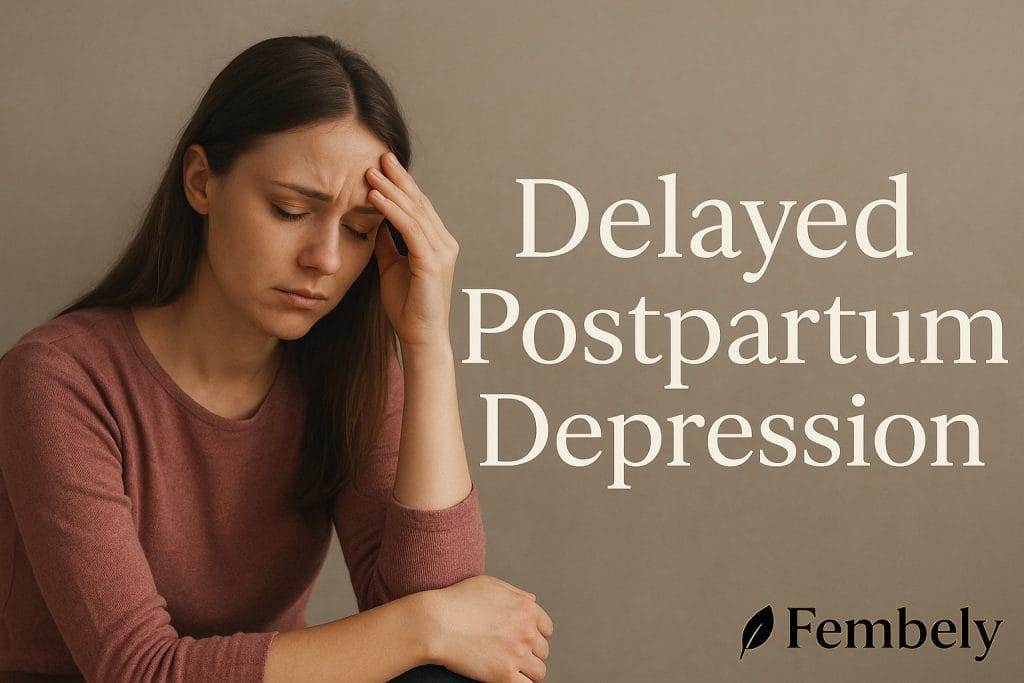
The months after childbirth can feel like an emotional earthquake. Many mothers struggle to reconnect with their previous identity, personal time, or independence.
This emotional tension makes delayed postpartum depression more likely when combined with stress and exhaustion.
Early Signs of Delayed Postpartum Depression Women Often Miss ✨
Because this condition appears later, its symptoms are often misunderstood as:
- “Just stress”
- “Just tiredness”
- “Just hormones”
Yet delayed postpartum depression has a recognizable pattern when women know what to look for.
Here are the most common early signs:
💫 Emotional Symptoms
- Sudden sadness weeks or months after feeling emotionally stable
- Feeling disconnected from daily life
- Irritability, frustration, or emotional sensitivity
- Difficulty bonding with the baby after previously feeling fine
- Feeling overwhelmed by small tasks
- Persistent guilt for struggling
💫 Cognitive Symptoms
- Difficulty concentrating
- Overthinking or constant worry
- Reduced motivation
- Feeling mentally “foggy” or slow
These are classic patterns of delayed postpartum depression, and recognizing them early allows for proactive management.
💫 Physical Symptoms
- Chronic fatigue even with enough rest
- Changes in appetite
- Headaches or tension
- Increased sensitivity to noise or sensory overload
Physical signs are often the first red flags of delayed postpartum depression for many women.
💫 Behavioral Signs
- Avoiding social interactions
- Withdrawing from loved ones
- Loss of interest in hobbies
- Reduced desire for physical intimacy
These shifts may be subtle but are significant indicators of delayed postpartum depression.
Who Is More At Risk? (Updated 2025 Insights) 🌿✨
While every mother can experience this condition, modern research suggests certain factors increase the likelihood of delayed postpartum depression:
- History of anxiety or depression
- Lack of social support
- Traumatic or complicated delivery
- Chronic stress during pregnancy
- Thyroid imbalance
- Low progesterone
- Sleep-deprived households
- High expectations of “perfect motherhood”
Social media pressure, comparison, and unrealistic expectations have made delayed postpartum depression more common in recent years — especially among first-time mothers.
How to Manage Delayed Postpartum Depression: Effective Tools and Strategies ✨💛
This condition is real, valid, and treatable. With the right support and strategies, women can recover with strength and confidence.
Below are the most effective, updated, and natural tools modern specialists recommend for managing delayed postpartum depression:
✨ 1. Strengthen Your Support System
Humans are not designed to raise babies alone. Reliable emotional support is one of the strongest protective factors.
Try:
- Asking family members for help with chores
- Scheduling weekly check-ins with friends
- Joining online mother communities
- Seeking a postpartum doula if possible
Women dealing with delayed postpartum depression benefit greatly from connection and community.
✨ 2. Restore Sleep in Smart, Sustainable Ways 😴
You can’t pour from an empty cup.
Try:
- Rotating nighttime responsibilities with a partner
- Using sleep windows to rest whenever possible
- Creating a predictable nap routine for both mother and baby
- Reducing screen time before bed
- Supporting nighttime calm with gentle relaxation rituals
Consistent sleep improvement reduces the intensity of delayed postpartum depression dramatically.
✨ 3. Nourish Your Body With Hormone-Supportive Foods 🥑🌿
Nutrition plays a crucial role in emotional health.
Focus on:
- Omega-3 fats (hemp seeds, chia seeds, walnuts)
- Complex carbs for steady energy
- Magnesium-rich foods for nervous system calm
- B vitamins for emotional balance
- Hydration and regular mealtimes
Balanced nutrition helps stabilize the emotional swings associated with delayed postpartum depression.
✨ 4. Incorporate Gentle Movement to Regulate Mood 💫
Exercise can help rebalance hormones and clear mental fog.
Ideal postpartum-friendly movement includes:
- Walking
- Light stretching
- Postnatal yoga
- Low-impact strength training
- Slow Pilates
- Breathing-based workouts
Regular movement decreases the severity of delayed postpartum depression, especially when done outdoors.
Recommended Reading:
Natural Ways to Increase Female Progesterone
✨ 5. Practice Nervous-System Care (2025–2026 Trend)
Regulating the nervous system is now a major pillar in emotional health.
Try:
- 4–7–8 breathing
- Guided meditations
- Warm baths
- Progressive muscle relaxation
- Sound therapy
- Mindful journaling
These practices help mothers manage delayed postpartum depression gently and effectively.
✨ 6. Seek Professional Guidance When Needed
Therapists, counselors, and postpartum specialists provide vital support — especially for moderate to severe symptoms.
Women dealing with delayed postpartum depression should never hesitate to reach out for professional care. Healing is stronger with guidance and support.
Prevention: How to Reduce the Risk of Delayed Postpartum Depression ✨🌸
While not entirely preventable, you can significantly lower the risk with simple, intentional habits.
✨ 1. Prepare Emotionally Before Birth
Discuss realistic expectations, share responsibilities, and plan support systems.
✨ 2. Prioritize Rest Over Productivity
Rest is essential — not optional.
✨ 3. Maintain Healthy Boundaries
Say no when needed, avoid energy-draining interactions, and protect your emotional space.
✨ 4. Stay Connected
Friendship and companionship protect women from emotional decline.
✨ 5. Support Hormonal Stability
Balanced nutrition, hydration, relaxation, and moderate movement all help prevent delayed postpartum depression in the months ahead.
Conclusion: You Are Not Alone — Understanding Delayed Postpartum Depression Is the First Step to Healing 💛🌿
Motherhood is transformative, beautiful, challenging, and deeply emotional. If you or someone you know is navigating delayed postpartum depression, remember this: it does not reflect weakness, failure, or inadequacy. It reflects the human need for rest, support, connection, and compassion.
With awareness, gentle self-care, modern wellness strategies, and the right support network, healing is absolutely possible ✨.
For more empowering, modern guides on women’s health and emotional well-being, visit https://fembely.com/ 💫🌸