The Influence of Social Platforms on Childhood Development
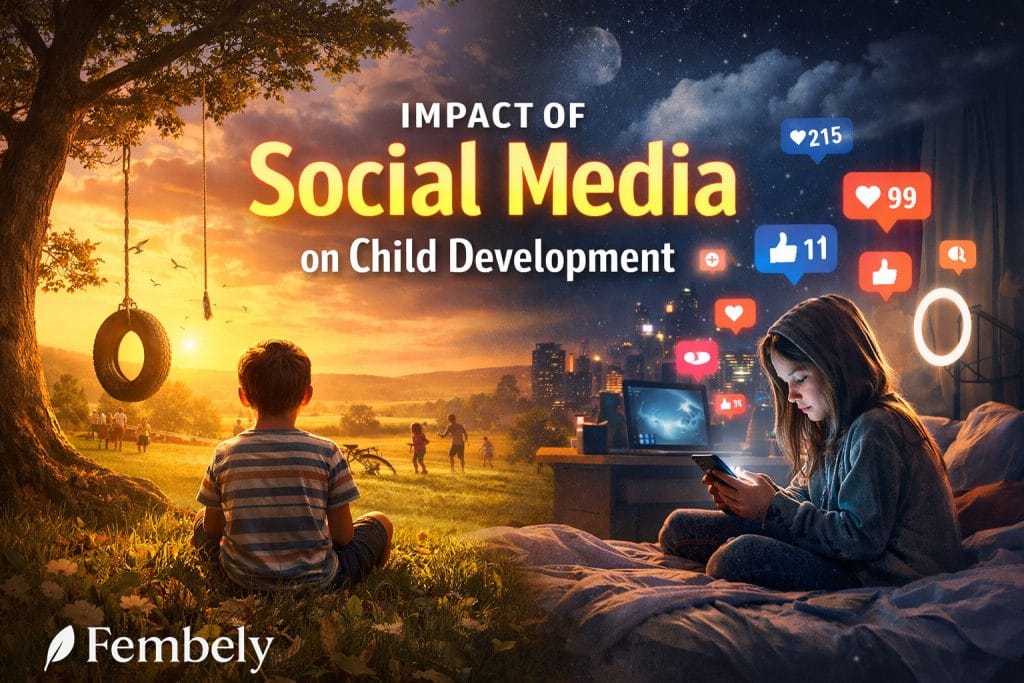
Impact of social media on child development is no longer a distant concern discussed in abstract terms—it is a lived reality unfolding quietly in homes, classrooms, and even playgrounds. The first exposure often happens earlier than many parents expect: a borrowed phone at dinner, a tablet used to calm restlessness, a short video meant to entertain but lingering far longer than intended. What follows is rarely dramatic or immediate. Instead, it is subtle, cumulative, and deeply woven into how children learn to see themselves, relate to others, and interpret the world around them.
What makes the impact of social media on child development so complex is that it resists simple conclusions. It is neither entirely harmful nor wholly beneficial. Its influence shifts depending on age, personality, family dynamics, emotional maturity, and the invisible pressures of modern life. The challenge lies not in banning or embracing it blindly, but in understanding where its quiet influence reshapes growth in ways we often notice only when patterns are already formed.
✨💫
The Early Years: When the Digital World Arrives Before Language
In early childhood, development is driven by sensory exploration, repetition, and real-world feedback. Facial expressions, tone of voice, physical play, and unstructured boredom all play a role in shaping emotional regulation and cognitive flexibility. The impact of social media on child development at this stage often enters indirectly—through short-form videos, algorithm-driven content, and fast-paced visual stimulation.
What tends to be overlooked is how this type of content alters a child’s tolerance for stillness. When entertainment arrives instantly, without effort or imagination, moments of quiet can feel uncomfortable rather than restorative. Children may struggle to engage deeply with slower activities like drawing, building, or listening to stories without visual reinforcement. This is not a failure of discipline, but a predictable response to overstimulation.
Parents often notice this as irritability or restlessness rather than a developmental shift. The connection becomes clear only later, when attention feels fragmented and frustration surfaces quickly in offline situations.
✨💫
Attention, Focus, and the Cost of Constant Stimulation
One of the most discussed aspects of the impact of social media on child development is attention span. Yet the issue is not simply that children “can’t focus anymore.” It is that their brains are adapting to a reward system built on immediacy, novelty, and endless scrolling.
Social platforms are designed to deliver small bursts of satisfaction at irregular intervals. For a developing brain, this creates an expectation that engagement should always feel stimulating. In classrooms or conversations where rewards are delayed—understanding a concept, resolving a conflict, completing a task—motivation can fade more quickly.
This does not mean children lose the ability to concentrate entirely. Instead, focus becomes conditional. They may concentrate intensely on digital content while struggling with tasks that require patience, effort, or emotional resilience. The contradiction is confusing for adults and often misinterpreted as laziness or lack of discipline.
✨💫
Recommended Reading:
All About Parenting: A Complete, Practical Guide
Emotional Development in a World of Curated Feelings
Emotional intelligence develops through lived interaction: misreading a friend’s tone, repairing misunderstandings, learning empathy through shared experience. The impact of social media on child development becomes more visible as children begin comparing their inner world with carefully curated digital realities.
Even at a young age, children pick up on patterns—who is admired, what gets attention, which emotions are celebrated and which are ignored. Online spaces often reward confidence, humor, beauty, or bold expression, while vulnerability and uncertainty remain hidden. Over time, children may internalize the idea that certain feelings should be performed and others concealed.
This can create emotional dissonance. A child who feels sad, anxious, or left out may believe something is wrong with them because those emotions are rarely reflected back in the content they consume. Emotional literacy becomes distorted, shaped more by observation than experience.
✨💫
Identity Formation and the Pressure to Be Seen
As children move into later childhood and early adolescence, identity becomes fluid and exploratory. This is where the impact of social media on child development intersects sharply with self-image. Digital platforms offer a stage, an audience, and metrics of validation—likes, comments, followers—that can subtly redefine self-worth.
The issue is not exposure alone, but timing. When identity is still forming, external validation can feel like proof of existence. Children may begin adjusting behavior, appearance, or opinions to align with what receives approval online. Authenticity becomes negotiable.
Offline, this can show up as heightened sensitivity to criticism, fear of standing out, or reluctance to try new things without reassurance. The digital self begins to compete with the real one, and the boundary between expression and performance blurs.
✨💫
Social Skills in the Age of Digital Interaction
Social media often promises connection, yet the impact of social media on child development includes a paradox: increased communication paired with reduced depth. Online interaction removes many social cues—body language, pauses, tone shifts—that help children learn empathy and conflict resolution.
When disagreements occur online, they are easier to avoid, delete, or escalate without repair. Children may miss opportunities to practice uncomfortable but necessary skills: apologizing, negotiating, reading emotional nuance. These gaps rarely appear dramatic but can influence friendships over time.
In group settings, some children become observers rather than participants, more comfortable watching than engaging. Others may feel socially overwhelmed, navigating both offline dynamics and the invisible hierarchy of online presence simultaneously.
✨💫
Sleep, Regulation, and the Hidden Ripple Effects
Sleep is foundational to emotional regulation, learning, and physical growth. The impact of social media on child development often shows up quietly through disrupted routines rather than obvious behavioral changes. Late-night scrolling, even passive consumption, keeps the brain alert and delays the transition into rest.
Beyond sleep deprivation, there is the issue of emotional carryover. Content consumed before bedtime—whether exciting, distressing, or socially charged—lingers in the nervous system. Children may wake feeling unsettled without understanding why.
This can affect mood, impulse control, and resilience the following day, creating a cycle that appears behavioral but is rooted in overstimulation and fatigue.
✨💫
Recommended Reading:
eco friendly living ideas for women
Why Common Advice Often Misses the Point
Much of the conversation around the impact of social media on child development focuses on limits, restrictions, or total avoidance. While boundaries matter, they often fail when they ignore context. Children do not experience social media in isolation; it is woven into peer culture, education, and social belonging.
Rigid rules without dialogue can create secrecy rather than safety. On the other hand, unlimited access framed as trust can place emotional responsibility on children before they are ready. What works better is involvement—understanding what children are watching, how it makes them feel, and why it matters to them.
Children benefit when adults model reflection rather than control. When conversations replace surveillance, social media becomes something to navigate together rather than something hidden or forbidden.
✨💫
Subtle Signs That Deserve Attention
The impact of social media on child development rarely announces itself loudly. It appears in small shifts: increased self-consciousness, reduced frustration tolerance, difficulty being alone, or heightened emotional reactions to minor social events.
These signs are not alarms but invitations—to slow down, observe, and recalibrate. Development is adaptive, and children are remarkably resilient when supported with presence rather than panic.
✨💫
Rethinking Growth in a Connected World
Understanding the impact of social media on child development requires moving beyond fear-based narratives. Digital spaces are now part of childhood, shaping how children learn, connect, and express themselves. The goal is not to eliminate influence, but to balance it with experiences that foster depth, empathy, and self-trust.
Children thrive when they have space to be bored, to struggle, to imagine without an audience. They also benefit from learning how to engage thoughtfully with digital tools rather than consuming them passively. Guidance, not perfection, shapes healthy development.
✨💫
A More Conscious Path Forward
The impact of social media on child development will continue to evolve as platforms change and cultural norms shift. What remains constant is the need for attuned, emotionally present adults who can help children interpret their experiences rather than absorb them unfiltered.
By paying attention to the subtle ways digital life intersects with emotional growth, identity, and connection, families can create environments where technology supports rather than defines development.
For more thoughtful explorations of modern life, emotional well-being, and the evolving realities women and families face today, we invite you to discover more editorials and insights on https://fembely.com/ — where depth, nuance, and lived experience always come first. ✨