
Sustainable Beauty Hair Rituals for Women
sustainable haircare routine women are no longer approaching beauty as a checklist of trends to copy but as a set of thoughtful decisions shaped by lifestyle, time, values, and reality. The shift toward sustainability in haircare isn’t driven by perfection or purity. It’s driven by fatigue — fatigue from excess, from waste, from routines that promise transformation but quietly drain time, money, and energy. In modern life, sustainability becomes less about doing more and more about doing enough, consistently, without compromise.
A sustainable approach to haircare does not ask women to abandon pleasure, elegance, or self-expression. Instead, it asks sharper questions: What truly supports hair health over years, not weeks? What routines survive busy mornings, hormonal shifts, climate changes, and evolving priorities? The answers rarely sit in extremes. They live in moderation, awareness, and small, repeatable choices that quietly compound.
✨💫
Rethinking What “Sustainable” Actually Means for Hair
Sustainability in haircare is often misunderstood as restriction — fewer washes, fewer products, fewer choices. In reality, a sustainable haircare routine women can realistically maintain is about alignment. Alignment between hair type and climate. Between routine and schedule. Between values and behavior.
Many women attempt rigid eco-inspired routines only to abandon them weeks later. Not because sustainability doesn’t work — but because the routine ignores friction points like time pressure, styling expectations at work, or unpredictable hair texture from one week to the next.
True sustainability adapts. It allows flexibility without excess. It accepts that hair doesn’t behave the same in winter as it does in summer, or during high-stress periods versus calmer seasons. A sustainable routine adjusts without restarting from zero every time life shifts.
The Quiet Cost of Overconsumption in Haircare
Haircare excess rarely announces itself loudly. It accumulates silently through half-used bottles, impulse purchases, and routines that grow longer without becoming better. Many women recognize the pattern: buying something new because the old routine feels stale, not because it stopped working.
This cycle doesn’t just affect the environment. It creates mental clutter. Too many products lead to inconsistent use, diluted results, and a sense of constant dissatisfaction. Hair becomes something to fix instead of something to maintain.
A sustainable haircare routine women trust is simplified, not stripped down. It removes redundancy rather than pleasure. The goal isn’t minimalism for its own sake, but clarity — knowing exactly why each step exists.
✨💫
Why “One-Size-Fits-All” Advice Fails Women’s Hair
Generic haircare advice often assumes consistency: consistent texture, consistent climate, consistent lifestyle. Real hair lives far from those assumptions. Hormonal cycles, stress levels, water quality, and even wardrobe choices affect how hair behaves.
This is where many sustainable routines fail. They are built on ideals instead of observation. Women are told to wash less without accounting for scalp sensitivity. To air-dry without considering hair density. To avoid heat without acknowledging professional or social expectations.
A sustainable haircare routine women actually sustain respects context. It allows strategic heat use instead of rigid avoidance. It encourages mindful washing rather than arbitrary schedules. Sustainability is not rigidity; it’s responsiveness.
Building a Sustainable Foundation Without Starting Over
The most effective sustainable routines are layered onto existing habits rather than replacing them entirely. Sudden overhauls often collapse under real-world pressure. Gradual refinement sticks.
Start by identifying what already works. If your hair responds well to a certain washing rhythm, sustainability does not require disruption. Instead, refinement may come from adjusting quantities, improving application technique, or reducing unnecessary steps between wash days.
Hair health improves not from novelty but from consistency. A sustainable haircare routine women return to week after week relies on familiarity. It feels intuitive, not experimental.
✨💫
Recommended Reading:
Natural Ways to Slow Early Aging in Women
The Small Choices That Quietly Define a Sustainable Haircare Routine Women Keep
Many routines fail not because they are unsustainable in theory, but because they ignore the small, physical moments where hair is most vulnerable. These overlooked details are where a sustainable haircare routine women can actually maintain begins to feel supportive rather than demanding.
✨💫
The Brushes That Protect Hair — And the Ones That Undermine It
Most long-term damage doesn’t happen during washing. It happens during detangling.
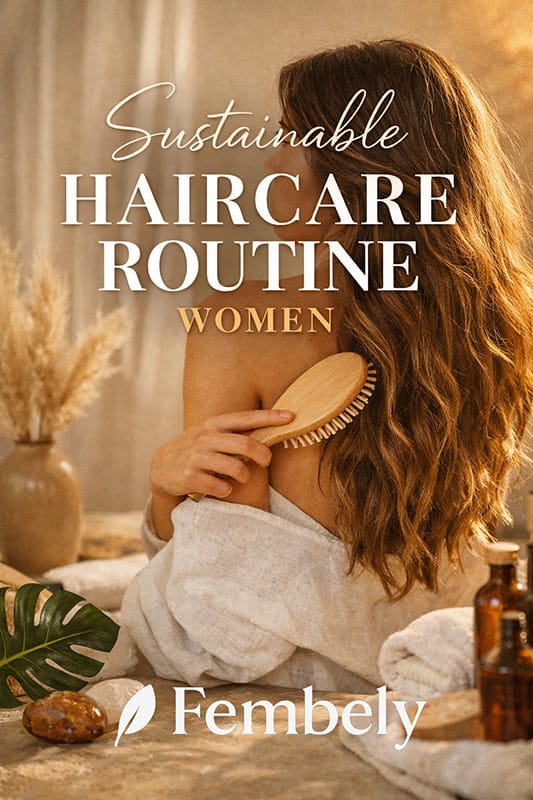
In a sustainable haircare routine women rely on, the brush is not a styling tool — it is a protection tool. Brushes that offer flexibility, gentle resistance, and movement allow hair to release knots instead of fighting them.
Overly rigid brushes tend to:
- Pull rather than guide
- Create tension at weak points along the strand
- Turn small knots into breakage over time
A sustainable routine quietly avoids anything that treats hair as something to be forced into submission.
Detangling Timing: Why When You Brush Matters More Than What You Use
Hair is at its most fragile when wet. This is the moment where impatience causes the most damage, even in otherwise careful routines.
A sustainable haircare routine women can trust prioritizes:
- Letting hair settle slightly before detangling
- Working gradually from ends upward
- Accepting that speed often comes at the cost of strength
Gentleness here is not indulgence — it is efficiency measured over months, not minutes.
✨💫
Towels, Friction, and the Damage No One Talks About
Aggressive towel-drying creates more stress than most styling tools. The friction may feel harmless in the moment, but repeated daily, it erodes the outer structure of the hair.
Within a sustainable haircare routine women benefit from:
- Pressing moisture out rather than rubbing
- Reducing unnecessary friction at the ends
- Treating wet hair as something to be supported, not hurried
Less friction means fewer split ends, less tangling, and fewer interventions later.
Styling Tools and the Myth of Total Avoidance
Completely eliminating styling tools is rarely realistic. A sustainable haircare routine women actually follow does not demand perfection — it demands intention.
Instead of daily reliance, sustainable routines:
- Reserve heat for moments that truly require polish
- Allow hair to rest between styling sessions
- Choose styles that age gracefully rather than collapse quickly
Sustainability lives in restraint, not denial.
✨💫
Sleeping Habits That Support Hair Without Extra Effort
Nighttime habits are among the most underestimated contributors to hair health.
A sustainable haircare routine women naturally maintain considers:
- How hair moves during sleep
- Whether friction is quietly undoing daytime care
- If morning styling is compensating for overnight stress
Simple adjustments here reduce breakage without adding steps to the routine.
Why Sustainable Haircare Is Often About Doing Less — But Doing It Better
The most effective sustainable haircare routine women embrace doesn’t grow longer over time. It becomes clearer.
Each step earns its place. Each habit supports the next. The routine works not because it is strict, but because it is kind — to hair, to time, and to the woman living inside it.
Recommended Reading:
White Hair Care: A Complete Guide for Mature Women
Washing Hair With Intention, Not Guilt
Washing frequency is one of the most emotionally loaded topics in haircare. Many women internalize guilt around washing “too often” or “not enough.” Sustainability dissolves that guilt by reframing washing as a functional decision, not a moral one.
Scalp health dictates washing needs more than trends. Oily scalps, active lifestyles, and humid environments require different rhythms than dry climates or low-exposure routines. Sustainability respects biology.
Mindful washing focuses on purpose: cleansing buildup, refreshing the scalp, resetting hair texture. When washing serves a clear role, frequency becomes less controversial and more personal.
The Role of Conditioning in Long-Term Hair Integrity
Conditioning is often treated as a recovery step — something done after damage occurs. In a sustainable haircare routine women rely on, conditioning becomes preventative.
Light, regular conditioning reduces breakage, tangling, and styling stress. It allows hair to be manipulated less aggressively, which extends its lifespan. Over time, this reduces the need for intensive interventions that consume more resources and time.
Sustainability favors gentle repetition over dramatic repair. Conditioning doesn’t need to be heavy to be effective. It needs to be consistent.
✨💫
Styling Choices That Respect Hair’s Natural Rhythm
Styling is where sustainability often feels most restrictive. Many women fear that eco-conscious routines mean sacrificing polish or identity. In reality, sustainable styling is about cooperation rather than control.
Hair has a natural rhythm — a way it wants to fall, wave, or volume itself. Sustainable routines work with that rhythm instead of forcing daily transformation. This reduces styling time, heat exposure, and frustration.
Choosing styles that age well throughout the day, rather than peak perfectly for one hour, changes everything. Hair becomes something lived in, not constantly corrected.
Heat, Tools, and the Reality of Modern Life
Completely eliminating heat is rarely realistic. Professional environments, social norms, and personal comfort all influence styling choices. A sustainable haircare routine women can maintain doesn’t demonize tools — it contextualizes them.
Heat becomes occasional and intentional, not habitual. Styling sessions are spaced out rather than repeated daily. Hair is allowed recovery days.
Sustainability shows up not in avoidance but in moderation. The absence of extremes is what keeps routines intact long-term.
✨💫
The Environmental Impact Women Rarely See
Sustainability extends beyond visible habits. Packaging waste, water usage, and disposal practices matter — but they must fit into daily life. A routine that feels burdensome won’t last.
Women often underestimate the impact of finishing what they already own. Completion is one of the most overlooked sustainable acts. Using products fully before replacing them reduces waste more effectively than constant “greener” substitutions.
A sustainable haircare routine women embrace values continuity. It prioritizes longevity over novelty.
Emotional Sustainability: The Missing Layer of Haircare
Hair is emotional. It carries identity, confidence, and memory. Sustainable routines respect that emotional layer instead of dismissing it as vanity.
A routine that creates anxiety, shame, or constant dissatisfaction isn’t sustainable — regardless of how eco-friendly it appears. Emotional sustainability means choosing routines that feel supportive, not punitive.
When haircare becomes grounding rather than corrective, consistency follows naturally.
✨💫
Aging, Hormones, and the Evolution of Hair Needs
Hair changes with time. Density shifts, texture softens or coarsens, and growth patterns evolve. Sustainable routines anticipate change rather than resist it.
Rigid attachment to past routines often creates frustration. A sustainable haircare routine women rely on evolves quietly — adjusting frequency, texture needs, and styling expectations without drama.
Adaptation is sustainability in its truest form.
Creating a Routine That Survives Busy Seasons
Life has seasons: demanding work cycles, caregiving phases, emotional lows. Sustainable routines account for those fluctuations.
Low-effort versions of the routine should exist alongside more involved ones. This prevents abandonment during high-stress periods. Haircare remains supportive, not another obligation.
The most sustainable routines are forgiving.
✨💫
Subtle Habits That Protect Hair Without Effort
Small habits often have the greatest long-term impact. Gentle handling, reduced friction, and mindful detangling protect hair invisibly over time.
These habits require no extra products, no additional waste, and no learning curve. They simply shift awareness. Sustainability often lives in what doesn’t happen — breakage avoided, stress reduced, damage prevented.
Why Sustainable Haircare Is a Long Conversation, Not a Trend
Trends fade. Values endure. A sustainable haircare routine women internalize becomes part of identity rather than performance.
It doesn’t announce itself. It doesn’t require validation. It quietly works because it fits life as it is, not as it’s idealized.
Sustainability is not a destination. It’s a way of choosing, again and again, what supports both hair and the woman wearing it.
✨💫
A Thoughtful Ending: Haircare That Honors the Whole Woman
Sustainable haircare is not about perfection or purity. It’s about coherence — between values, habits, and reality. A sustainable haircare routine women genuinely maintain supports hair health without demanding constant attention. It adapts, forgives, and evolves.
When haircare aligns with life instead of fighting it, sustainability stops feeling like effort and starts feeling like ease.
For more refined, experience-driven perspectives on beauty, lifestyle, and modern womanhood, explore the thoughtfully curated editorials at https://fembely.com/ — where elegance meets realism, and sustainability becomes second nature.